The atomic mushroom cloud over Nagasaki following the explosion of the Fat Man nuclear bomb on August 9, 1945.
January 5, 2026 - Reading time: 11 minutes
Atomic mushroom cloud rising over Nagasaki after the Fat Man nuclear bomb explosion, August 9, 1945
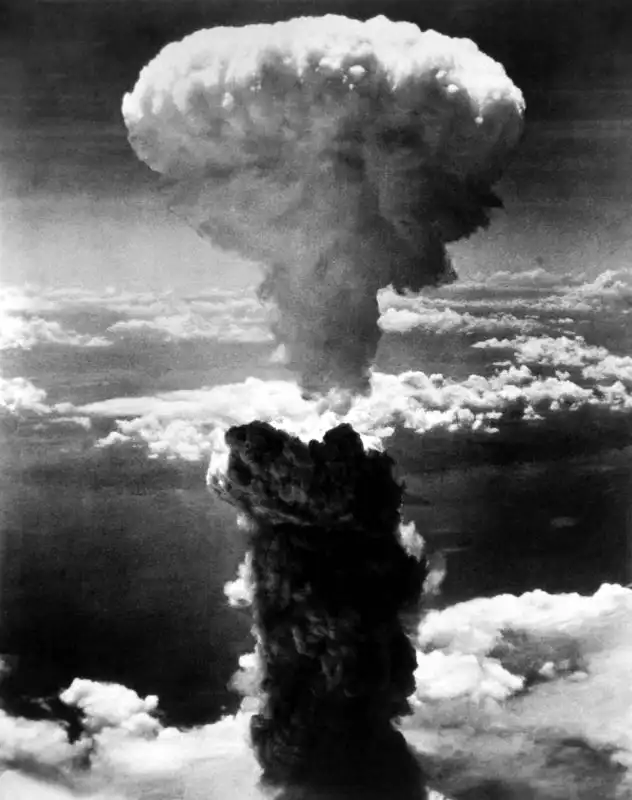
On August 9, 1945, the atomic bomb “Fat Man” detonated above the Nagasaki Valley in Japan, creating one of the most recognizable and terrifying images in modern history — the nuclear mushroom cloud.
The explosion marked the second and final use of nuclear weapons in warfare, permanently altering global military strategy and human consciousness.
The Detonation Over Nagasaki:
The bomb exploded at an altitude of approximately 300 meters above the city:
-
Optimized for maximum blast damage
-
Reduced immediate ground absorption
-
Increased the radius of destruction
Within seconds, the explosion released an immense amount of energy, heat, and radiation.
Formation of the Mushroom Cloud:
The mushroom cloud seen in the photograph consists of:
-
Superheated air rising rapidly
-
Vaporized debris, dust, and building materials
-
Smoke and radioactive particles
The column rose to an estimated height of 20 kilometers, piercing the upper atmosphere and becoming visible from vast distances.
This shape became the universal symbol of nuclear power — and nuclear fear.
“Fat Man” and the B-29 Bomber:
The Fat Man bomb was:
-
A plutonium-based implosion weapon
-
More complex than the Hiroshima bomb
-
Delivered by a B-29 Superfortress
The mission targeted Nagasaki after weather conditions prevented an attack on the primary target, Kokura.
Immediate Consequences:
The explosion caused:
-
Massive destruction of the urban area
-
Tens of thousands of deaths
-
Severe burns, shockwaves, and fires
Unlike conventional bombing, the atomic detonation combined blast, heat, and radiation into a single catastrophic event.
Long-Term Effects:
Beyond the immediate devastation, Nagasaki faced:
-
Radiation sickness among survivors
-
Long-term health effects, including cancer
-
Generational trauma and displacement
The city became a living reminder of nuclear warfare’s enduring consequences.
Strategic and Historical Impact:
The bombing of Nagasaki:
-
Accelerated Japan’s surrender
-
Brought World War II to an end
-
Initiated the nuclear arms era
From that moment onward, global security would be defined by deterrence, not just armies.
The Image as a Historical Document:
This photograph is significant because it shows:
-
No city
-
No people
-
Only the scale of the weapon itself
It represents raw power detached from human perspective — a defining image of the 20th century.
Photo Information:
-
📝 Subject: Atomic mushroom cloud from the Fat Man explosion
-
📍 Location: Nagasaki, Japan
-
📅 Date: August 9, 1945
-
💣 Weapon: Fat Man nuclear bomb
The mushroom cloud over Nagasaki is not merely an image of destruction — it is a boundary marker in human history. It signals the moment when warfare transcended conventional limits and entered the nuclear age, a reality the world continues to live with today.
👉 Related: Atomic bombing of Nagasaki • Nuclear weapons history • End of World War II
Related Pages


Category
Search
Categories
- Unidentified WWII Photos (14)
- World War II Photos 1937 (1)
- World War II Photos 1938 (1)
- World War II Photos 1939 (3)
- World War II Photos 1940 (5)
- World War II Photos 1941 (103)
- World War II Photos 1942 (60)
- World War II Photos 1943 (56)
- World War II Photos 1944 (77)
- World War II Photos 1945 (48)
- WWII and Postwar Photos 1946 (1)