Thermal Burns on a Japanese Girl After the Atomic Bombing of Nagasaki
January 7, 2026 - Reading time: 10 minutes
Thermal burn patterns on a Japanese civilian caused by the atomic bombing of Nagasaki in August 1945.
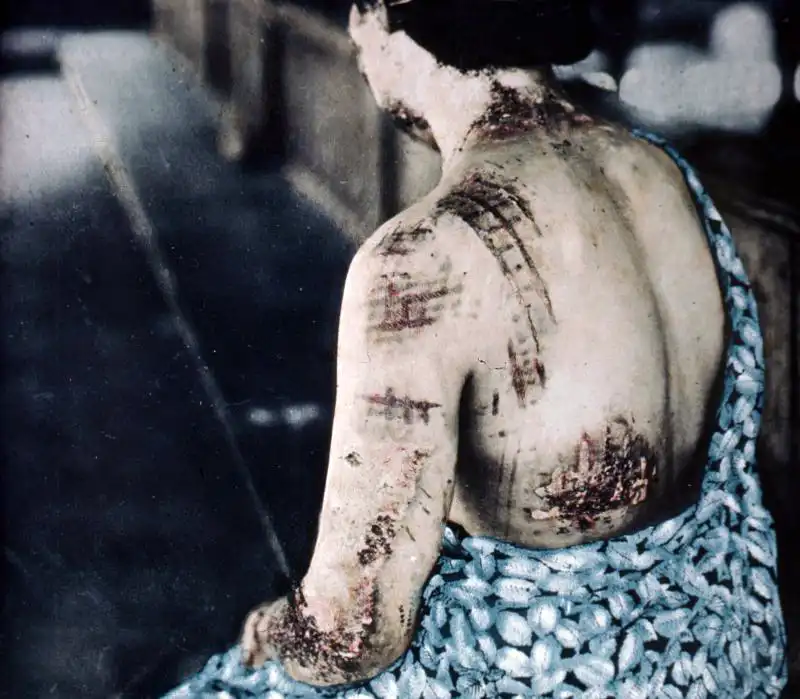
This color photograph, taken in August 1945, shows thermal burns on the body of a young Japanese girl caused by the atomic bombing of Nagasaki. The burn patterns on her skin replicate the dark areas of her kimono, offering direct evidence of the extreme heat released by the nuclear explosion.
The image is one of the most important visual records of the human impact of nuclear weapons.
Thermal Radiation and Clothing Shadow Burns:
One of the immediate effects of the atomic explosion was intense thermal radiation:
-
Released in a fraction of a second
-
Capable of causing severe burns at great distances
-
Absorbed differently depending on surface color and material
Dark fabric absorbed more heat, while lighter areas reflected part of it. As a result, burn patterns mirrored the design of clothing, creating what became known as “patterned burns”.
Civilian Victims of the Atomic Bombing:
The majority of victims in Nagasaki were civilians:
-
Women, children, and elderly people
-
Residents far from any military installations
-
People with no protection from heat or radiation
This photograph documents not a battlefield injury, but the consequences of a weapon affecting the entire urban population indiscriminately.
Why This Image Matters:
This image is historically significant because it:
-
Demonstrates the physical effects of nuclear heat on the human body
-
Provides visual evidence beyond statistics and casualty numbers
-
Shifts focus from weapons and aircraft to human suffering
It shows how nuclear warfare operates at a level where no distinction exists between combatant and civilian.
Color Photography and Historical Impact:
Unlike many wartime images, this photograph is in color, making the damage:
-
More immediate
-
More difficult to abstract
-
More emotionally powerful
Color photography removed distance and forced viewers to confront the reality of atomic warfare.
Ethical and Historical Context:
Images like this played a crucial role in:
-
Postwar medical research on radiation and burns
-
Public awareness of nuclear weapon effects
-
Global debates about the use and prohibition of nuclear arms
They contributed to the understanding that nuclear weapons represent a fundamentally different category of warfare.
Photo Information:
-
📝 Subject: Thermal burns caused by atomic explosion
-
📍 Location: Nagasaki, Japan
-
📅 Date: August 1945
-
🎞 Format: Color photograph
This photograph does not depict destruction from above or explosions in the distance. It shows the direct imprint of nuclear heat on a human body. As a historical document, it reminds us that the true legacy of nuclear warfare is measured not only in ruined cities, but in lives permanently altered.
👉 Related: Civilian victims of nuclear weapons • Atomic bombing of Nagasaki • Human effects of WWII
Related Pages
Tags
Category
Search
Categories
- Unidentified WWII Photos (14)
- World War II Photos 1937 (1)
- World War II Photos 1938 (1)
- World War II Photos 1939 (3)
- World War II Photos 1940 (5)
- World War II Photos 1941 (103)
- World War II Photos 1942 (60)
- World War II Photos 1943 (56)
- World War II Photos 1944 (77)
- World War II Photos 1945 (48)
- WWII and Postwar Photos 1946 (1)