Destroyed Buddhist Temple in Nagasaki After the Atomic Bombing
January 3, 2026 - Reading time: 10 minutes
A ruined Buddhist temple and burned Buddha statue in Nagasaki, photographed weeks after the atomic bombing of 1945.
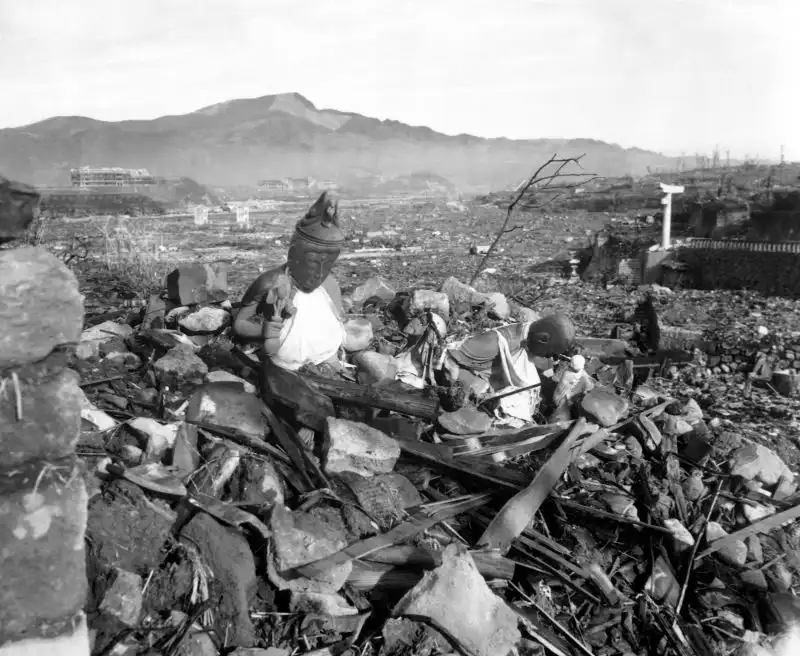
This photograph shows Nagasaki, Japan, approximately six weeks after the atomic bombing of August 9, 1945. In the foreground stands a destroyed Buddhist temple and a charred statue of Buddha, while the background reveals a city reduced almost entirely to ruins.
Unlike images taken immediately after the explosion, this scene reflects the aftermath — silence, destruction, and the long shadow left by nuclear warfare.
Nagasaki After August 9, 1945:
The atomic bomb detonated over Nagasaki at 11:02 a.m., destroying large parts of the city:
-
Tens of thousands were killed instantly
-
Entire residential districts vanished
-
Fires burned uncontrolled for days
By late September 1945, the immediate chaos had passed, but the devastation remained absolute.
The Ruined Temple and the Burned Buddha:
The Buddhist temple in the photograph symbolizes:
-
The destruction of civilian life
-
The loss of cultural and spiritual heritage
-
The vulnerability of sacred spaces in modern war
The burned Buddha statue, blackened and damaged, became one of the most haunting visual metaphors of the atomic age — a figure traditionally associated with peace and compassion standing amid total annihilation.
A City Without a Center:
In the background, Nagasaki appears almost unrecognizable:
-
Streets erased
-
Buildings flattened
-
Infrastructure destroyed
Survivors faced radiation sickness, homelessness, and long-term health consequences that would last for decades.
Beyond the Battlefield:
This image is significant because it shows:
-
No soldiers
-
No aircraft
-
No weapons
Only the result.
It reminds viewers that atomic warfare does not end with military objectives — it continues in civilian suffering, cultural loss, and generational trauma.
Historical Importance of the Photograph:
Photographs like this played a key role in:
-
Documenting the humanitarian impact of nuclear weapons
-
Shaping postwar debates about atomic warfare
-
Influencing global anti-nuclear movements
They transformed abstract statistics into undeniable visual evidence.
Legacy of Nagasaki:
Today, Nagasaki stands as:
-
A symbol of nuclear devastation
-
A center for peace advocacy
-
A reminder of the cost of technological warfare
The ruins captured in this image represent not only destruction, but a warning carried into the modern world.
Photo Information:
-
📝 Subject: Destroyed Buddhist temple and burned Buddha statue
-
📍 Location: Nagasaki, Japan
-
📅 Date: September 24, 1945
-
📷 Photographer: Lynn P. Walker, Jr.
This photograph does not depict the moment of destruction — it shows what comes after. The ruined temple in Nagasaki stands as a silent witness to the consequences of nuclear warfare, reminding future generations that the true cost of war is measured long after the explosions end.
👉 Related: Atomic bombing of Nagasaki • Postwar Japan • Civilian impact of WWII
Tags
Category
Search
Categories
- Unidentified WWII Photos (14)
- World War II Photos 1937 (1)
- World War II Photos 1938 (1)
- World War II Photos 1939 (3)
- World War II Photos 1940 (5)
- World War II Photos 1941 (103)
- World War II Photos 1942 (60)
- World War II Photos 1943 (56)
- World War II Photos 1944 (77)
- World War II Photos 1945 (44)
- WWII and Postwar Photos 1946 (1)