Aerial view of liberated Sevastopol in May 1944. The heroic fortress city lies in ruins after being freed from Nazi occupation by the Red Army.
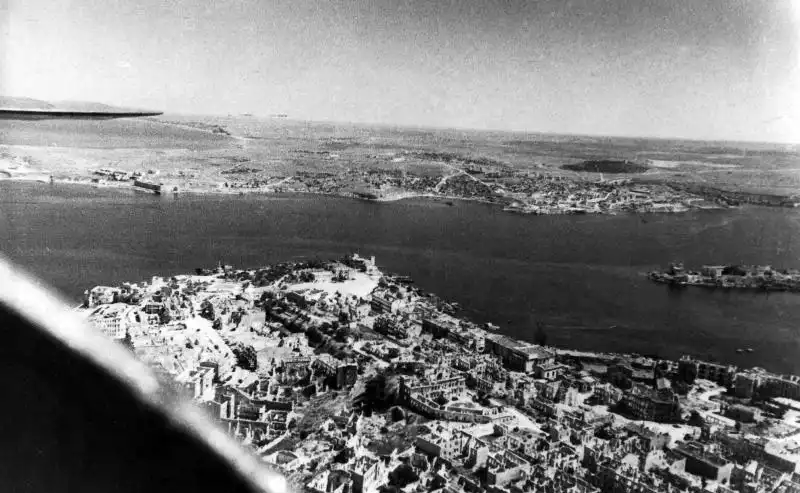
This remarkable World War II aerial photograph was taken from a Soviet aircraft shortly after the liberation of Sevastopol in May 1944. Beneath the aircraft stretches the shattered fortress city, once the principal naval base of the Black Sea Fleet, its docks, fortifications, and residential districts scarred by prolonged warfare and deliberate destruction during the Axis retreat.
Sevastopol had become one of the defining battlefields of the Eastern Front. Following the German invasion of the Soviet Union in June 1941, the city resisted for approximately 250 days, earning worldwide recognition for the determination of its defenders. After exhausting bombardments by German artillery, including massive railway guns and sustained Luftwaffe attacks, Sevastopol finally fell in July 1942. The occupation lasted almost two years until the Soviet Crimean Offensive of 1944 decisively reversed the situation.
On May 9, 1944, formations of the 4th Ukrainian Front, supported by the Black Sea Fleet and Soviet aviation, completed the liberation of Sevastopol after breaking through heavily fortified German and Romanian defensive positions. The victory eliminated the last major Axis bridgehead in Crimea and restored Soviet control over one of the most strategically important ports on the Black Sea.
The devastation visible in this photograph illustrates the enormous cost of the campaign. Retreating German forces systematically demolished harbor facilities, military installations, warehouses, transportation infrastructure, and many civilian buildings in an effort to deny their use to the advancing Red Army. Entire neighborhoods were reduced to rubble, while smoke from isolated fires still drifted above the ruined city.
Despite this destruction, the liberation of Sevastopol carried immense symbolic importance. The city had become synonymous with endurance during its legendary defense in 1941–1942, and its recapture represented both a strategic military victory and a powerful morale boost for the Soviet Union. Reconstruction began almost immediately after the fighting ceased, and in later years Sevastopol was officially awarded the prestigious title of Hero City in recognition of the courage displayed by its defenders and liberators.
This aerial image captures more than a battlefield landscape. It documents a pivotal moment when one of the Soviet Union's most celebrated cities emerged from occupation—devastated, yet once again under Soviet control and beginning the long process of rebuilding after war.
Technical photo data:
📍 Location: Sevastopol, Crimea, USSR
📅 Date: May 1944
📝 Event: Aerial view of Sevastopol immediately after its liberation during the Crimean Offensive
📷 Author: Unknown Soviet Air Force photographer
Recommended reading:
- David M. Glantz — The Soviet-German War 1941–1945: Myths and Realities
- Earl F. Ziemke — Stalingrad to Berlin: The German Defeat in the East
- John Erickson — The Road to Berlin
- Robert Forczyk — Where the Iron Crosses Grow: The Crimea 1941–44
Related photos:
- Liberation of Sevastopol WWII
- Crimean Offensive Operation 1944
- Soviet aerial photography over Sevastopol
- Ruins of Sevastopol after liberation
- Red Army operations in Crimea
- Black Sea Fleet and the defense of Sevastopol
- Hero Cities of the Soviet Union