Abandoned Soviet T-26 Light Tanks During the Red Army Retreat, 1941
December 21, 2025 - Reading time: 9 minutes
A rare wartime photograph showing abandoned Soviet T-26 light tanks during the Red Army retreat in the western USSR in summer 1941, highlighting the collapse of prewar armored forces.
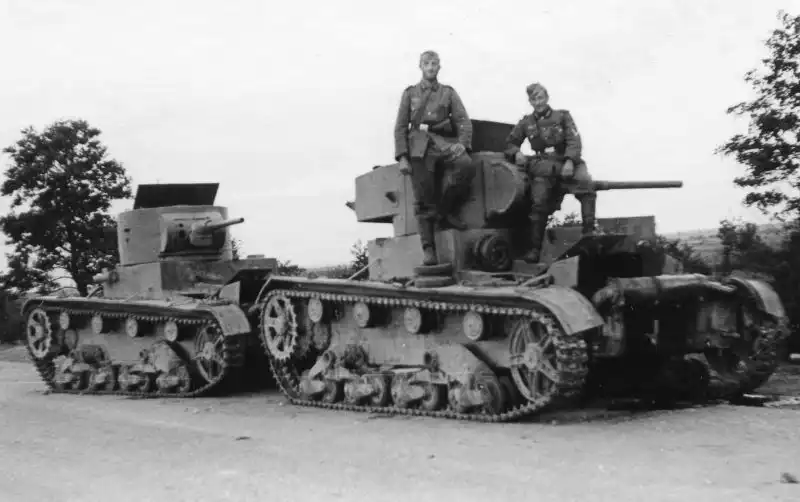
This wartime photograph captures a column of abandoned Soviet T-26 light tanks left on a road during the Red Army’s retreat from the western regions of the USSR in the summer of 1941. Images like this illustrate the scale of material losses suffered by Soviet armored forces in the opening weeks of Operation Barbarossa.
The T-26 Light Tank: Backbone of Prewar Soviet Armor
The T-26 was the most widely produced Soviet tank of the 1930s and one of the most numerous armored vehicles in the world by 1941. Originally based on the British Vickers 6-Ton design, the T-26 became the standard light tank of the Red Army before World War II.
Key characteristics of the T-26:
-
Main armament: 45 mm tank gun
-
Armor: up to 15 mm
-
Crew: 3 men
-
Designed for infantry support
Although effective in the 1930s, by 1941 the T-26 was obsolete, vulnerable to anti-tank weapons, air attacks, and plagued by mechanical wear.
Retreat in the Summer of 1941:
The photograph was taken during the Soviet withdrawal from the western USSR under pressure from the advancing Wehrmacht in the early phase of the German invasion.
During this period:
-
Soviet units retreated rapidly under air and ground attacks
-
Fuel shortages were common
-
Repair and evacuation capabilities collapsed
-
Damaged vehicles were often abandoned intact
The image dates to before mid-July 1941, when a formal Red Army order was issued instructing crews to disable abandoned combat vehicles to prevent their capture and reuse.
Why So Many T-26 Tanks Were Lost:
The abandoned tanks in this photo reflect systemic problems faced by the Red Army in 1941:
-
Outdated vehicle designs
-
Insufficient spare parts and maintenance
-
Poor coordination during retreat
-
Luftwaffe air superiority
-
Inadequate logistics and fuel supply
As a result, thousands of T-26 tanks were lost not in combat, but due to breakdowns, lack of fuel, or organizational collapse.
German Advance and Battlefield Aftermath:
German forces advancing eastward frequently encountered scenes like this:
-
Columns of abandoned Soviet armor
-
Equipment left on roadsides
-
Vehicles stripped or inspected by German troops
Such images were widely photographed and later used in German wartime propaganda, emphasizing the scale of Soviet losses in the early weeks of the campaign.
Historical Value of the Photograph:
This photograph is significant because it:
-
Documents the scale of Soviet armored losses in 1941
-
Illustrates the limitations of prewar tank doctrine
-
Provides visual evidence of the chaotic retreat from western regions of the USSR
For historians and military researchers, it serves as a stark reminder that numerical superiority alone could not compensate for organizational and technical weaknesses.
Photo Information:
-
📝 Source: wartime photograph
-
📍 Location: western USSR
-
📅 Date: summer 1941
-
📷 Author: unknown
Conclusion:
The abandoned T-26 tanks seen in this photograph symbolize the dramatic failures of the Red Army’s prewar armored strategy during the opening phase of World War II. While once the backbone of Soviet tank forces, the T-26 proved unable to survive the realities of modern, fast-moving warfare in 1941.
👉 See also: rare photographs of abandoned Soviet armored vehicles during Operation Barbarossa.
Related Pages
Category
Search
Categories
- Unidentified WWII Photos (14)
- World War II Photos 1937 (1)
- World War II Photos 1938 (1)
- World War II Photos 1939 (3)
- World War II Photos 1940 (5)
- World War II Photos 1941 (103)
- World War II Photos 1942 (60)
- World War II Photos 1943 (56)
- World War II Photos 1944 (77)
- World War II Photos 1945 (50)
- WWII and Postwar Photos 1946 (1)