Destroyed Monument to Joseph Stalin in German-Occupied Lviv, 1941
December 23, 2025 - Reading time: 7 minutes
A wartime photograph showing a destroyed monument to Joseph Stalin in German-occupied Lviv in 1941, symbolizing the collapse of Soviet authority during the invasion.
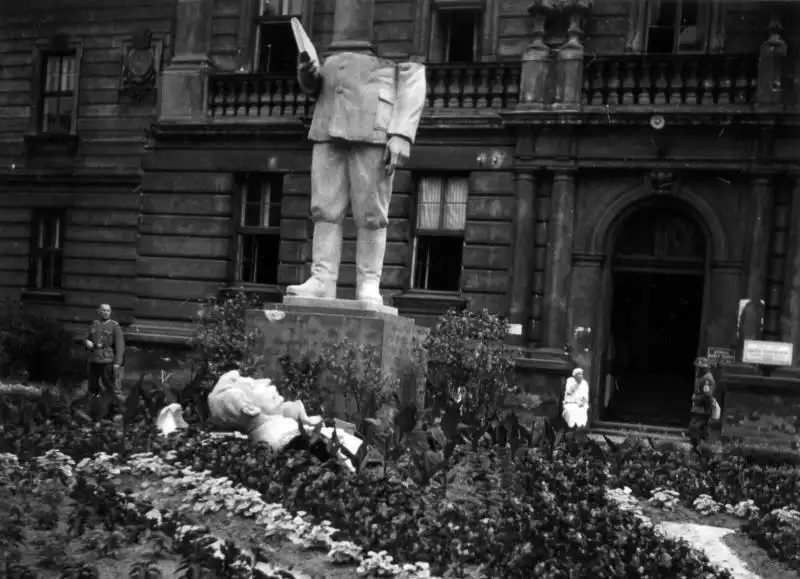
This wartime photograph shows a destroyed monument to Joseph Stalin in the city of Lviv, Ukraine, following its occupation by German forces in 1941. The image captures not only physical destruction but also the symbolic dismantling of Soviet authority during the early months of Operation Barbarossa.
Stalin Monuments in the Prewar Soviet Union:
Before World War II, monuments to Joseph Stalin were erected across the Soviet Union as part of an extensive cult of personality. These statues symbolized:
-
Soviet political power
-
Loyalty to the Communist Party
-
Ideological control over public space
Major cities in western Ukraine, including Lviv, saw the installation of such monuments after their incorporation into the USSR in 1939–1940.
German Occupation and Symbolic Destruction:
When German forces occupied Lviv in the summer of 1941, one of their first actions was the removal and destruction of Soviet symbols, including monuments to Stalin.
The destruction served several purposes:
-
Demonstrating the collapse of Soviet authority
-
Undermining communist ideology
-
Supporting German occupation propaganda
-
Appealing to segments of the local population hostile to Soviet rule
The ruined monument in this photograph reflects these early occupation policies.
Lviv in 1941: A City Under New Rule:
Lviv, formerly part of interwar Poland and incorporated into the USSR in 1939, became a key target during the German advance into Soviet territory.
In 1941:
-
The city was rapidly occupied by German forces
-
Soviet administrative and ideological symbols were dismantled
-
Public spaces were transformed to reflect new power structures
This photograph documents one of the earliest visible signs of that transformation.
Historical Significance of the Photograph:
This image is historically important because it:
-
Records the destruction of Soviet political symbolism
-
Illustrates occupation practices beyond the battlefield
-
Provides visual evidence of ideological warfare during World War II
Such photographs help historians understand how control over memory and symbols played a crucial role during the occupation of Soviet territories.
Photo Information:
-
📝 Source: wartime photograph
-
📍 Location: Lviv, Ukrainian SSR, USSR
-
📅 Date: 1941
-
📷 Author: unknown
The destroyed Stalin monument in Lviv stands as a powerful symbol of the rapid political and ideological shifts that followed the German invasion of the Soviet Union. Beyond physical damage, the image reflects the deliberate effort to erase Soviet presence from occupied cities in 1941.
👉 See also: rare photographs of Soviet symbols destroyed during the German occupation of Eastern Europe.
Related Pages

Category
Search
Categories
- Unidentified WWII Photos (12)
- World War II Photos 1937 (1)
- World War II Photos 1938 (1)
- World War II Photos 1939 (3)
- World War II Photos 1940 (5)
- World War II Photos 1941 (103)
- World War II Photos 1942 (58)
- World War II Photos 1943 (51)
- World War II Photos 1944 (77)
- World War II Photos 1945 (41)
- WWII and Postwar Photos 1946 (1)