Loading frontline mail onto a Soviet Po-2 (U-2) biplane at a forward airfield during World War II, USSR, 1943.
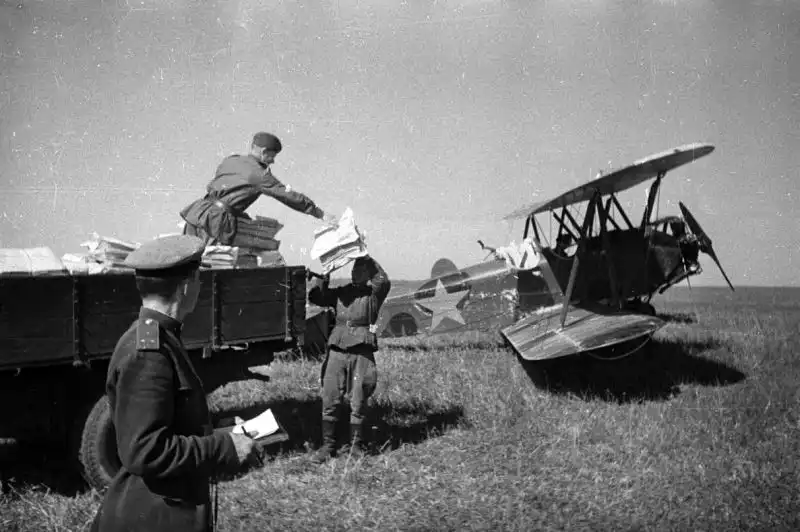
This wartime photograph captures a seemingly ordinary but essential moment: Soviet personnel loading frontline mail and supplies onto a Po-2 (U-2) biplane in 1943. Far from the dramatic scenes of air combat, the image reveals another side of warfare — the enormous logistical effort required to maintain communication between soldiers at the front and the society behind them.
The Po-2: A Simple Aircraft with Many Missions
The Polikarpov Po-2, originally known as the U-2, was one of the most versatile aircraft used by the Soviet Union during World War II. Although outdated compared with modern fighters and bombers, its simplicity, reliability, and ability to operate from small unprepared airfields made it extremely valuable.
During the war, Po-2 aircraft performed many different tasks:
- Night bombing missions against enemy positions
- Liaison and communication flights
- Medical evacuation missions
- Transport of supplies, documents, and frontline mail
The aircraft’s low speed and short takeoff distance allowed it to operate close to the front line, often from primitive airstrips where larger aircraft could not be used.
Frontline Mail: A Connection Between Soldiers and Home
Maintaining communication between soldiers and their families was an important part of wartime morale. Letters from home provided emotional support for men and women serving thousands of kilometers away from their relatives.
Frontline aviation transported not only personal correspondence but also:
- Newspapers and official publications
- Military documents and reports
- Small parcels and essential supplies
- Printed materials for frontline units
For soldiers living under constant danger, receiving mail was often one of the few reminders that normal life still existed beyond the battlefield.
The Hidden Dangers of Frontline Transport Flights
Although mail delivery was not a combat mission, flights near the front were far from safe. Po-2 crews operated close to active fighting areas, where airfields could be shelled or attacked by enemy aircraft.
The pilots and ground crews performing these routine tasks faced the same realities as other frontline personnel: difficult weather conditions, poor visibility, primitive facilities, and the constant possibility of enemy action.
The Photographer: Natalia Bode
The photograph was taken by Natalia Bode, a Soviet wartime photojournalist known for documenting everyday life during the war.
Her photographs often focused not only on battles themselves, but also on the people who supported the war effort: soldiers, workers, medics, and civilians.
This image reflects that documentary approach, showing the less visible side of the Eastern Front.
The Historical Importance of the Photograph
This photograph is valuable because it shows an essential but often overlooked part of military history.
- It documents the logistical systems supporting frontline units
- It illustrates the role of light aviation beyond combat missions
- It shows how communication helped maintain the morale of soldiers during prolonged warfare
The photograph reminds us that wars are not fought only through battles and weapons. They also depend on thousands of daily tasks that keep armies connected, supplied, and functioning.
Technical Photo Data:
📍 Location: USSR
📅 Date: 1943
📝 Subject: Loading frontline mail onto a Soviet Po-2 aircraft
📷 Photographer: Natalia Bode
- Soviet wartime aviation and logistics
- Soviet Po-2 aircraft operations during World War II
- Red Army frontline communications
- Daily life behind the Eastern Front
The loading of mail onto a small Po-2 aircraft may seem insignificant compared with tank battles and air duels, but moments like this reveal the human infrastructure behind victory. A simple letter carried by a small aircraft could become a powerful reminder that soldiers at the front were still connected to the world they were fighting for.