Soviet air defense soldiers keeping night watch on a Moscow rooftop, summer 1941.
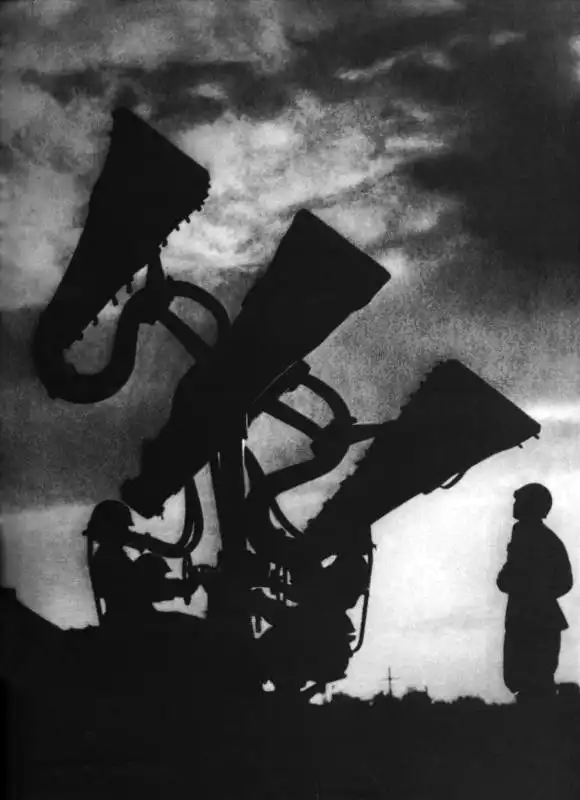
This atmospheric wartime photograph shows soldiers of the Soviet PVO (Protivo-Vozdushnaya Oborona, Air Defense Forces) standing watch on a rooftop in Moscow during the tense summer of 1941. Following the launch of Operation Barbarossa, the Soviet capital faced the growing threat of German air raids, and observation posts became one of the first links in the city's defensive network.
Before the widespread introduction of radar, rooftop observers played a vital role in air defense. Equipped with binoculars, telephones, and acoustic listening devices, they scanned the night sky for approaching aircraft and immediately reported sightings to command centers. Their warnings enabled anti-aircraft batteries, searchlight units, fighter controllers, and civil defense organizations to react as quickly as possible.
Moscow's PVO system rapidly expanded during 1941 into one of the most extensive urban air defense networks of the Second World War. Thousands of soldiers, volunteers, firefighters, and civilian observers worked together to protect factories, government buildings, railway hubs, and residential districts from Luftwaffe bombing attacks.
The dimly lit rooftop captured by photographer Naum Granovsky reflects the atmosphere of wartime blackout regulations. Every unnecessary light was extinguished, while those on watch remained alert throughout the night, knowing that the sound of distant aircraft engines could signal the beginning of another air raid.
Rather than depicting combat itself, the photograph illustrates the constant vigilance that became part of everyday life in wartime Moscow. Long hours of waiting, discipline, and readiness formed an essential but often overlooked element of the Soviet capital's successful defense against German strategic bombing.
Technical Photo Data:
📍 Location: Moscow, USSR
📅 Date: Summer 1941
📝 Subject: Soviet PVO rooftop observation post during the defense of Moscow
📷 Photographer: Naum Granovsky
Recommended literature:
- David M. Glantz – Barbarossa: Hitler's Invasion of Russia 1941
- Richard Overy – Russia's War
- John Erickson – The Road to Stalingrad