Overturned Luftwaffe Ju-87 Stuka dive bomber after a failed landing on a frontline airfield during World War II.
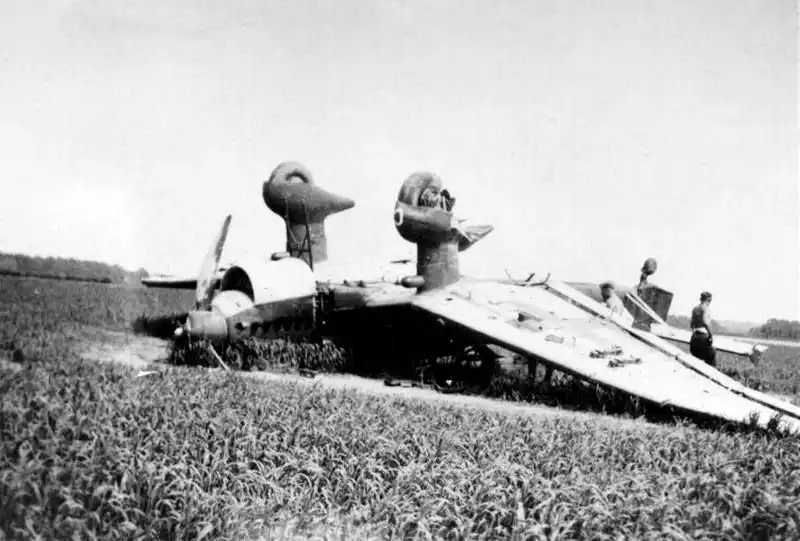
A Stuka Turned on Its Back
This unusual wartime photograph captures a Junkers Ju 87 "Stuka" lying upside down after an unsuccessful landing on a frontline airfield. The aircraft is instantly recognizable by its distinctive inverted gull wings and fixed landing gear, features that made the Stuka one of the most iconic military aircraft of World War II. Although celebrated for its precision in combat, it was by no means immune to the hazards of operating from rough wartime airfields.
The accident was most likely the result of a difficult or emergency landing. On uneven ground, especially after rain or heavy use, the narrow landing gear of the Ju 87 could dig into soft soil or strike an obstacle, causing the aircraft to flip forward. Such incidents occurred more often than many people realize and were a constant risk for Luftwaffe crews operating close to the front.
The Aircraft That Became a Symbol of Blitzkrieg
The Ju 87 earned worldwide fame during the opening campaigns of the war in Poland, France, and the Balkans. Designed specifically for dive bombing, it could attack targets with remarkable accuracy thanks to its dive brakes, which allowed pilots to descend at extremely steep angles before releasing their bombs.
Equally famous was the Jericho-Trompete ("Jericho Trumpet"), a siren mounted on the landing gear legs of many early Stukas. Its piercing howl was intended to intimidate enemy troops and civilians during attacks, making the aircraft as psychologically frightening as it was physically destructive.
From Battlefield Success to Growing Vulnerability
As the war progressed, however, the Stuka's weaknesses became increasingly apparent. It was relatively slow, lacked maneuverability, and depended heavily on fighter protection whenever modern enemy aircraft were present. By 1941 and especially from 1942 onward, faster Soviet and Allied fighters inflicted mounting losses on Ju 87 units, gradually ending the aircraft's period of battlefield dominance.
This overturned bomber serves as a reminder that wartime losses were not caused solely by enemy action. Mechanical failures, exhausted pilots, poor visibility, damaged runways, and improvised frontline airfields all contributed to accidents that could destroy valuable aircraft without a single shot being fired. Every such incident reduced the Luftwaffe's operational strength at a time when replacing experienced crews and specialized aircraft had become increasingly difficult.
Technical Photo Data
Source: Wehrmacht photographic archive (photographer unknown)
Location: Frontline airfield, probably Eastern Front
Date: Approximately 1941–1942
Aircraft: Junkers Ju 87 Stuka dive bomber
Recommended reading:
- Peter C. Smith — Junkers Ju 87 Stuka
- Alfred Price — The Luftwaffe Handbook
- Chris Goss — Luftwaffe Fighter-Bombers over the Eastern Front