German Soldiers Inspect a Shot-Down Soviet SB Bomber, 1941
December 8, 2025 - Reading time: 4 minutes
German soldiers inspecting the wreckage of a downed Soviet SB bomber, 1941.
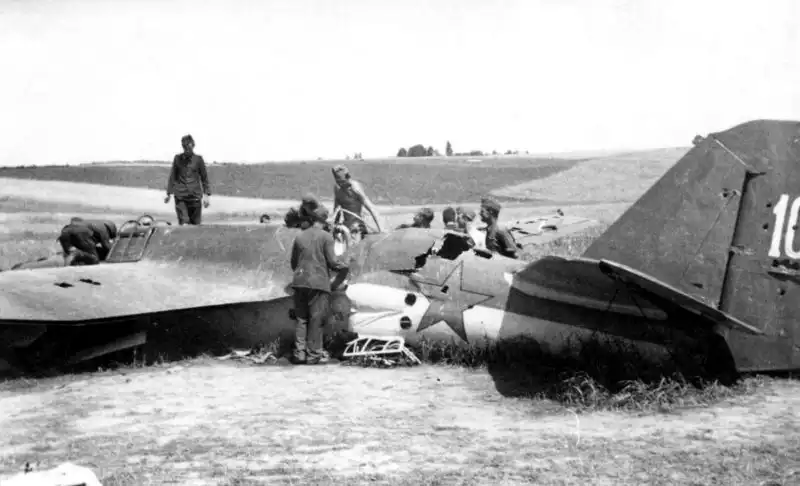
This wartime photograph shows German soldiers examining the wreckage of a shot-down Soviet SB (Skorostnoy Bombardirovshchik — “high-speed bomber”) during the opening phase of the war in 1941. At the time of the German invasion of the USSR, the SB was already considered technically outdated, despite the name that once reflected its advanced performance when it had been designed in the mid-1930s.
By 1941, the SB could no longer outrun modern German fighters. Nevertheless, it still made up around 90% of the Soviet bomber fleet, leaving Soviet Air Force command with no alternative but to use these aircraft intensively during the first months of the war.
SB bombers were often sent on missions without fighter escort, operating under conditions of almost complete German air superiority. Weak defensive armament, limited armor protection, and outdated flight performance made the aircraft extremely vulnerable. Loss rates were catastrophic, and it was not uncommon for entire formations to be lost in a single mission, with no aircraft returning to base.
As newer Soviet bombers gradually entered service, surviving SB aircraft were reassigned to night bombing roles, where their lower speed was less of a disadvantage. In this capacity, they continued to serve until the middle of 1943.
This image captures the harsh technological reality of the early Eastern Front air war, where outdated aircraft and brave crews were thrown into combat against a far more powerful and modern enemy air force.
Technical Photo Data:
📍 Location: USSR
📅 Date: 1941
📝 Subject: Wrecked Soviet SB (Skorostnoy Bombardirovshchik) bomber examined by German troops
📷 Author: Unknown
Skorostnoy Bombardirovshchik
Soviet bomber losses
Luftwaffe air superiority
Eastern Front aviation 1941
Related Pages

Category
Search
Categories
- Unidentified WWII Photos (14)
- World War II Photos 1937 (1)
- World War II Photos 1938 (1)
- World War II Photos 1939 (3)
- World War II Photos 1940 (5)
- World War II Photos 1941 (103)
- World War II Photos 1942 (59)
- World War II Photos 1943 (52)
- World War II Photos 1944 (77)
- World War II Photos 1945 (41)
- WWII and Postwar Photos 1946 (1)