Remarkable group photograph of the Royal New Zealand Air Force No. 6 Flying Boat Squadron personnel posing on and around a Consolidated PBY-5 Catalina at Halavo Bay, Solomon Islands, 1944.
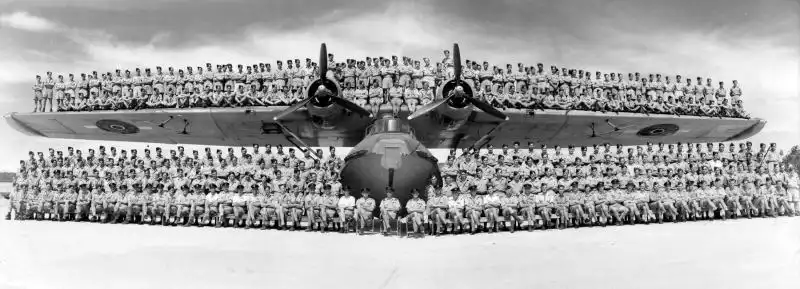
RNZAF No. 6 Flying Boat Squadron at Halavo Bay (1944):
This extraordinary panoramic group photograph from 1944 captures the entire personnel of the Royal New Zealand Air Force (RNZAF) No. 6 Flying Boat Squadron gathered around and sitting atop a Consolidated PBY-5 Catalina patrol bomber at Halavo Bay, Florida Island (Solomon Islands).
Operating in support of Allied naval and amphibious campaigns in the Pacific Theater, No. 6 Squadron performed critical maritime reconnaissance, anti-submarine patrols, and air-sea rescue (ASR) missions during the Solomon Islands campaign.
Structural Engineering: Wing Loading of the PBY-5 Catalina:
The photograph serves as a visual testament to the exceptional structural integrity of the Consolidated PBY-5 design:
- High-Wing Parasol Configuration: The Catalina featured an iconic high-mounted parasol wing supported by internal central struts and external streamline bracing. With a massive wingspan of 104 feet (31.7 meters) and a wing area of 1,400 square feet, the airframe was engineered to handle immense dynamic loads during rough-water landings.
- Weight Capacity: Designed for maximum takeoff weights exceeding 35,000 lbs (16,066 kg) including heavy fuel loads, depth charges, and torpedoes, the main wing spar easily supported the combined weight of over 100 servicemen lined up along the leading and trailing edges.
- Export Variants (PBY-5): The PBY-5 was the non-amphibious pure flying-boat variant supplied extensively via Lend-Lease and direct purchase contracts to Allied air forces, including Great Britain, Canada (Canso), Australia, New Zealand, France, and the Netherlands.
Operational Role in the Solomon Islands Campaign:
Based at Halavo Bay, RNZAF flying boat squadrons maintained constant surveillance over contested sea lanes:
- "Dumbo" Air-Sea Rescue Operations: RNZAF Catalina crews frequently landed in open ocean under hazardous conditions or enemy fire to rescue downed Allied aviators and shipwrecked naval personnel.
- Black Cat Night Patrols: Painted in matte black camouflage finishes, modified Catalinas conducted nocturnal radar-guided anti-shipping strikes and night harassment bombing runs against Japanese supply barges (the "Tokyo Express").
📍 Location: Halavo Bay, Florida Island, Solomon Islands
📅 Date: 1944
📷 Photographer: Official RNZAF Photographer / Unknown
📰 Primary Source: Air Force Museum of New Zealand Archival Collection
Recommended reading:
- Combat history of RNZAF No. 6 Flying Boat Squadron in the Pacific
- Structural design and flight characteristics of the Consolidated PBY-5 Catalina
- Allied Air-Sea Rescue ("Dumbo") missions in the Solomon Islands (1943–1944)
- Lend-Lease aircraft deliveries to the Royal New Zealand Air Force