Dramatic historical photograph capturing a burning Boeing B-29 Superfortress of the 29th Bombardment Group plummeting after a Japanese fighter attack in 1945.
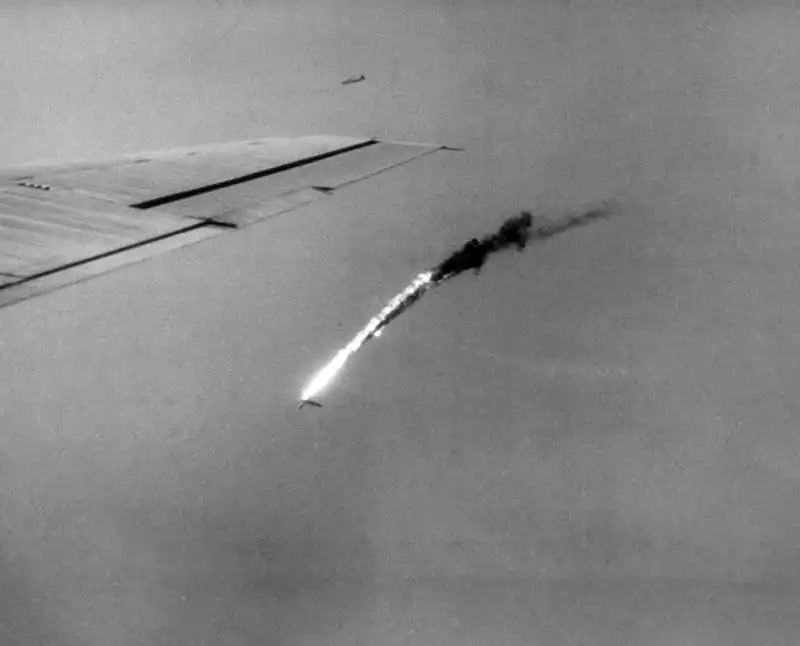
Downed B-29 Superfortress: Pacific Aerial Combat (1945):
This harrowing air-to-air photograph from 1945 captures the final moments of a Boeing B-29 Superfortress heavy bomber trailing a massive streak of fire and dense smoke after sustaining catastrophic damage during a daylight raid in the Pacific Theater.
Assigned to the 29th Bombardment Group (Very Heavy) of the 314th Bombardment Wing, 20th Air Force, the aircraft was photographed from the cockpit window of an adjacent formation bomber as it plummeted toward the ocean.
Historical Location and Combat Attribution Theories:
Archival sources present two primary historical attributions regarding the exact mission and location of this shoot-down:
- Marianas Islands Transit Sector: Early photographic records identify the scene near the Mariana Islands (Guam, Saipan, and Tinian), where 20th Air Force bomber groups assembled before and after high-altitude strategic bombing strikes against the Japanese mainland.
- Shimonoseki Strait Mining Operations: Alternative USAAF casualty logs link the loss specifically to strategic raids over the Shimonoseki Strait and mainland Japan. Records indicate the 29th Bombardment Group suffered verified combat losses in this target sector during missions executed on May 28, 1945, and July 9, 1945.
B-29 Production and Operational Losses:
The B-29 Superfortress was the most technologically advanced heavy bomber of World War II, featuring pressurized cabins, remote-controlled gun turrets, and high-altitude turbocharged engines:
- Production Figures: Between 1943 and 1946, American manufacturing plants produced a total of 3,970 B-29 aircraft (including variants produced by Boeing, Bell, and Martin).
- Vulnerability to Engine Fires: Powered by four Wright R-3350 Duplex-Cyclone radial engines, early production models were notoriously susceptible to magnesium engine fires when operating under extreme stress or when struck by enemy cannon fire.
- Strategic Impact: Despite heavy defensive armament, Japanese Army and Navy night fighters equipped with upward-firing slanted cannons and dedicated ramming units (Shinten Seikotai) posed severe threats to isolated or damaged bombers separating from formation.
📍 Location: Mariana Islands / Shimonoseki Strait, Japan
📅 Date: May–July 1945
📷 Photographer: USAAF Combat Camera Crew (20th Air Force)
📰 Primary Source: US National Archives / 20th Air Force Combat Reports
Recommended reading:
- Combat history of the 29th Bombardment Group (20th Air Force)
- Japanese interceptor tactics against USAAF B-29 Superfortress formations
- Strategic aerial mining operations in the Shimonoseki Strait (Operation Starvation)
- Engine reliability and magnesium fire hazards in the Wright R-3350 Duplex-Cyclone