A rare German Dornier Do 24N-1 flying boat sitting on the water, summer 1941. Only 11 units of this Wright Cyclone-powered variant were ever built.
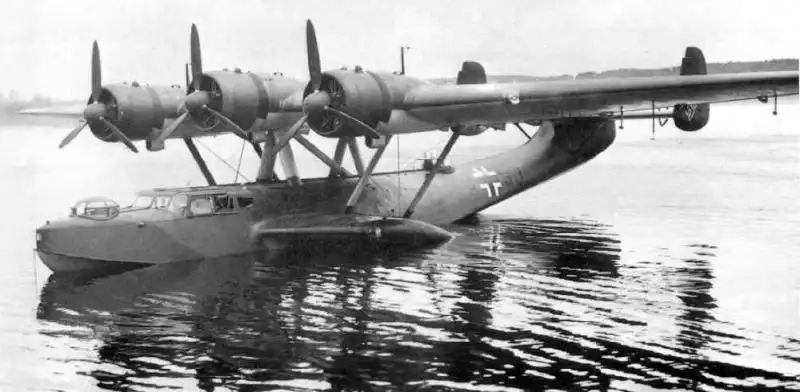
Rare German Dornier Do 24N-1 Flying Boat on the Water:
This remarkable photograph showcases a rare German Dornier Do 24N-1 flying boat resting on calm waters in Germany during the summer of 1941. Renowned for its exceptional seaworthiness, three-engine layout, and distinct hull design with broad lateral stabilization sponsons ("stub wings"), the Do 24 was widely regarded as one of the finest maritime reconnaissance and air-sea rescue aircraft of the World War II era.
While the standard production versions of the Do 24 were manufactured in large numbers, the N-1 variant captured in this image represents an extremely scarce and historically fascinating sub-series within the Luftwaffe's maritime inventory.
Dutch Origins and the Wright Cyclone Engines:
The story of the Do 24N-1 is intimately connected to the German occupation of the Netherlands in May 1940. Before the outbreak of war, the Royal Netherlands Naval Air Service (Marine-Luchtvaartdienst) had licensed the Do 24 design for service in the Dutch East Indies, placing orders for Dutch aviation factories (Aviolanda and Fokker) to assemble the flying boats locally using imported American Wright R-1820-G102 Cyclone radial engines.
When German forces occupied Dutch aviation plants, they discovered a small batch of uncompleted airframes along with a limited stock of imported Wright Cyclone engines. The German Ministry of Aviation (RLM) ordered these airframes completed using the available American powertrains, resulting in the production of only 11 aircraft designated as the Do 24N-1.
Air-Sea Rescue (Seenotdienst) Operations:
Because the Do 24N-1 lacked standard German Bramo 323 engines and standardized ammunition supply chains, the Luftwaffe assigned these 11 unique aircraft primarily to specialized maritime duties rather than combat patrol missions:
- Air-Sea Rescue (Seenotdienst): Equipped with medical gear, inflatable dinghies, and emergency survival kits, the Do 24N-1 served as a long-range rescue plane, picking up downed Allied and German aircrews floating in the chilly waters of the North Sea, Baltic Sea, and English Channel.
- Transport and Logistics: Its spacious hull allowed for transporting high-priority military cargo, naval personnel, and emergency medical evacuations between coastal air bases.
Initially painted in unarmed civilian-style white air-sea rescue schemes with red cross markings, many were later retrofitted with camouflage patterns and light defensive machine guns as war conditions intensified in northern Europe.
Legacy of the Dornier Do 24 Design:
Despite the rarity of the N-1 sub-variant, the overall Dornier Do 24 platform proved so robust and mechanically reliable that production continued throughout the war using German Bramo engines (the T-series). Over 270 Do 24s were built in total, serving not only Germany but also neutral Spain and post-war French naval aviation well into the 1950s.
The aircraft's deep-V hull and broad sponsons allowed it to operate in rough open-sea conditions that would severely damage or capsize most other wartime flying boats, solidifying its reputation as a masterpiece of nautical aviation engineering.
📍 Location: Germany
📅 Date: Summer 1941
📷 Photographer: Unknown
Recommended reading:
- Dutch license production of the Dornier Do 24 in Aviolanda
- The history and tactics of the German Seenotdienst (Air-Sea Rescue)
- American Wright R-1820 Cyclone engines in European service
- Post-war operational service of the Dornier Do 24 in Spain and France