Japanese fighter pilots pose with a Kawasaki Ki-61 Hien during the desperate air defense of the Japanese home islands in 1945.
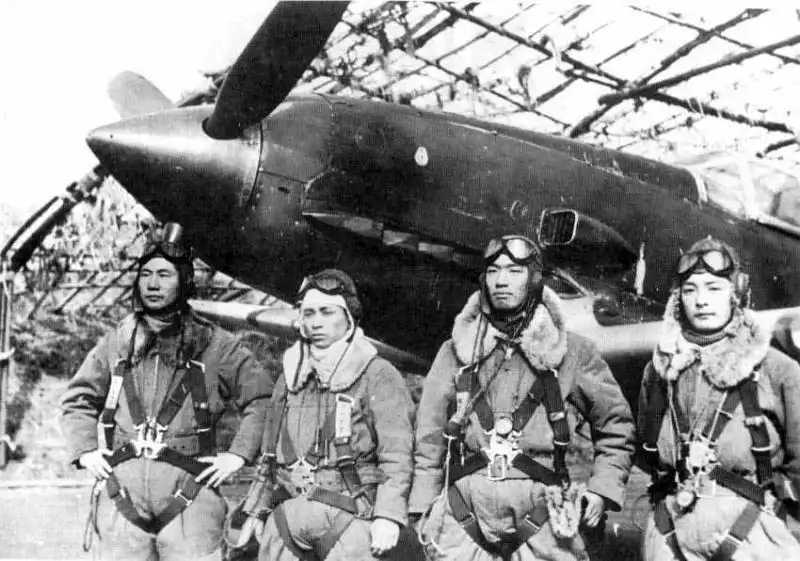
This remarkable photograph shows four Japanese fighter pilots posing beside a Kawasaki Ki-61 Hien fighter aircraft before a combat mission during the final months of World War II. By 1945, Japan's military situation had become increasingly desperate as American bombers appeared in ever-growing numbers over the home islands.
For these airmen, every takeoff carried the possibility of being their last.
Defending the Japanese Homeland:
By 1945, the air war over Japan had entered a new phase. American B-29 Superfortress bombers were conducting large-scale attacks against Japanese cities, industrial centers, ports, and transportation networks.
The Imperial Japanese Army Air Force faced the difficult task of intercepting these high-altitude bombers despite dwindling fuel supplies, shortages of experienced pilots, and growing material losses.
Photographs such as this one capture a brief moment of calm before combat. The pilots stand confidently beside their aircraft, unaware of what the coming mission will bring.
The Kawasaki Ki-61 Hien:
The aircraft visible in the photograph is a Kawasaki Ki-61 Hien, known to the Allies by the reporting name "Tony."
The Ki-61 was one of the most unusual Japanese fighters of the war. Unlike many Japanese aircraft that relied on air-cooled radial engines, the Hien used a liquid-cooled inline engine derived from German technology.
Its Kawasaki Ha-140 powerplant was developed from the German Daimler-Benz DB 601A engine produced under license in Japan. This heritage is clearly visible in the aircraft's appearance, particularly the streamlined nose, exhaust arrangement, and overall silhouette, which gave it a profile more reminiscent of contemporary German fighters than traditional Japanese designs.
The result was a fast and heavily armed interceptor well suited for combating Allied aircraft.
A Fighter for a Changing War:
When the Ki-61 first entered service, it represented a significant step forward for Japanese aviation. The aircraft combined good speed, respectable firepower, and better protection than many earlier Japanese fighters.
However, by 1945 the situation facing Japan had changed dramatically. Allied air superiority was overwhelming, and even capable aircraft like the Ki-61 struggled against the growing numbers of American fighters escorting B-29 formations.
Maintenance also became increasingly difficult. The sophisticated liquid-cooled engines required resources and spare parts that were becoming scarce as the war turned against Japan.
Nevertheless, many Ki-61 units continued fighting until the very end of the conflict.
The Human Side of the Air War:
What makes this photograph particularly compelling is the presence of the pilots themselves. Wartime aviation photographs often focus on aircraft, but here the men take center stage.
Their expressions appear calm and composed, yet the reality behind the image was harsh. Japanese fighter pilots in 1945 faced overwhelming odds. They were defending a nation under constant attack while confronting an enemy that possessed superior numbers, abundant fuel, and a vast industrial base.
For many Japanese airmen, simply reaching the bomber formations was a challenge. Returning safely was never guaranteed.
A Snapshot of Japan's Final Air Defense:
This photograph captures a fleeting moment during the final chapter of the Pacific War. The Ki-61 Hien standing behind the pilots symbolizes Japan's efforts to resist Allied air power, while the men themselves represent the determination of those who continued flying despite increasingly unfavorable circumstances.
Today the image serves as a reminder that behind every aircraft stood a crew of individuals facing uncertainty, danger, and the immense pressures of a war that was rapidly approaching its conclusion.
📍 Location: Japan
📅 Date: 1945
📷 Photographer: Unknown
Recommended Reading:
- Richard M. Bueschel — Kawasaki Ki-61 Hien and Ki-100
- René J. Francillon — Japanese Aircraft of the Pacific War
- Henry Sakaida — Imperial Japanese Army Aces 1937–45
- Osamu Tagaya — Ki-44 "Tojo" Aces of World War 2
- Carl Molesworth — Japanese Army Air Force Fighter Units and Their Aces 1931–1945
- Barrett Tillman — Whirlwind: The Air War Against Japan 1942–1945