A rare photograph showing an assembly accident involving a Boeing B-29 Superfortress at an American aircraft factory in March 1945.
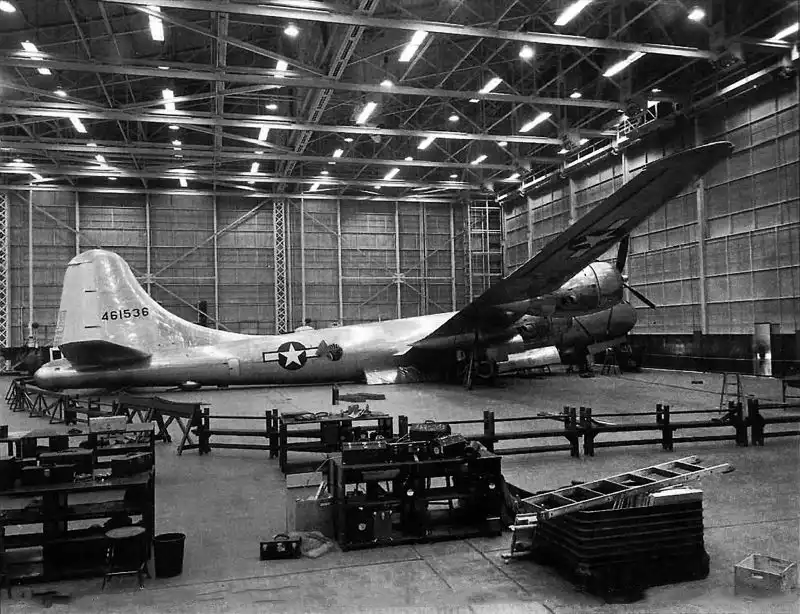
This unusual photograph captures an industrial accident rather than a combat scene.
The aircraft shown is Boeing B-29A-35-BN Superfortress, serial number 44-61536, during the final stages of assembly at an American aircraft factory on 23 March 1945.
While the bomber was resting on maintenance jacks, the support beneath the left wing slipped, causing the aircraft to tilt and sustain structural damage before it had even entered operational service.
What Happened?
At the time of the accident, the B-29 was supported by several heavy jacks used during assembly and inspection.
When the jack beneath the left wing failed or slipped out of position, part of the aircraft's weight shifted suddenly.
As a result, the No. 1 engine nacelle, the propeller, the left wingtip, and the bomb bay doors were damaged.
Although the incident appears dramatic, it was a factory accident rather than the result of sabotage or enemy action.
Building the Most Advanced Bomber of Its Time:
The Boeing B-29 was among the most technologically sophisticated aircraft produced during the Second World War.
It incorporated pressurized crew compartments, remotely controlled defensive gun turrets, advanced fire-control systems, and four powerful radial engines. Manufacturing such an aircraft required exceptional precision and thousands of individual components.
During the peak of production, American factories assembled B-29s at an extraordinary pace, employing tens of thousands of workers across multiple facilities.
With such a massive industrial effort, occasional accidents were almost inevitable.
American Industrial Standards:
One particularly striking aspect of the photograph is the orderly appearance of the factory floor.
The aircraft is surrounded by organized work areas, specialized equipment, and carefully arranged production stations, reflecting the high manufacturing standards developed by the American aviation industry during the war.
Such efficiency enabled damaged aircraft to be repaired quickly and production schedules to continue with minimal disruption, despite incidents like this one.
The photograph offers a rare glimpse into the industrial system that made the large-scale production of complex combat aircraft possible.
The Factory Behind the Front Lines:
Combat photographs often focus on aircrews and missions over enemy territory, yet every operational B-29 represented thousands of hours of engineering, manufacturing, inspection, and testing performed far from the battlefield.
Without the enormous industrial capacity of the United States—and the skilled workers who built these aircraft—the strategic bombing campaign against Japan could never have reached the scale it ultimately achieved.
This image serves as a reminder that victory depended not only on those who flew combat missions but also on the engineers, mechanics, and factory workers who built and maintained the machines of war.
📍 Location: United States
📅 Date: 23 March 1945
📷 Photographer: Unknown
Recommended Reading:
- Robert A. Mann — The B-29 Superfortress: A Comprehensive Registry
- René J. Francillon — McDonnell Douglas Aircraft Since 1920
- Steve Pace — Boeing B-29 Superfortress
- David Doyle — B-29 Superfortress in Detail & Scale
- T.A. Heppenheimer — America's Aircraft Factories During World War II
- Richard Overy — Why the Allies Won