Rare 1943 propaganda photograph from the occupation newspaper Severnoye Slovo showing young translator Kostya Slonov outside the German labor office (Arbeitsamt) in Strugi Krasnye.
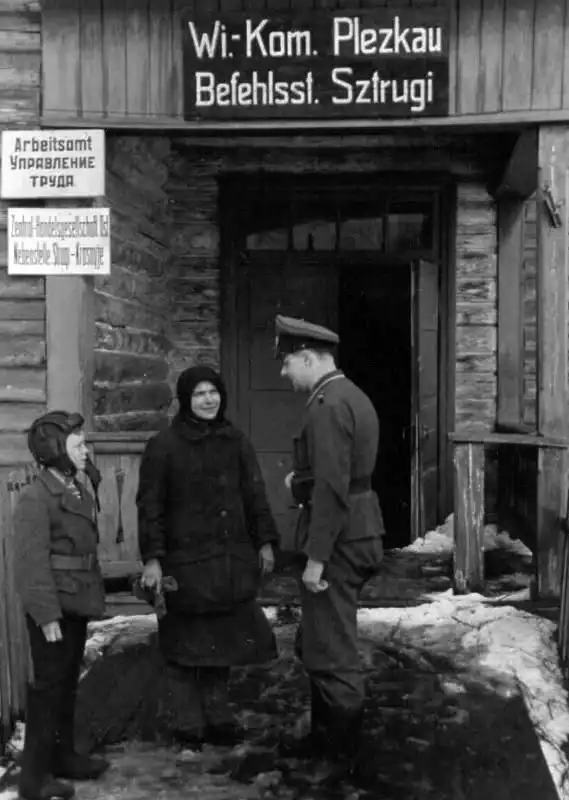
Young Translator Kostya Slonov in Occupied Strugi Krasnye (1943)
This historical photograph was originally published in 1943 in the German-sponsored occupation newspaper Severnoye Slovo ("Northern Word"), circulated across occupied regions of Northwestern USSR. The image depicts a young boy named Kostya Slonov, described by wartime press as a local translator assisting residents during interactions with German military authorities in the settlement of Strugi Krasnye (then Leningrad Oblast, now Pskov Oblast).
The original newspaper caption framed the youth as a helpful intermediary, serving as part of broader Axis propaganda efforts aimed at encouraging civilian cooperation with occupation administrative offices.
Occupation Administration and Signage Analysis
The background of the photograph provides exceptional detail regarding the structure of the German civil and economic administration in Northwestern Russia:
- Wirtschaftskommando Sign: The main sign above the entrance reads "Wi.-Kom. Pleskau / Befehlsst. Sztrugi" (Economic Command Pskov, Command Post Strugi), indicating the local oversight body responsible for requisitioning food supplies and resources for the Wehrmacht.
- Arbeitsamt (Labor Office): The bilingual sign on the left reads "Arbeitsamt / Управление труда". These labor offices registered local civilians for mandatory labor service and coordinated forced labor transportations (Ostarbeiter).
- Zentral-Handelsgesellschaft Ost: The lower sign identifies a branch of the Central Trade Company East, the monopoly organization tasked with managing agricultural yield across occupied Eastern territories.
- Uniform Elements: Kostya Slonov wears a striking mix of civilian clothing and captured Soviet military gear, including a Red Army tanker's padded helmet (shlemofon), a military waist belt, and a striped naval undershirt (telnyshka).
Historical Context and Wartime Media
The publication of such human-interest stories in occupation media served specific propaganda purposes during late 1943:
- Occupied Press Operations: Published in Narva, Severnoye Slovo targeted Soviet citizens behind the front lines, attempting to downplay occupation hardships as Red Army counter-offensives closed in on the region.
- Post-Liberation Fate: Following the liberation of Strugi Krasnye by Soviet forces in February 1944 during the Leningrad–Novgorod Offensive, publication of the newspaper ceased, leaving no official archival record regarding Kostya Slonov's subsequent fate.
📍 Location: Strugi Krasnye, Pskov Oblast (formerly Leningrad Oblast), USSR
📅 Date: 1943
📷 Photographer: Unknown (Published in Severnoye Slovo / Propaganda Company Correspondent)
📰 Primary Source: Russian State Archive of Socio-Political History (RGASPI) / WWII Press Archives
Recommended reading:
- Structure and function of the German Arbeitsamt (Labor Offices) in occupied USSR
- German occupation administration: Wirtschaftskommando and Economic Commands
- Propaganda press on the Eastern Front: The history of Severnoye Slovo (1942–1944)
- Liberation of Pskov Oblast during the Leningrad–Novgorod Offensive (1944)