Two abandoned Soviet T-34-76 tanks left behind during the Red Army retreat in the summer of 1941, showing the challenges faced by Soviet armored units during the opening phase of the Eastern Front.
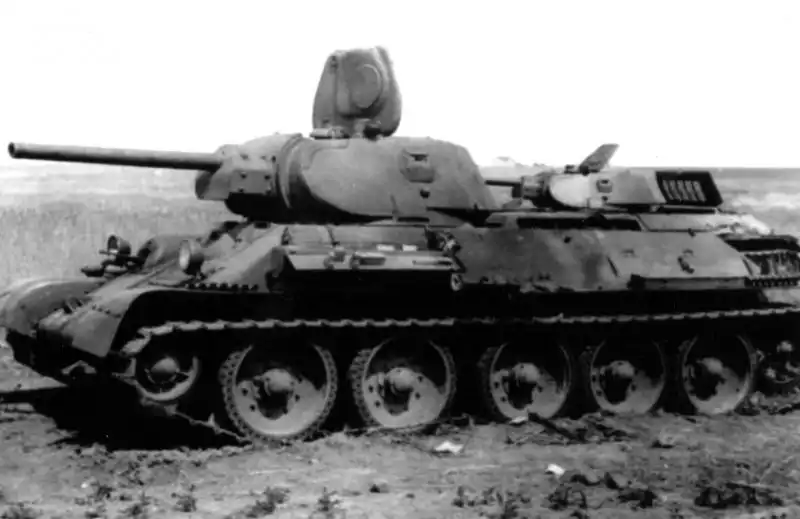
Two Abandoned Soviet T-34-76 Tanks During the Retreat of 1941:
This wartime photograph shows two Soviet T-34-76 medium tanks standing abandoned in open steppe terrain during the summer of 1941, at the beginning of the German invasion of the Soviet Union. The image reflects one of the most difficult periods of the Eastern Front, when Red Army units were forced into rapid retreats under intense enemy pressure.
The tanks appear to have been abandoned rather than destroyed in direct combat. Possible reasons include mechanical failure, lack of fuel, damaged components, or the inability of crews to recover vehicles during a fast-moving withdrawal.
Photo Information:
- Location: USSR
- Date: Summer 1941
What the Photo Shows:
The photograph captures two early T-34-76 tanks standing intact in open terrain. There are no visible signs of an active battlefield position, suggesting that these vehicles were left behind during a difficult operational situation rather than immediately destroyed by enemy fire.
Such scenes became common during the summer of 1941, when Soviet armored units faced:
- Rapid German advances deep into Soviet territory
- Breakdowns in supply and repair systems
- Shortages of fuel and spare parts
- Limited availability of recovery vehicles
During the chaotic first months of the war, crews sometimes had no choice but to abandon even modern tanks when evacuation became impossible.
Early Production T-34-76: Features of the 1940–1941 Vehicles:
The tanks shown in the photograph appear to belong to the early production series of the T-34-76, manufactured before wartime production was fully standardized.
Visible Characteristics:
- F-34 76.2 mm main gun
- Early welded turret design
- Early hull construction features
- Sloped armor layout that became a defining feature of the T-34
These early vehicles represented a revolutionary design concept, combining armor protection, mobility, and firepower in a way that influenced tank development worldwide.
The Red Army Retreat in Summer 1941:
The summer of 1941 was a period of severe crisis for Soviet forces. The German invasion created enormous pressure on Red Army formations, resulting in:
- Large-scale encirclements
- Losses of manpower and equipment
- Disrupted communications
- Difficulty maintaining supply and repair networks
Even advanced tanks like the T-34 could become ineffective if they lacked fuel, maintenance, or properly organized support.
Why Tanks Were Abandoned:
Although crews were often ordered to disable equipment before abandoning it, battlefield conditions frequently made this impossible.
- There was often no time for demolition procedures
- Enemy pressure forced immediate withdrawal
- Saving trained crews was more important than saving damaged vehicles
- Some tanks were abandoned with the hope of later recovery
Many abandoned vehicles later became trophies, repair sources, or battlefield landmarks showing the scale of early-war losses.
The T-34-76: A Revolutionary Tank Facing Wartime Reality:
The T-34-76 was one of the most advanced tanks of 1941. Its main advantages included:
- Strong sloped armor
- Powerful 76.2 mm gun
- Excellent cross-country mobility
However, early-war conditions exposed serious challenges:
- Mechanical problems in early production vehicles
- Limited numbers of trained crews
- Insufficient repair infrastructure
- Problems with coordination and logistics
The result was that many T-34 tanks were lost not only in combat, but also because of operational difficulties.
Historical Significance of the Image:
This photograph is important because it shows:
- The material losses suffered during the first months of the Eastern Front
- Early production T-34-76 tanks in frontline conditions
- The difference between technical potential and battlefield reality
- The importance of logistics and maintenance in armored warfare
The image demonstrates that even the most advanced military technology depends on fuel, repair, supply systems, and effective organization.
Conclusion:
The photograph of two abandoned Soviet T-34-76 tanks during the summer retreat of 1941 captures one of the harsh realities of the opening phase of World War II on the Eastern Front. These advanced armored vehicles represented the future of tank warfare, yet they could still be lost when faced with overwhelming operational challenges, disrupted logistics, and the chaos of rapid retreat.