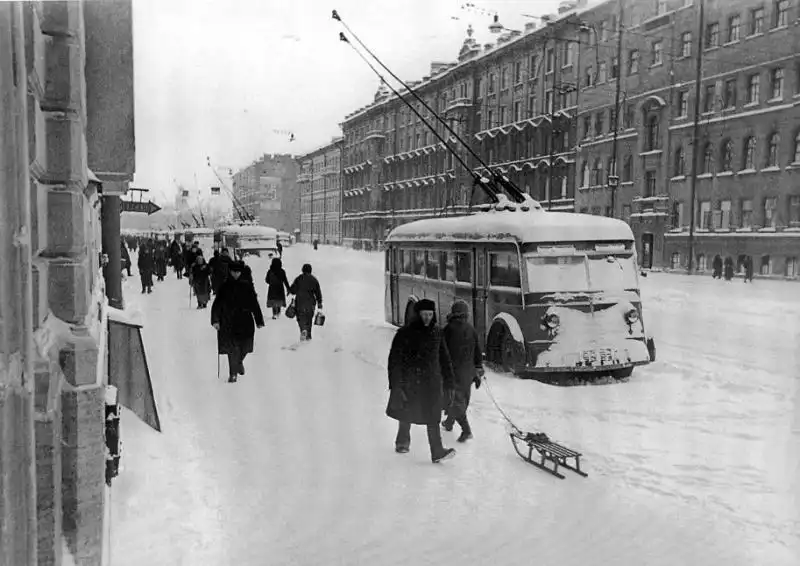
Frozen YaTB-1 trolleybuses stand abandoned on snow-covered Nevsky Prospect in besieged Leningrad during the harsh winter of the Siege of Leningrad. The photograph reflects the collapse of the city's electric transport system after the failure of the power supply during the blockade.
Frozen Transport in a Besieged City:
This powerful wartime photograph shows abandoned YaTB-1 trolleybuses standing in the middle of Nevsky Prospect in besieged Leningrad.
The vehicles were part of the city's electric public transportation system before the war. Under normal conditions, trolleybuses carried thousands of passengers every day along the central streets of Leningrad.
During the Siege of Leningrad, however, the urban transport network gradually collapsed. The photograph captures a haunting scene: the once-busy Nevsky Prospect is covered with snow, while trolleybuses remain frozen in place after the electricity supply failed.
The Collapse of Urban Infrastructure:
During the early months of the Siege of Leningrad, the city's infrastructure faced enormous pressure.
German bombing raids, artillery shelling, and shortages of fuel damaged energy networks and disrupted power generation. Electricity production became increasingly difficult under the conditions of the blockade.
During the severe winter of 1941–1942, power supplies to many areas of the city were interrupted. When electricity disappeared, trolleybuses operating on the streets could no longer move because they depended entirely on overhead electrical lines.
Why the Trolleybuses Remained on the Streets:
Under normal circumstances, disabled vehicles would have been returned to depots for repair. However, during the winter of the siege, Leningrad faced an unprecedented crisis.
There were simply no resources available to remove abandoned vehicles:
- fuel supplies were critically limited
- transport vehicles were required for military purposes
- many workers were mobilized or weakened by starvation
- streets were covered with deep snow and ice
As a result, many trolleybuses remained where they had stopped. Some stood in the streets for months, gradually becoming covered with snow and ice.
Nevsky Prospect During the Blockade:
Nevsky Prospect was the main avenue of Leningrad and one of the city's most important transportation routes.
Before the war, the street was filled with trams, trolleybuses, automobiles, and pedestrians. During the siege, however, its appearance changed dramatically.
Air raid alarms became common, artillery shells struck nearby buildings, and residents moved carefully through the streets while searching for food and carrying out essential tasks. Public transportation almost completely disappeared as the city's power system failed.
The abandoned trolleybuses standing on the snow-covered avenue became one of the most recognizable symbols of the destruction and hardship caused by the blockade.
The Winter of 1941–1942:
The winter of 1941–1942 was one of the most difficult periods in the history of Leningrad.
Temperatures fell far below freezing, heating systems stopped functioning in many buildings, water pipes froze, and electricity became unreliable.
Food supplies were reduced to extremely low levels, and hundreds of thousands of residents suffered from starvation and disease.
Despite these conditions, the population continued to defend and maintain the city. Factories produced military equipment, hospitals treated wounded soldiers, and civil defense workers attempted to preserve essential services.
A Silent Witness to the Siege:
The abandoned trolleybuses in this photograph became silent witnesses to one of the darkest periods of the Siege of Leningrad.
Their frozen silhouettes on Nevsky Prospect symbolize the sudden interruption of normal urban life caused by war.
What had once been a busy transportation system serving workers and residents became a row of motionless vehicles trapped in snow and ice.
Today, photographs like this help historians understand how deeply the siege affected everyday life in Leningrad.
Historical Photograph Information:
Location: Leningrad, USSR
Date: Winter 1941
Photographer: David Trakhtenberg
Recommended Books on the Siege of Leningrad:
Readers interested in learning more about the history of the blockade may find the following books valuable:
1. The 900 Days: The Siege of Leningrad — Harrison E. Salisbury
A classic historical account based on eyewitness testimonies and archival research.
2. Leningrad: State of Siege — Michael Jones
A detailed narrative focusing on the daily struggles of civilians during the blockade.
3. Leningrad: The Epic Siege of World War II, 1941–1944 — Anna Reid
A modern historical study based on personal diaries and archival documents.
4. The Siege of Leningrad 1941–1944 — David M. Glantz
A detailed military analysis of the operations surrounding the city during the siege.