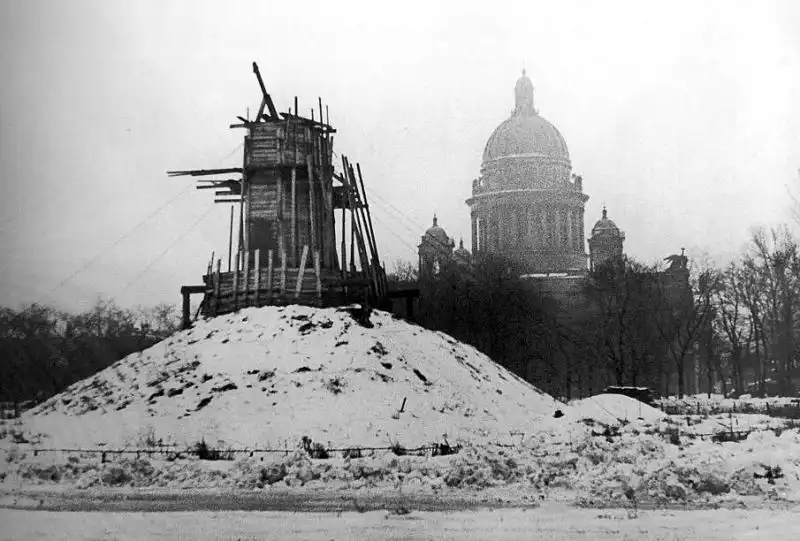
The Bronze Horseman monument in Leningrad is protected with wooden shields and sandbags during the Siege of Leningrad. The photograph reflects the efforts of residents to preserve the city's cultural heritage while enduring artillery bombardments, hunger, and the harsh winter of 1941.
Protecting a Symbol of the City:
This wartime photograph shows the famous Bronze Horseman monument in Leningrad covered with wooden shields and sandbags to protect it from artillery shells and aerial bombs during the siege.
The monument, depicting Peter the Great on horseback, was one of the most recognizable symbols of the city. During the early months of the Siege of Leningrad, authorities took extraordinary measures to prevent its destruction. Wooden boards, sandbags, and protective barriers were placed around the statue to reduce the effects of explosions and flying fragments.
Life in Leningrad During the Siege:
By autumn 1941, German and Finnish forces had surrounded Leningrad. Artillery bombardments and air raids became a daily reality for the city's population.
Residents faced severe shortages of food, fuel, and heating. As winter approached, many people struggled to find firewood for their homes. Some of the wooden boards used to protect the Bronze Horseman were removed by residents to provide fuel for heating.
“He is not cold, but we will warm ourselves.”
This phrase reflected both the extreme conditions faced by civilians and their ability to maintain a sense of humor even during one of the darkest periods of the siege.
The Monument Under Siege:
The Bronze Horseman had long represented St. Petersburg's historical and cultural identity. Protecting it during wartime demonstrated the determination of the city's residents to preserve their heritage despite the constant threat of destruction.
Wooden shields and sandbags helped protect the bronze statue from artillery fragments and blast waves. At the same time, the protective structure itself became a powerful symbol of civilian endurance and resilience.
Urban Life Amid Cultural Preservation:
During the siege, the preservation of historical monuments existed alongside the daily struggle for survival. Residents had to make difficult choices between immediate needs and protecting cultural landmarks.
- Using available wooden materials for heating during the winter
- Maintaining streets and public spaces under bombardment
- Continuing cultural and educational activities despite the blockade
Photographs like this reveal the difficult balance between human survival and the preservation of historical memory.
A Lasting Symbol:
The Bronze Horseman during the siege remains a symbol of endurance and cultural continuity. Even while facing cold, starvation, and constant shelling, Leningrad's residents attempted to maintain their connection with the city's history and identity.
The photograph provides historians with valuable evidence of how civilians adapted to extreme wartime conditions while protecting important cultural landmarks.
Historical Photograph Information:
Location: Leningrad, USSR
Date: Autumn 1941
Photographer: David Trakhtenberg
Recommended Books on the Siege of Leningrad:
For readers interested in civilian experiences and the preservation of cultural heritage during the siege, the following works are recommended:
1. The 900 Days: The Siege of Leningrad — Harrison E. Salisbury
A classic account of the blockade based on eyewitness testimony and archival sources.
2. Leningrad: State of Siege — Michael Jones
A detailed narrative focusing on civilian life and urban resilience under bombardment.
3. Leningrad: The Epic Siege of World War II, 1941–1944 — Anna Reid
A modern historical study of the siege, including the experiences of civilians.
4. The Siege of Leningrad 1941–1944 — David M. Glantz
A detailed military analysis providing context on urban conditions and defensive measures during the blockade.