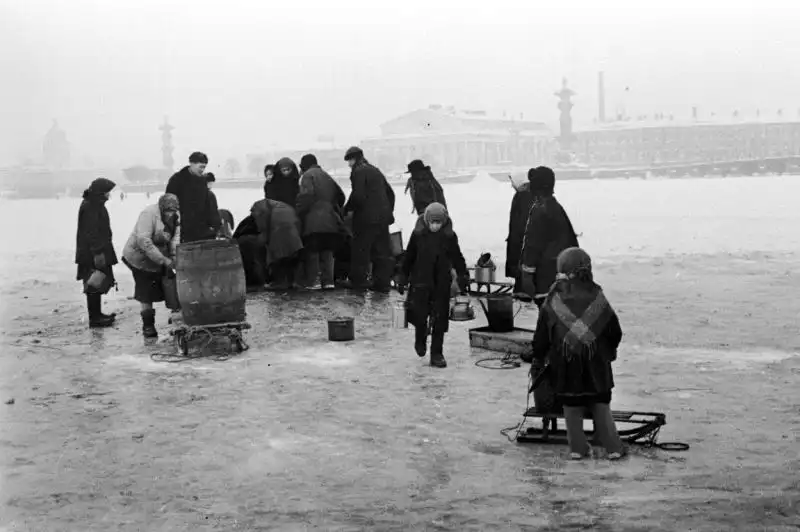
Residents of Leningrad draw drinking water directly from the Neva River during the winter of 1941. The photograph illustrates the harsh conditions faced by civilians during the early months of the Siege of Leningrad.
Survival Amid Frozen Waters:
This wartime photograph shows residents of besieged Leningrad collecting drinking water from the Neva River during the winter of 1941.
With electricity cut off, water pumps disabled, and the municipal water supply system severely damaged, citizens were forced to rely on the river itself for their daily needs. Water from the Neva became a vital resource in an increasingly desperate situation.
Water Crisis in the Siege:
The Siege of Leningrad began in September 1941, quickly cutting off regular supply routes to the city.
By winter, access to safe drinking water became increasingly difficult because of several major problems:
- Electricity for water pumps was unavailable
- Pipes and water mains froze in sub-zero temperatures
- Sewage and sanitation systems were disrupted
Under these conditions, millions of residents depended on natural sources such as the Neva River for drinking and cooking water. People often had to stand in long queues to fill containers, facing freezing temperatures and the constant danger of artillery fire along the riverbanks.
Daily Life Under Siege:
Collecting water from the river became part of everyday survival in Leningrad. Civilians carried buckets, pails, and improvised containers while struggling through snow and ice to obtain one of the most basic necessities of life.
This photograph captures the resourcefulness and determination of the Leningrad population. Despite starvation, bombardments, and extreme cold, residents continued performing the daily tasks required to survive.
Public Health Challenges:
Using water directly from the Neva River created additional risks:
- Contamination from urban debris and pollution
- Exposure to freezing temperatures and hypothermia
- Difficulties transporting heavy water containers through snow-covered streets
However, for many residents these dangers were unavoidable. When the city infrastructure failed, the Neva River became one of the few available sources of water that helped sustain civilians during the harsh winter of the blockade.
Symbol of Civilian Endurance:
Images like this illustrate the daily struggle for survival during the Siege of Leningrad. Residents faced not only bombardment and starvation but also the collapse of essential services such as water supply.
The photograph shows how civilians adapted to extreme wartime conditions while maintaining dignity and determination despite severe hardship.
Historical Photograph Information:
Location: Leningrad, USSR
Date: Winter 1941
Photographer: Nikolai Khandogin
Recommended Books on the Siege of Leningrad:
For readers interested in civilian life and survival during the blockade:
1. The 900 Days: The Siege of Leningrad — Harrison E. Salisbury
Eyewitness accounts and archival research documenting civilian hardship during the siege.
2. Leningrad: State of Siege — Michael Jones
A detailed narrative focused on daily life, endurance, and urban survival during the blockade.
3. Leningrad: The Epic Siege of World War II, 1941–1944 — Anna Reid
A modern historical study of the blockade, including the challenges faced by civilians.
4. The Siege of Leningrad 1941–1944 — David M. Glantz
A military and civilian analysis of the operations, infrastructure problems, and survival strategies during the siege.