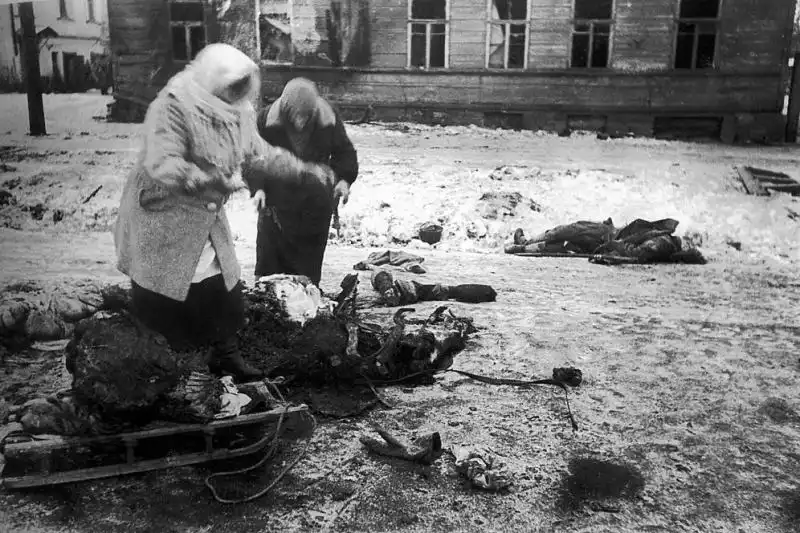
Civilians in besieged Leningrad are seen butchering a horse killed by artillery fire on a city street. The photograph reveals the extreme scarcity of food and daily struggle for survival during the early winter of 1941.
Survival Amid the Siege:
This harrowing photograph shows residents of Leningrad butchering a horse killed by artillery for food during the winter of 1941.
The image reflects the desperate circumstances faced by the city's civilians during the early months of the Siege of Leningrad, when starvation and extreme shortages forced people to use every possible source of sustenance.
On the opposite side of the street lies the body of the Red Army soldier who had been driving the horse, a stark reminder of the constant danger posed by artillery bombardments.
The Food Crisis in Leningrad:
By the winter of 1941, Leningrad had been under siege for several months. The blockade imposed by German and Finnish forces cut off supplies from the outside world.
The food crisis was intensified by several factors:
- Extreme rationing of bread, meat, and other essential foods
- The collapse of livestock deliveries and local food production
- Widespread hunger forcing civilians to seek alternative food sources
The scarcity of food led people to consume what would have been unthinkable under normal circumstances, including horses used for transportation and military logistics.
Daily Life Under Extreme Conditions:
Residents often faced impossible choices simply to survive. Scenes like this became tragically common throughout the city.
- Civilians searching for food wherever it could be found
- Using animals killed by shellfire or exhausted from labor
- Risking artillery attacks while trying to feed themselves and their families
This photograph captures the human struggle for survival, illustrating how ordinary citizens adapted to unimaginable conditions during the blockade.
The Siege of Leningrad:
The Siege of Leningrad, lasting from September 1941 to January 1944, became one of the longest and most devastating blockades in modern history.
During the first blockade winter:
- Temperatures dropped far below freezing
- Food rations fell to starvation levels
- Civilians and soldiers alike suffered from hunger, cold, and constant shelling
The siege forced the population to adapt in extraordinary ways, from collecting water from the frozen Neva River to processing dead animals for food in the streets.
A Testament to Civilian Endurance:
While deeply disturbing, this photograph also stands as a testament to the resilience and determination of Leningrad's civilians.
Despite artillery fire, bitter cold, and severe food shortages, people continued to fight for survival. Every desperate measure reflected the determination of the city's inhabitants to endure one of the darkest chapters of the Second World War.
Historical Photograph Information:
Location: Leningrad, USSR
Date: Winter 1941
Photographer: David Trakhtenberg
Recommended Books on the Siege of Leningrad:
For readers interested in civilian survival during the blockade:
1. The 900 Days: The Siege of Leningrad — Harrison E. Salisbury
A classic eyewitness account highlighting civilian endurance throughout the siege.
2. Leningrad: State of Siege — Michael Jones
A compelling study of daily life, hardship, and resilience during the blockade.
3. Leningrad: The Epic Siege of World War II, 1941–1944 — Anna Reid
A modern historical account based on archival documents and personal testimonies.
4. The Siege of Leningrad 1941–1944 — David M. Glantz
A detailed military and civilian history of the siege and the struggle for survival.