The Royal Castle in Warsaw burning after German artillery fire during the siege, Poland, 17 September 1939
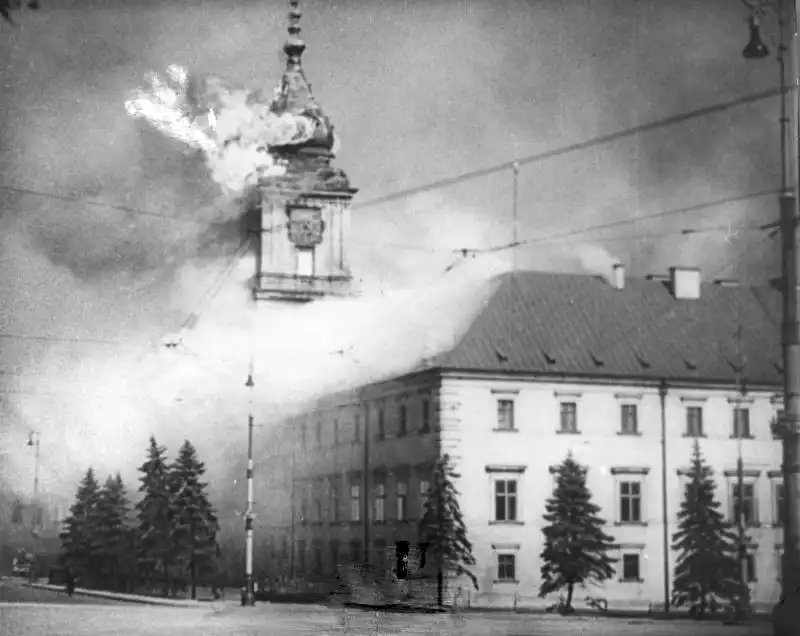
The Royal Castle in Warsaw Burning (17 September 1939):
This dramatic wartime photograph shows the Royal Castle in Warsaw engulfed in flames after being set on fire by German artillery during the siege of the city. The image was taken on 17 September 1939, at a moment when Warsaw was already exhausted by days of bombardment and fighting.
The burning castle stands as a powerful symbol of how cultural and historical landmarks were not spared during the assault on the Polish capital.
Photo Information:
-
Location: Warsaw, Poland
-
Date: 17 September 1939
What the Photo Shows:
The photograph captures:
-
The Royal Castle consumed by fire
-
Thick smoke rising above the city skyline
-
The visible impact of sustained artillery bombardment
This is not a battlefield in the traditional sense, but the destruction of a historic and political symbol of Poland. The flames reflect the intensity of the siege and the scale of damage inflicted on the city.
The Royal Castle: A National Symbol:
The Royal Castle in Warsaw was not just an architectural monument. It represented:
-
The historical seat of Polish kings
-
A symbol of Polish statehood and culture
-
One of the most important landmarks of the capital
Its destruction during the siege was therefore not only a material loss, but also a blow to national heritage and identity.
The Siege of Warsaw:
In September 1939, Warsaw endured:
-
Continuous artillery bombardment
-
Aerial attacks on military and civilian areas
-
Widespread fires and разрушение across the city
-
Severe shortages of water, food, and medical supplies
By mid-September, large parts of the city were burning or in ruins. The fire at the Royal Castle became one of the most visible and tragic images of the siege.
Artillery Fire and Urban Destruction:
Heavy artillery played a decisive role in the assault on Warsaw. Its effects included:
-
Setting entire districts on fire
-
Collapsing historic buildings and residential blocks
-
Turning cultural landmarks into ruins
-
Causing massive civilian suffering
The burning castle shown here illustrates how modern warfare in 1939 already meant the destruction of cities, not just armies.
Cultural Loss in the Opening Days of the War:
The destruction of the Royal Castle was part of a wider pattern:
-
Museums, churches, and historic buildings were damaged or destroyed
-
Archives and artworks were lost in fires
-
The cultural landscape of Warsaw was permanently scarred
This photograph captures the moment when centuries of history were being consumed by war.
Historical Significance of the Image:
This image is important because it shows:
-
The direct impact of the siege on Poland’s cultural heritage
-
The scale of destruction inflicted on Warsaw in September 1939
-
A symbol of the wider devastation of the Polish capital
-
The early transformation of World War II into a war against cities and culture
It stands as visual evidence that the conflict began with the burning of historic centers and national symbols.
Conclusion:
The photograph of the Royal Castle in Warsaw burning on 17 September 1939 is one of the most powerful images of the siege of the city. It represents not only military destruction, but also the loss of cultural and historical treasures. The flames consuming the castle mark the moment when the war showed its true face — a war that would devastate not only armies, but also the very heart of Europe’s cities and their heritage.