German submariners rescued after the sinking of U-175 sit wrapped in blankets aboard the American Coast Guard cutter Spencer during the Battle of the Atlantic in April 1943.
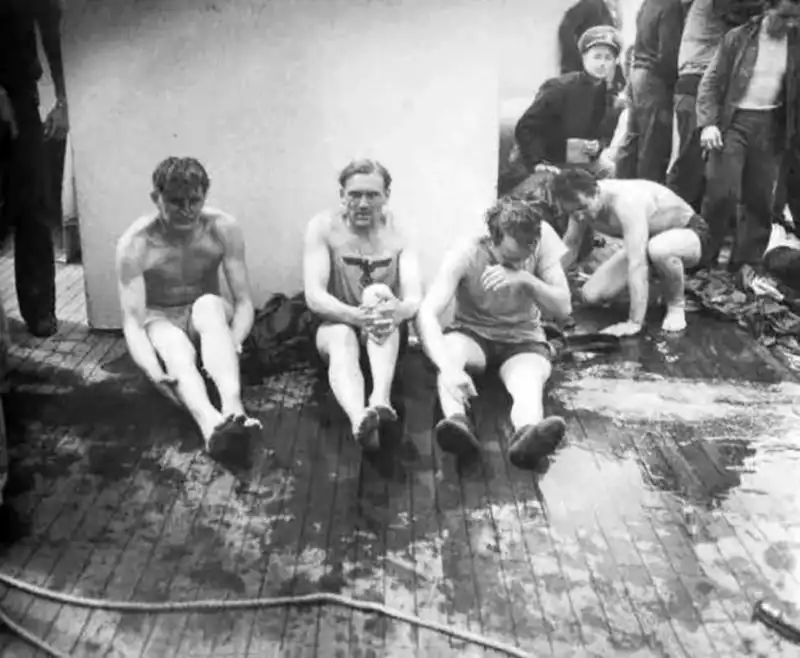
Survivors from a Sunken U-Boat:
This emotional World War II photograph shows three exhausted German submariners rescued after the destruction of the German submarine U-175 during the Battle of the Atlantic.
The men are sitting aboard the American Coast Guard cutter USCGC Spencer — the very ship whose attack helped sink their submarine.
Wrapped in blankets after being pulled from the freezing Atlantic waters, the rescued sailors appear physically exhausted and emotionally stunned.
The photograph captures a rare moment of humanity amid one of the deadliest naval campaigns in modern history.
The Sinking of German Submarine U-175:
U-175 was a German Type IXC submarine operated by the Kriegsmarine.
On April 17, 1943, the submarine attacked Allied convoy shipping in the North Atlantic.
The boat was detected and hunted by escort vessels protecting the convoy.
After a fierce anti-submarine engagement, U-175 was heavily damaged by depth charges and gunfire from the American cutter USCGC Spencer.
The submarine eventually surfaced, badly damaged and unable to continue fighting.
Soon afterward it sank beneath the Atlantic Ocean.
The Battle of the Atlantic:
The destruction of U-175 occurred during the critical middle phase of the Battle of the Atlantic.
German submarines attempted to:
- destroy Allied merchant shipping
- cut supply routes to Britain
- isolate Allied forces in Europe
In response, Allied navies developed increasingly effective anti-submarine tactics using:
- radar
- sonar
- convoy escorts
- aircraft patrols
- coordinated hunter-killer groups
By 1943 the balance of the Atlantic war had begun turning decisively against the German submarine fleet.
Rescue at Sea:
Although the U-boat had been an enemy vessel, Allied sailors still rescued survivors from the water whenever possible.
According to historical accounts:
- 13 members of the crew died
- 41 German submariners survived and were rescued
The rescued Germans received:
- warm blankets
- coffee
- brandy
- cigarettes
- hot food
after being brought aboard the American ship.
This treatment reflected long-standing naval traditions regarding survivors at sea.
Life Aboard German Submarines:
Service aboard German U-boats was extraordinarily dangerous.
Submariners lived under constant pressure:
- confined spaces
- stale air
- extreme fatigue
- fear of sudden attack
- long patrols far from land
Once a submarine was critically damaged, survival chances dropped dramatically.
Many sailors trapped inside sinking U-boats never escaped.
USCGC Spencer:
The American cutter Spencer became one of the most successful anti-submarine vessels of the war.
The ship participated in convoy escort missions across the Atlantic and earned distinction for:
- anti-submarine operations
- rescue work
- convoy defense
Its crew fought one of the Atlantic campaign’s brutal hidden wars — battles often fought in storms, darkness, and freezing seas.
A Human Moment Between Enemies:
What makes this photograph especially powerful is the contrast between:
- deadly combat only minutes earlier
- calm humanitarian treatment afterward
The same sailors who destroyed the submarine then helped save the surviving crew.
World War II photography often shows combat and destruction, but images like this reveal another side of wartime experience:
- exhaustion
- relief
- survival
- shared humanity between enemies
The Turning Point of 1943:
The sinking of U-175 occurred during a disastrous year for the German submarine fleet.
By spring 1943:
- Allied radar had improved dramatically
- convoy escort coordination became more effective
- long-range aircraft closed previous gaps in Atlantic coverage
German U-boat losses rose sharply.
Many historians consider 1943 the decisive turning point in the Atlantic campaign.
Historical Importance of the Photograph:
Photographs of rescued U-boat crews are relatively uncommon.
Most wartime images focus on:
- combat
- explosions
- damaged ships
This image instead preserves the immediate aftermath:
- shock on the faces of survivors
- physical exhaustion
- the grim reality of survival at sea
It remains one of the more human and intimate visual records of the Atlantic war.
Historical Photograph Information:
Location: Atlantic Ocean
Date: April 17, 1943
Photographer: Jack January
Recommended Books About the Battle of the Atlantic:
1. Black May — Michael Gannon
Excellent study of the collapse of the German U-boat offensive in 1943.
2. The Battle of the Atlantic — Jonathan Dimbleby
Comprehensive history of the Atlantic naval war.
3. Iron Coffins — Herbert A. Werner
Memoir of a German U-boat officer describing life aboard submarines.
4. U-Boat War — David Westwood
Detailed overview of German submarine operations during World War II.