Iconic autumn 1942 photograph by Evgeny Podshivalov showing famous Soviet Nanai sniper Maxim Passar holding a Mosin-Nagant 1891/30 sniper rifle with a PE optical sight during the Battle of Stalingrad.
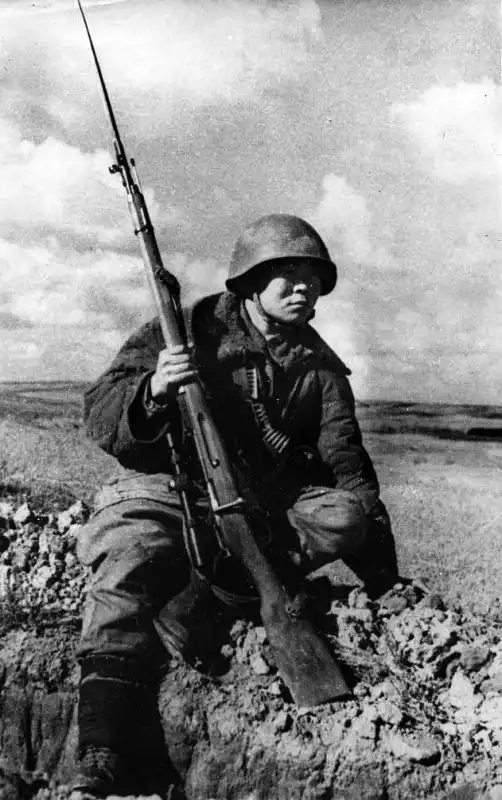
Soviet Sniper Maxim Passar During the Battle of Stalingrad (Autumn 1942)
This iconic historical photograph, taken by frontline correspondent Evgeny Podshivalov in the autumn of 1942, depicts legendary Soviet sniper Maxim Alexandrovich Passar. An ethnic Nanai hunter from the Far Eastern Khabarovsk region, Passar served with distinction in the 71st Guards Rifle Division (formerly the 23rd Rifle Division) of the Red Army during the defense of Stalingrad.
First published in the Far Eastern newspaper Tikhookeanskaya Zvezda on November 15, 1942, the image became a prominent symbol of Red Army sniper operations on the Don and Stalingrad fronts.
Weaponry Analysis: Mosin-Nagant 1891/30 with PE Optical Sight
The photograph features detailed equipment elements characteristic of early-to-mid World War II Soviet marksmen:
- 7.62mm Mosin-Nagant M1891/30 Sniper Rifle: Fitted with a turned-down bolt handle to clear the mounted optics, allowing smooth manual bolt cycling from a prone concealed position.
- PE Optical Sight (VP Pattern): Mounted atop the receiver is the early 4x magnification PE (Emelyanov system) optical scope on a side bracket. The PE sight featured external focus and elevation rings, providing high clarity for long-range target elimination.
- Fixed Quadrangular Socket Bayonet: Attached to the muzzle is a standard M1891/30 spike bayonet. While field snipers routinely detached bayonets to optimize rifle balance and shot consistency, ceremonial and press photographs frequently depicted fully equipped infantry arms.
- Field Gear: Passar is dressed in a standard Soviet quilted jacket (telogreika), SSh-40 steel helmet, and leather waist belt fitted with Mosin ammunition pouches.
Combat Record and Historical Legacy
Maxim Passar's marksmanship made significant contributions to anti-sniper warfare during the Siege of Stalingrad:
- Battlefield Score: A skilled taiga hunter prior to the war, Passar accumulated over 230 confirmed kills against enemy personnel and specialized observers during trench fighting in late 1942.
- Final Engagement: On January 17, 1943, during Operation Ring (the final assault to liquidate the surrounded German 6th Army), Passar was killed in action after single-handedly neutralizing two enemy machine gun crews near Peschanka village, Gorodishchensky District.
- Posthumous Hero of Russia: Initially awarded two Orders of the Red Banner, Maxim Passar was posthumously bestowed the title Hero of the Russian Federation by Presidential Decree No. 199 on February 16, 2010.
📍 Location: Stalingrad Front, USSR
📅 Date: Autumn 1942
📷 Photographer: Evgeny Podshivalov
📰 Primary Source: Tikhookeanskaya Zvezda Newspaper (No. 270, Nov 15, 1942) / Russian State Film and Photo Archive (RGAKFD)
Recommended reading:
- Technical history of the Mosin-Nagant M1891/30 sniper rifle and PE/PEM optical sights
- Soviet sniper movement during the Battle of Stalingrad (1942–1943)
- Combat path of the 71st Guards Rifle Division on the Don and Stalingrad fronts
- Indigenous Siberian and Far Eastern marksmen in the Red Army during World War II