A Soviet frontline reconnaissance scout with Asiatic facial features, wearing a camouflage suit and armed with a captured German MP 40 submachine gun during World War II.
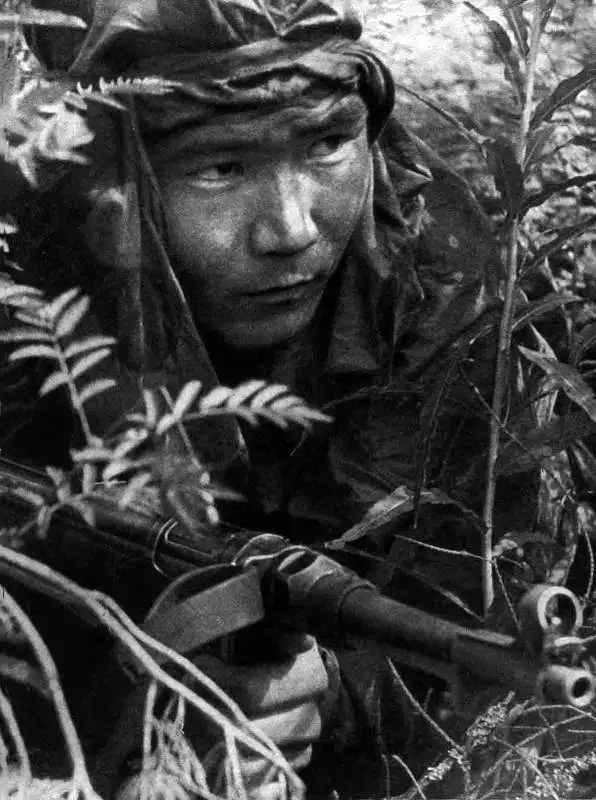
Soviet Frontline Scout with a Captured German MP 40:
This striking wartime photograph captures a Soviet frontline reconnaissance scout equipped for a dangerous mission behind enemy lines. Dressed in a summer camouflage suit and wearing a side cap (pilotka), the soldier holds a captured German MP 40 submachine gun, a prized weapon among Red Army scouts and assault groups.
The scout's distinct Asiatic facial features highlight one of the most significant aspects of the Red Army during World War II: its deeply multiethnic character. Soldiers from across Central Asia, Siberia, and the Far East served alongside Russians, Ukrainians, and Belarusians, bringing invaluable regional survival and hunting skills to frontline combat units.
The Multiethnic Face of the Red Army:
The Soviet Union was a vast, multinational state, and its armed forces reflected this diversity. Millions of soldiers from non-Slavic republics and indigenous ethnic minorities fought in the ranks of the Red Army during the Great Patriotic War.
Recruits from regions such as Kazakhstan, Uzbekistan, Buryatia, and Yakutia were frequently assigned to specialized roles, including snipers, observers, and infantry scouts. Many of these soldiers possessed exceptional fieldcraft, stamina, and familiarity with harsh environmental conditions, making them exceptionally effective in close-quarters combat and deep-reconnaissance patrols.
Captured Weapons in Soviet Reconnaissance Operations:
Although the Red Army mass-produced its own iconic automatic weapons, such as the PPSh-41 and later the PPS-43, captured German arms were widely utilized by elite units. Frontline scouts (razvedchiki) had a special preference for the German MP 40 for several practical reasons:
- Compact size: The folding metal stock made the MP 40 much easier to carry through thick underbrush or tight spaces during covert raids.
- Ammo availability: Operating behind enemy lines meant scouts could easily resupply 9×19mm Parabellum ammunition directly from captured German stocks.
- Acoustic confusion: Firing a German weapon in enemy territory could temporarily confuse German sentries, delaying counteraction during sudden ambushes.
Camouflage and Gear of Soviet Reconnaissance Patrols:
The scout in the photograph wears a two-piece camouflage oversuit, most likely the famous Soviet M1938 "Ameba" (Amoeba) pattern. Designed to break up the human silhouette in forested and grassy terrain, these loose-fitting garments were worn over standard field uniforms.
Reconnaissance patrols operated with minimal gear to maintain stealth and speed. Unlike regular infantry, scouts often stripped away non-essential equipment, keeping only ammunition, hand grenades, combat knives, and specialized intelligence-gathering tools needed for capturing prisoners for interrogation (known as capturing a "tongue").
Behind the Lens: A Silent Witness to War:
Photographs of individual scouts from this era are particularly compelling because they offer an authentic glimpse into the daily reality of frontline soldiers away from staged propaganda shots.
While the exact date and location of this image remain unrecorded, the soldier's calm demeanor and practical equipment tell a powerful story of endurance, tactical adaptability, and the diverse background of the men who fought on the Eastern Front.
📍 Location: USSR
📅 Date: World War II (1941–1945)
📷 Photographer: Unknown
Recommended reading:
- Soviet frontline reconnaissance tactics and equipment during WWII
- The multiethnic composition of the Red Army in World War II
- The German MP 40 submachine gun in Soviet service
- Soviet camouflage patterns: The M1938 Ameba suit