Historical analysis of a summer 1941 Wehrmacht photograph depicting German soldiers posing with a captured civilian Ukrainian SSR state banner in rural Ukraine.
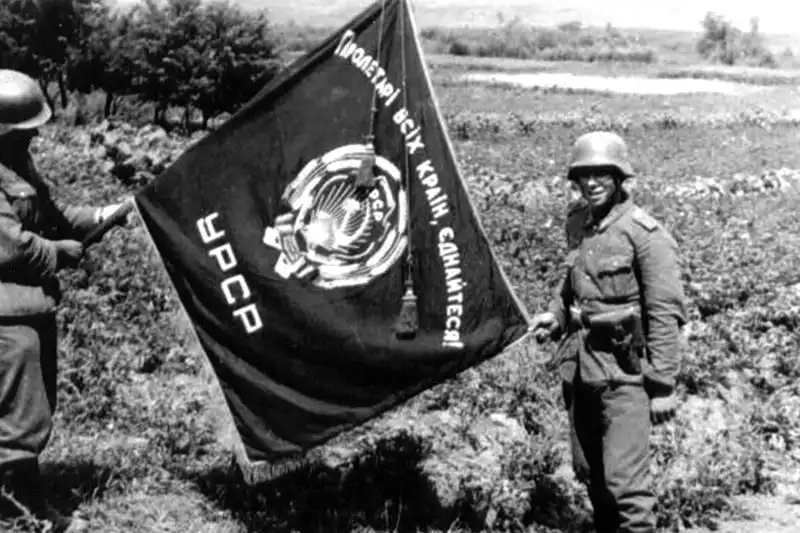
German Soldiers Posing with Captured Ukrainian SSR Civil Banner (Summer 1941)
This photograph captured during the summer of 1941 in Ukraine depicts Wehrmacht infantrymen proudly displaying a Soviet banner seized during their rapid advance through rural villages in Operation Barbarossa.
While framed by wartime photography units as a significant combat trophy, historical and vexillological analysis reveals that this item was a civilian administrative flag rather than a military military regimental banner.
Vexillological Identification: Ukrainian SSR State Banner
The captured flag displays clear visual markers of late-1930s Soviet civilian administrative standards:
- Ukrainian SSR State Emblem: The center features the coat of arms of the Ukrainian Soviet Socialist Republic (adopted in the 1937 Constitution), complete with the hammer and sickle over a rising sun framed by wheat ears.
- Ukrainian Inscription: The flag bears the official slogan in Ukrainian: "Пролетарі всіх країн, єднайтеся!" ("Workers of the world, unite!") alongside the acronym УРСР (Ukrainian Soviet Socialist Republic).
- Civilian Origin: Unlike official Red Army unit battle flags (which followed strict military standardized patterns and were guarded at headquarters), this ceremonial banner was taken from a local municipal office, village council (selsoviet), or collective farm administrative center.
- Propaganda Staging: Frontline German soldiers and Propaganda Companies (Propagandakompanien) frequently collected civilian banners, club flags, and civic decorations from occupied buildings to pose for souvenir photos pretending to have captured enemy military colors.
Historical Distinction: Military Battle Flags vs. Civic Trophies
Throughout World War II, the Red Army treated regimental military colors (Boevoe Znamya) as sacred operational symbols. In combat, military unit banners were strictly guarded by designated flag bearers and staff officers. If a unit faced imminent destruction or encirclement, soldiers were under standing orders to bury, burn, or break through enemy lines with the colors attached to their bodies.
As a result, genuine Red Army regimental battle flags captured by German forces were exceptionally rare. Souvenir photographs like this one feature staged displays using local municipal, trade union, or pioneer organization flags staged to boosted home front morale.
📍 Location: Ukrainian SSR, USSR
📅 Date: Summer 1941
📷 Photographer: Unknown (German Wehrmacht / Propaganda Company)
📰 Primary Source: World War II Eastern Front Photographic Archives
Recommended reading:
- Soviet Vexillology in WWII: Distinguishing regimental battle banners from civilian civic flags
- Operation Barbarossa Propaganda: How Wehrmacht staged battlefield trophy photographs in 1941
- Ukrainian SSR Symbols (1937–1949): Emblems, acronyms, and ceremonial flag designs
- Red Army Regimental Colors: Regulations and heroic rescues of unit battle banners in encirclements