Dramatic historical photograph capturing exhausted Wehrmacht infantrymen sleeping in deep snow wrapped in a Heeres Unterkunft blanket during the brutal Battle of Moscow, December 1941.
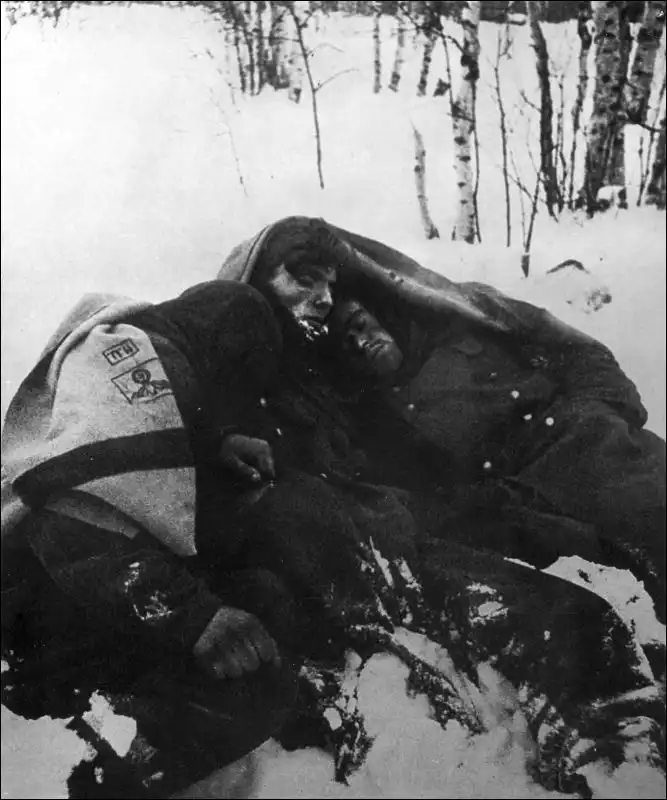
Exhausted German Soldiers Sleeping in the Snow (December 1941)
This striking historical photograph from December 1941 captures the dire logistics and extreme environment faced by Wehrmacht forces during the strategic climax of the Battle of Moscow. The image depicts two exhausted German infantrymen huddled together in deep snow within a birch woodland, attempting to sleep beneath a single issued wool blanket.
The photo highlights the severe operational toll on German frontline units as ambient temperatures dropped past minus thirty degrees Celsius during the Soviet winter counter-offensive.
Equipping for Survival: The Heeres Unterkunft Blanket
A notable material detail visible in the photo is the distinct military stamp on the corner of the wool blanket:
- Heeres Unterkunft Marking: The prominent letter stamp H.U. stands for Heeres Unterkunft (Army Accommodation / Barracks Supply). These heavy grey wool blankets were originally designated for stationary garrison quarters, barracks, and military hospitals inside Germany rather than combat field gear.
- Supply Shortages: The presence of administrative barracks blankets at the front lines underscores the severe crisis in German winter quartermaster supplies during late 1941, as field units improvised shelter and insulation using any available administrative textiles.
Impact of the Russian Winter on Operation Typhoon
The failure of German logistics to provide adequate winter uniforms severely affected combat readiness during Operation Typhoon:
- Extreme Climate Exposure: Lacking specialized cold-weather clothing (Winteranzug), infantry units suffered tens of thousands of severe frostbite casualties, while heavy machinery, vehicle lubricants, and small-arms mechanisms routinely froze up.
- Counter-Offensive Context: By December 1941, exhausted Wehrmacht formations faced well-equipped Soviet Red Army divisions reinforced with winter-trained troops, forcing the German army into a grueling strategic retreat away from the Soviet capital.
📍 Location: Moscow Oblast, Russian SFSR, Soviet Union
📅 Date: December 1941
📷 Photographer: Unknown (German War Correspondent / PK Unit)
📰 Primary Source: World War II Archival Photographic Collection
Recommended reading:
- Logistical challenges and winter clothing shortages during Operation Typhoon
- Standard quartermaster issue equipment and markings of the German Wehrmacht
- Tactical development of the Soviet Winter Counter-Offensive (December 1941)
- The impact of extreme low temperatures on military hardware on the Eastern Front