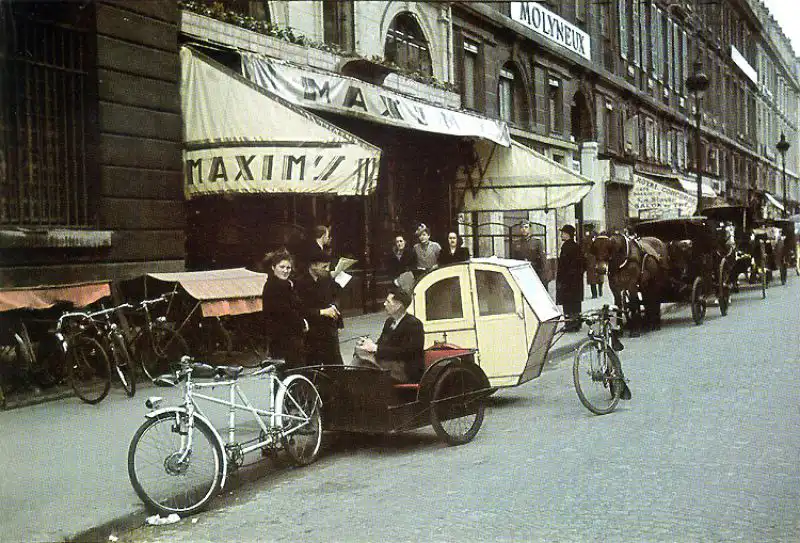
Color WWII photograph of bicycle taxis waiting outside the famous Maxim’s restaurant in occupied Paris during German rule in 1942.
Paris Without Fuel:
This fascinating color photograph shows bicycle taxis and horse-drawn carriages waiting outside the famous Maxim’s restaurant in occupied Paris during 1942.
The image captures one of the most unusual realities of wartime France:
👉 A modern European capital suddenly forced back into older forms of transportation.
Because of wartime shortages and German military demands, fuel became extremely scarce for civilians.
The Famous Restaurant – Maxim's:
The photograph was taken near Maxim's, one of the most legendary restaurants in Paris.
Founded in the 19th century, Maxim’s became famous for:
- Luxury dining
- Art Nouveau interiors
- Wealthy clientele
- Parisian high society
Even during the occupation, prestigious establishments like Maxim’s continued operating.
Occupied Paris and Fuel Shortages:
Under the German occupation of Paris, gasoline was tightly controlled.
Most French fuel supplies were redirected toward:
- German military vehicles
- Occupation authorities
- Wehrmacht logistics
Ordinary civilians often had little or no access to gasoline.
The Return of Bicycle Transport:
As a result, wartime Paris saw the return of transportation methods that had nearly disappeared before the war:
- Bicycle taxis
- Horse-drawn wagons
- Hand carts
- Pedal-powered delivery vehicles
The occupation transformed the appearance of the city streets.
What Is a Bicycle Taxi?
The vehicles visible in the photograph are early forms of bicycle taxis, sometimes called cycle rickshaws or pedicabs.
They became practical because:
- Fuel was unavailable
- Spare parts were limited
- Bicycles required no gasoline
During the occupation, bicycles became one of the most important civilian transport methods in France.
Everyday Life Continued:
One reason photographs by André Zucca remain so famous is their unusual atmosphere.
Instead of ruins and destruction, they often show:
- Fashionable streets
- Markets
- Restaurants
- Civilian daily life
This creates a strange contrast between:
👉 Visible normality
👉 Hidden wartime hardship
The Strange Economy of Occupied France:
Occupied Paris operated in a complicated wartime economy.
Luxury establishments still existed, while at the same time:
- Food shortages increased
- Black markets flourished
- Rationing affected millions
Some people managed to maintain comfortable lifestyles, while others struggled to survive.
Transportation During World War II:
The photograph also highlights how quickly modern infrastructure can change during war.
By 1942:
- Civilian automobiles became rare in Paris
- Public transportation struggled with shortages
- Bicycles dominated city traffic
Even wealthy districts adapted to wartime conditions.
Color Photography and Historical Memory – Agfacolor:
The vivid colors of the image make the scene feel surprisingly modern.
Many wartime photographs from occupied Paris were taken using Agfacolor film, one of the most advanced color processes available at the time.
Because color photography was still uncommon during World War II, such images became extremely valuable historical documents.
The Photographer – André Zucca:
French photographer André Zucca documented occupied Paris extensively during the war years.
His work remains controversial because it often portrays:
- Calm streets
- Elegant civilians
- Ordinary urban life
while largely avoiding direct images of repression or violence.
A City Adapting to Occupation:
This photograph captures a city adapting rather than collapsing.
Parisians adjusted to shortages through:
- Improvisation
- Reuse of older technology
- Alternative transportation
- Informal trade networks
The bicycle taxi became a symbol of wartime adaptation.
Historical Photograph Information:
Location: Paris, France
Date: 1942
Photographer: André Zucca
Recommended Books on Occupied Paris:
1. France Under the Germans — Julian Jackson
2. Paris After the Liberation — Antony Beevor & Artemis Cooper
3. The Invention of Paris — Eric Hazan
4. Suite Française — Irène Némirovsky