Detailed historical analysis of a 1943 photograph showing USAAF B-24 Liberator bomber gunners wearing flak vests and helmets while manning defensive machine guns over Europe.
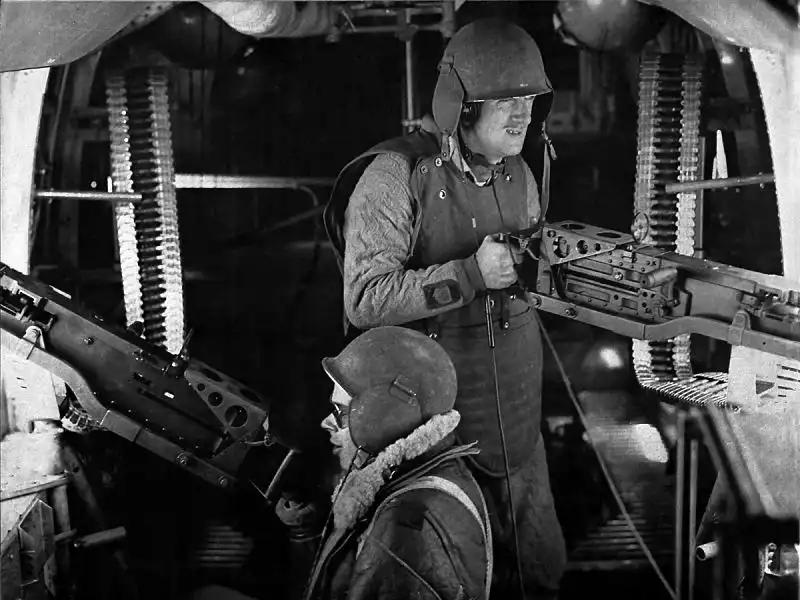
B-24 Liberator Defensive Gunners in Flight Over Europe (1943)
This striking archival photograph from 1943 captures the tense reality of aerial warfare for defensive gunners aboard an American Consolidated B-24 Liberator heavy bomber operating over the European Theater.
Equipped with heavy defensive machine guns and specialized personal armor, bomber crews faced relentless interception from Axis fighter defenses during daylight strategic bombing campaigns.
Tactical Environment and Personal Protection
The image highlights the unique equipment and operational hazards faced by bomber crews in 1943:
- Flak Vests and Helmets: To mitigate wounds from anti-aircraft shell fragments (flak) and high-altitude machine-gun fire, gunners were issued early protective gear, including heavy manganese-steel armored vests and steel helmets adapted with communications headsets.
- The European Theater vs. The Pacific: Unlike operations against the Japanese Empire—where fading enemy fighter opposition frequently led to the removal of defensive armor and guns on aircraft like the B-29 to maximize bomb payloads—the skies over occupied Europe demanded robust defensive firepower and continuous crew protection against determined Luftwaffe interception.
- Defensive Armament: The gunners operate heavy Browning M2 .50-caliber machine guns, which served as the standard defensive backbone for USAAF heavy bombers throughout World War II.
- Cross-Service Parallels: Similar frontline adaptations occurred across various air forces; for instance, early-war Soviet gunners on unprotected variants of the Ilyushin Il-2 stormovik similarly utilized infantry helmets and steel breastplates (such as the SN-42) to survive ground fire.
The Human Cost of Daylight Bombing
Serving as a defensive gunner in a bomber formation required enduring sub-zero temperatures, oxygen mask operations, and extreme psychological stress during coordinated fighter attacks. Archival records from the Eighth and Fifteenth Air Forces document the immense casualty rates sustained by combat crews prior to the introduction of long-range fighter escorts like the P-51 Mustang.
📍 Location: Skies over Europe
📅 Date: 1943
📷 Photographer: Unknown (USAAF Combat Camera Unit)
📰 Primary Source: WWII Allied Air Forces Photographic Archives
Recommended reading:
- USAAF Bomber Defense Tactics: The role of .50 cal machine guns in heavy formations
- Aviation Body Armor in World War II: Development of flak vests and helmets
- The B-24 Liberator in Europe: Operational range, survivability, and combat roles
- Luftwaffe Fighter Tactics Against Allied Bombers: The 1943 air war over Germany