American Coast Guardsmen use creative haircuts to spell the word “HELL” during the historic Allied invasion of Normandy.
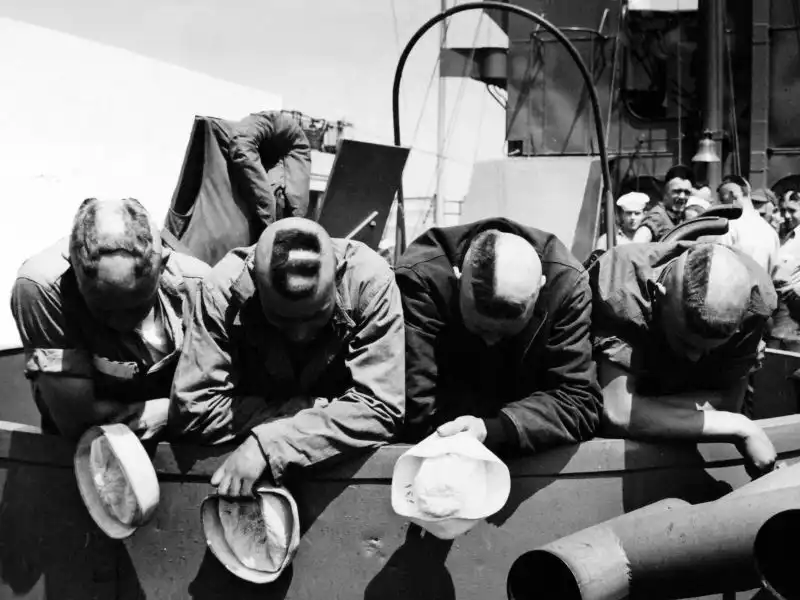
This remarkable photograph shows U.S. Coast Guard sailors whose haircuts collectively spell the word “HELL.”
The image was taken on June 6, 1944, during the Allied invasion of Normandy. At first glance, the photograph appears humorous, but it also reflects the mindset of men preparing to participate in one of the largest and most dangerous military operations in history.
The word was likely inspired by the famous phrase often attributed to American Civil War General William Tecumseh Sherman: “War is Hell.”
Source: history.navy.mil
D-Day and the Crossing to France:
On the morning of June 6, 1944, Allied forces launched Operation Overlord, the long-awaited invasion of German-occupied Western Europe.
Thousands of ships crossed the English Channel carrying soldiers, sailors, airmen, vehicles, and supplies. For many participants, the operation represented the beginning of a decisive campaign that would eventually lead to the liberation of France and the defeat of Nazi Germany.
The men aboard those vessels understood that they were heading toward one of the most dangerous days of the war.
Humor Before Battle:
Military history contains countless examples of soldiers using humor to cope with stress.
The unusual haircuts seen in this photograph are a perfect example. By transforming their heads into a living message, the sailors created a joke that was both amusing and deeply meaningful.
The word “HELL” reflected what many expected to face once the invasion began: confusion, violence, fear, and uncertainty.
Rather than ignoring those realities, the sailors confronted them with humor.
Life at Sea Before the Landing:
Long voyages often produced periods of waiting and boredom interrupted by moments of extreme danger.
Sailors frequently found creative ways to pass the time. Playing cards, writing letters, performing music, telling jokes, and creating unusual hairstyles were all common forms of entertainment aboard military vessels.
This photograph preserves one such moment shortly before history's course would be altered on the beaches of Normandy.
The Human Side of D-Day:
Many images associated with D-Day show landing craft under fire, advancing infantry, or destroyed equipment.
This photograph offers something different.
Instead of combat, it captures the personalities of the men involved. These sailors were not merely participants in a vast military operation; they were individuals capable of humor, friendship, and creativity even while preparing for battle.
That contrast makes the image particularly memorable.
“War Is Hell”:
Whether the sailors consciously referenced General Sherman's famous statement or simply used a widely known expression, the message remains powerful.
The men posing for the camera understood that war was not an adventure. By June 1944, years of fighting across Europe, Africa, and the Pacific had already demonstrated the terrible cost of global conflict.
The simple four-letter word expressed a reality recognized by soldiers on every side of the war.
Historical Significance:
Photographs of major military operations often focus on equipment and strategy.
This image instead reveals the thoughts and emotions of the people behind those operations. It reminds us that even during the most important events of the twentieth century, ordinary men continued to joke, improvise, and seek moments of humanity amid uncertainty.
Today, the photograph remains one of the most unusual and memorable images associated with D-Day.
Photo data:
📍 Location: English Channel
📅 Date: June 6, 1944
📷 Photographer: Unknown
Recommended Literature:
- Stephen E. Ambrose — D-Day: June 6, 1944
- Antony Beevor — D-Day: The Battle for Normandy
- Craig L. Symonds — Operation Neptune
- Cornelius Ryan — The Longest Day
- Joseph Balkoski — Omaha Beach
- Samuel Eliot Morison — History of United States Naval Operations in World War II