German prisoners of war warm themselves by a campfire in a Soviet transit camp during the spring of 1943.
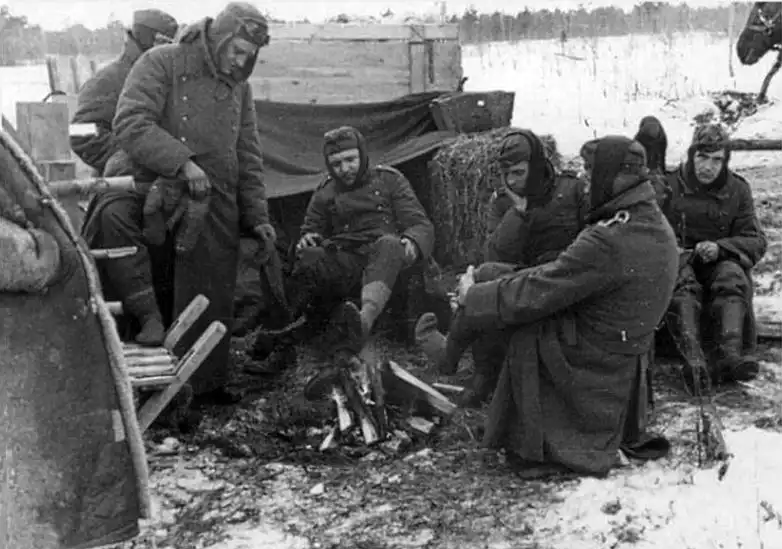
This photograph shows six former German soldiers warming themselves around a campfire in a Soviet prisoner-of-war camp during the spring of 1943.
Several men have removed their boots and placed them close to the fire to dry. The scene appears almost peaceful at first glance, yet it reflects the harsh realities faced by hundreds of thousands of soldiers after the brutal winter campaigns on the Eastern Front.
The image captures a simple moment of human necessity: exhausted men seeking warmth after enduring months of cold, combat, and hardship.
The Aftermath of a Harsh Winter:
By the spring of 1943, the strategic situation on the Eastern Front had changed dramatically.
The German defeat at Stalingrad and the Soviet winter offensives of 1942–1943 resulted in enormous losses among Axis forces. Hundreds of thousands of German, Romanian, Hungarian, and Italian soldiers were killed, wounded, or captured.
Many of those who entered Soviet captivity had already survived some of the most severe weather conditions experienced during the war.
The Challenge of Winter Warfare:
One detail visible in the photograph is the footwear of the prisoners.
The traditional German marching boots, recognizable by their relatively short shafts and metal heel plates, were durable and well suited for normal military service. However, they were not designed for prolonged exposure to the extreme cold and wet conditions encountered on the Eastern Front.
German soldiers often improvised additional insulation using cloth, straw, paper, captured Soviet clothing, or whatever materials were available.
As a result, images of soldiers drying boots and clothing near fires became a common sight during the war in the East.
Captivity and Survival:
For many prisoners of war, capture did not mean an immediate end to hardship.
The transition from front-line soldier to prisoner often occurred after weeks or months of combat, inadequate food, and physical exhaustion. Many captives entered camps already weakened by hunger, disease, or exposure.
Simple activities such as obtaining dry footwear, warm clothing, or a place near a fire could have a significant impact on daily life.
A Rarely Seen Perspective:
Most photographs from the Eastern Front focus on combat operations, destroyed vehicles, or military victories.
This image is different. There are no weapons being fired and no dramatic battlefield scenes. Instead, the photograph presents a quiet moment centered on basic human needs.
The campfire serves as the focal point of the composition, emphasizing how essential warmth remained even after the fighting had ended for these men.
The Human Side of War:
One of the most valuable aspects of wartime photography is its ability to reveal ordinary moments amid extraordinary events.
The men gathered around the fire were once members of an invading army. Now they are simply individuals trying to warm themselves and dry their boots.
The photograph reminds us that behind military campaigns and strategic decisions stood millions of people coping with fatigue, cold, uncertainty, and the struggle to survive.
Historical Significance:
Images of Axis prisoners in Soviet custody provide important evidence about the aftermath of major battles on the Eastern Front.
They help historians understand not only military events but also the everyday realities experienced by captured soldiers.
This photograph preserves a small but revealing moment from the spring of 1943, when the tide of war had begun to turn decisively against Germany.
Photo data:
📍 Location: USSR
📅 Date: Spring 1943
📷 Photographer: Unknown
Recommended Literature:
- Antony Beevor — Stalingrad
- Earl F. Ziemke — Stalingrad to Berlin
- David M. Glantz — After Stalingrad
- Rüdiger Overmans — The Eastern Front 1941–1945
- Stephen G. Fritz — Ostkrieg
- Richard Overy — Russia's War