Rare WWII image of a torpedo attack on the Japanese destroyer Yamakaze, captured through a submarine periscope in 1942.
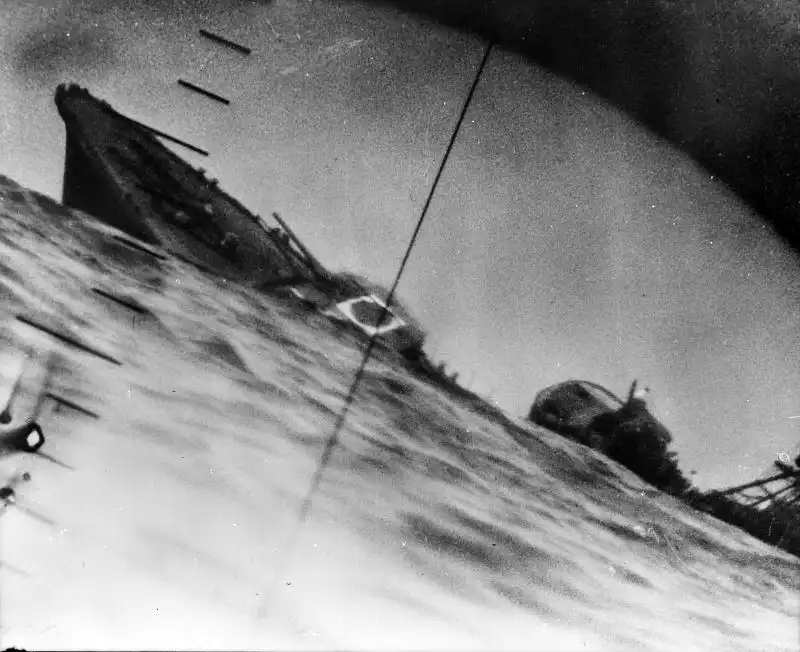
A Rare Combat Image from Beneath the Sea:
This extraordinary photograph captures the exact moment of a successful torpedo attack on the Japanese destroyer Yamakaze, taken through the periscope of a U.S. submarine.
Moments like this were almost never photographed.
Why?
👉 Submarine attacks were fast, silent, and deadly
👉 There was no time for documentation
Yet here —
👉 The kill is visible
The Target – Japanese destroyer Yamakaze:
The ship under attack is the Japanese destroyer Yamakaze, a destroyer of the Imperial Japanese Navy.
Ships of this class were designed for:
- Escort duties
- Anti-submarine warfare
- Fleet operations
Ironically:
👉 A hunter became the target
The Attacker – USS Nautilus:
The photograph was taken from the American submarine USS Nautilus.
U.S. submarines like Nautilus were tasked with:
- Intercepting enemy shipping
- Destroying naval assets
- Disrupting supply chains
They operated unseen —
👉 Until they struck
The Moment of Impact:
The image shows:
- The destroyer in the periscope view
- The aftermath of a torpedo hit
Within seconds:
- Massive internal damage
- Flooding
- Loss of control
The result:
👉 The ship sank
The Role of the Periscope – Submarine periscope:
The Submarine periscope was essential for attack execution.
It allowed submarine crews to:
- Track targets
- Calculate firing angles
- Confirm hits
But it also carried risk:
👉 Even a brief exposure could reveal the submarine
Submarine Warfare in 1942 – Pacific War:
This attack took place during the early phase of the Pacific War, when submarine warfare was becoming increasingly important.
In 1942:
- The U.S. Navy intensified its submarine campaign
- Japanese shipping became a primary target
- Strategic attrition began
Why This Photo Matters:
This image is valuable because it shows:
- A real combat strike
- From the attacker’s perspective
- At the moment of success
Such images are extremely rare due to:
- Operational secrecy
- Technical limitations
- Combat conditions
The Fate of Yamakaze:
After the torpedo strike:
- The destroyer suffered catastrophic damage
- Crew survival chances dropped rapidly
- The vessel was lost
This reflects the deadly efficiency of submarine warfare.
The Invisible War:
Most naval battles are remembered for:
- Surface engagements
- Aircraft carriers
- Large fleet actions
But beneath the surface:
👉 A quieter, deadlier war was unfolding
Submarines operated unseen —
and struck without warning.
Precision Kill:
A torpedo attack required:
- Accurate calculations
- Proper positioning
- Timing
One shot often determined the outcome.
There were no second chances.
Historical Photograph Information:
Location: Pacific Ocean, 73 miles from Yokohama
Date: June 25, 1942
Photographer: Unknown
Recommended Books on Submarine Warfare in WWII:
1. Silent Victory — Clay Blair
2. The War Below — James Scott
3. Clear the Bridge! — Richard O’Kane
4. Japanese Destroyer Captain — Tameichi Hara