Soviet T-26 light tanks of the Murmansk Fortified Region stationed on Kildin Island in the summer of 1942. The photograph shows the use of armored vehicles in the defense of Arctic coastal positions during World War II.
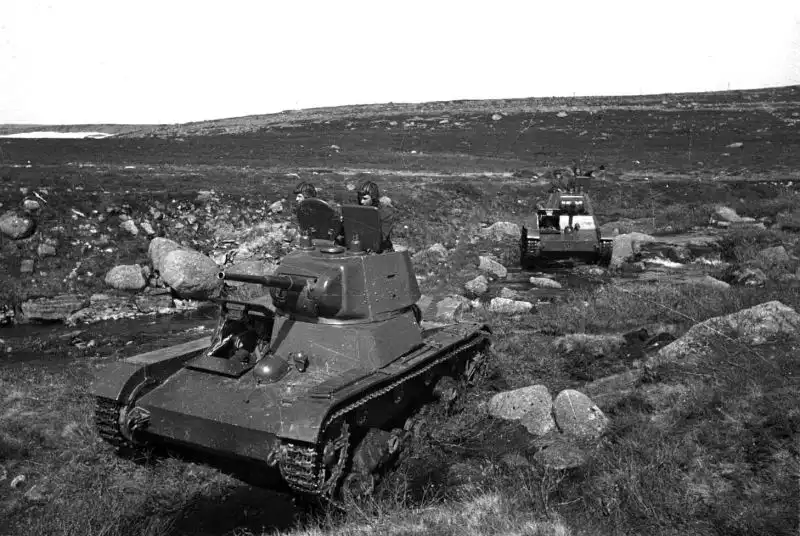
Soviet T-26 Tanks of the Murmansk Fortified Region on Kildin Island (1942)
This wartime photograph shows Soviet T-26 light tanks belonging to a separate tank company of the Murmansk Fortified Region of the Red Army's Northern Fleet. The vehicles were stationed on Kildin Island and formed part of the garrison of the 2nd Separate Artillery Battalion during the summer of 1942.
Although the T-26 had become outdated for large-scale mobile warfare by this period, these tanks continued to serve an important role in protecting strategically significant Arctic positions. Later, the separate tank company was reorganized into the 654th Separate Coastal Defense Tank Company of the Main Base of the Northern Fleet of the USSR.
Photo Information
- Location: Kildin Island, Murmansk region, USSR
- Date: July–August 1942
- Photographer: Yevgeny Khaldei
What the Photo Shows
The image depicts several T-26 light tanks positioned in a coastal defense environment. Unlike armored units engaged in major tank battles on the Eastern Front, these vehicles performed a static defensive mission, supporting coastal artillery formations and protecting important military installations.
The presence of T-26 tanks on Kildin Island demonstrates several important aspects of Soviet Arctic defense:
- The strategic importance of remote coastal positions in the far north
- The integration of armored vehicles into fixed defensive systems
- The continued use of older tank models for specialized military tasks
Kildin Island and the Northern Theater of Operations
Kildin Island, located near the entrance to Kola Bay, had major strategic importance for the defense of Murmansk and the naval bases of the Northern Fleet. The area protected vital northern approaches and helped secure:
- Sea routes used for Allied Arctic convoys
- Facilities of the Soviet Northern Fleet
- Coastal areas vulnerable to enemy attacks and naval operations
In the harsh Arctic environment, even a small number of armored vehicles could significantly strengthen defensive positions and provide additional firepower for isolated garrisons.
The T-26 Light Tank: An Older Vehicle in a New Role
By 1942, the Soviet T-26 light tank was considered obsolete compared with newer German and Soviet armored vehicles. However, its reliability, simplicity, and familiarity among crews allowed it to remain useful in secondary theaters and defensive roles.
The T-26 was still valuable for:
- Static defensive positions
- Garrison duties
- Supporting infantry and coastal artillery
- Protecting important military facilities
Key Characteristics of the T-26
- Light tank with relatively thin armor
- Limited protection against modern anti-tank weapons
- Adequate firepower for local defensive missions
- Simple construction and well-known maintenance procedures
In isolated areas such as Kildin Island, the weaknesses of the T-26 were less important than on the main battlefield. Its ability to provide mobile fire support made it a useful asset for coastal defense units.
From Tank Company to Coastal Defense Unit
The separate tank company of the Murmansk Fortified Region was later reorganized into the 654th Separate Coastal Defense Tank Company. This change reflected the increasing importance of protecting naval bases, coastal areas, and strategically important northern territories.
The reorganization demonstrated several wartime trends:
- Greater emphasis on permanent defense zones
- The creation of specialized units for regional protection
- The adaptation of existing military equipment to changing battlefield conditions
Life and Service in the Arctic
Operating armored vehicles in the Arctic conditions of the Murmansk region presented serious challenges for Soviet crews.
- Extreme cold affecting engines and mechanical systems
- Difficult terrain and limited infrastructure
- Isolation from major supply and repair centers
Despite these difficulties, northern garrisons played an important role in securing the Soviet Union's Arctic frontier and protecting strategic naval routes throughout the war.
Historical Significance of the Image
This photograph is valuable because it documents a lesser-known aspect of World War II: the use of armored vehicles outside the major tank battlefields.
The image highlights:
- The use of light tanks in coastal and garrison defense
- The militarization of remote Arctic regions
- The daily service conditions of Soviet troops far from the main front lines
- The ability of Soviet forces to adapt available equipment to specific missions
It provides a rare visual record of the Northern Theater of Operations and the defensive preparations around Murmansk during 1942.
Conclusion
The image of Soviet T-26 tanks on Kildin Island in the summer of 1942 illustrates how older armored vehicles remained useful when assigned to the right mission. Serving with the Murmansk Fortified Region and later coastal defense units of the Northern Fleet, these tanks became part of the Soviet effort to protect the Arctic approaches of the USSR.
Recommended Literature
- David M. Glantz — The Soviet-German War 1941–1945: Myths and Realities
- Steven J. Zaloga — T-26 Light Tank: Backbone of the Red Army
- Albert Axell — The Russian Front: 1941–1945
- Jukka Nevakivi — The Arctic Front: The War in the Far North