A famous WWII photo shows a Soviet soldier and a Berlin civilian in 1945. Often misrepresented, the image reveals how context can change historical meaning.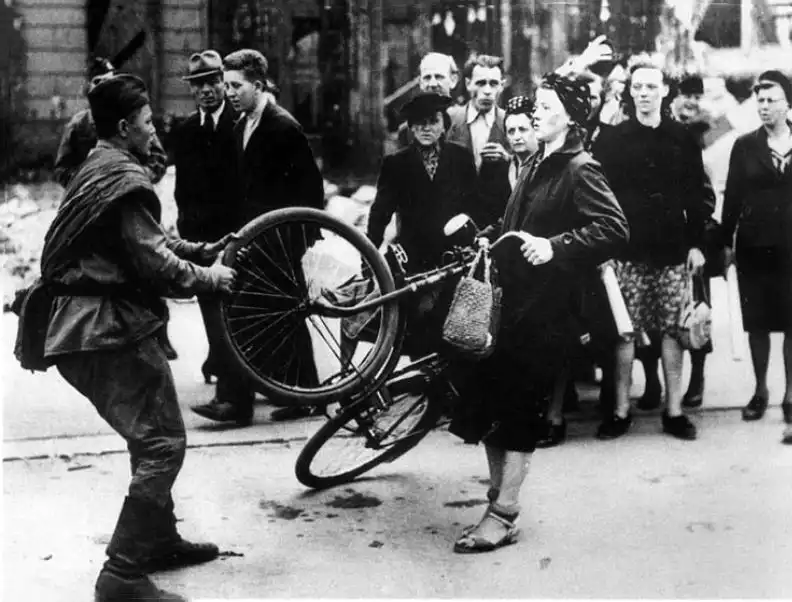
A Photograph with a Controversial Reputation:
This widely circulated photograph from August 1945 shows a Soviet soldier in a tense interaction with a German civilian woman in Berlin.
Over the years, the image has frequently been presented in Western publications with a specific caption:
👉 “A Soviet soldier stealing a bicycle from a Berlin woman.”
However, this interpretation is not universally supported by original archival sources.
The Original Archive Description:
According to records from the Life magazine archive, the description of the image provides a different perspective:
A Soviet soldier arguing with a woman over a bicycle he wanted to buy.
This version suggests not a robbery, but a dispute —
a very different situation.
Context Matters:
Photographs, especially from wartime, are often:
- Cropped
- Re-captioned
- Reinterpreted
Depending on who presents them.
Without context, a single frame can easily be used to support:
- Political narratives
- Propaganda
- Simplified conclusions
This image is a clear example of how meaning can shift over time.
Berlin After the War:
The photograph was taken in Berlin in August 1945, just months after the end of World War II in Europe.
At that time, the city was:
- Devastated by bombing and fighting
- Occupied by Allied forces
- Struggling with shortages of food and goods
In such conditions, everyday interactions could become tense — especially over valuable items like a bicycle.
The Value of a Bicycle:
In postwar Berlin, a bicycle was not just a convenience.
It was:
- A means of transportation
- A tool for survival
- A valuable possession
Disputes over such items were not uncommon, especially in a city facing collapse and scarcity.
The Power of Framing:
The way this photograph has been presented illustrates how framing works:
- A dramatic caption suggests theft
- A neutral description suggests negotiation or conflict
The visual itself remains the same —
only the interpretation changes.
A Complex Reality:
It is important to acknowledge that the final months of the war and its aftermath were marked by:
- Violence
- Disorder
- Tensions between soldiers and civilians
But it is equally important not to draw broad conclusions from a single image — especially when its context is debated.
Reading Historical Images Carefully:
This photograph reminds us that:
- Images do not speak for themselves
- Captions influence perception
- Context is essential for understanding history
Without careful analysis, even authentic images can become tools of distortion.
Historical Photograph Information:
Location: Berlin, Germany
Date: August 1945
Photographer: Unknown
Recommended Books on Berlin 1945 and Postwar Europe:
1. Berlin: The Downfall 1945 — Antony Beevor
2. After the Reich — Giles MacDonogh
3. Savage Continent — Keith Lowe
4. The Fall of Berlin 1945 — Peter Antill