Energetic summer 1942 photograph depicting a seasoned Red Army volunteer soldier traveling to the front lines aboard a troop transport train, heavily armed with an SVT-40 rifle, RGD-33 grenades, and captured Axis trophies.
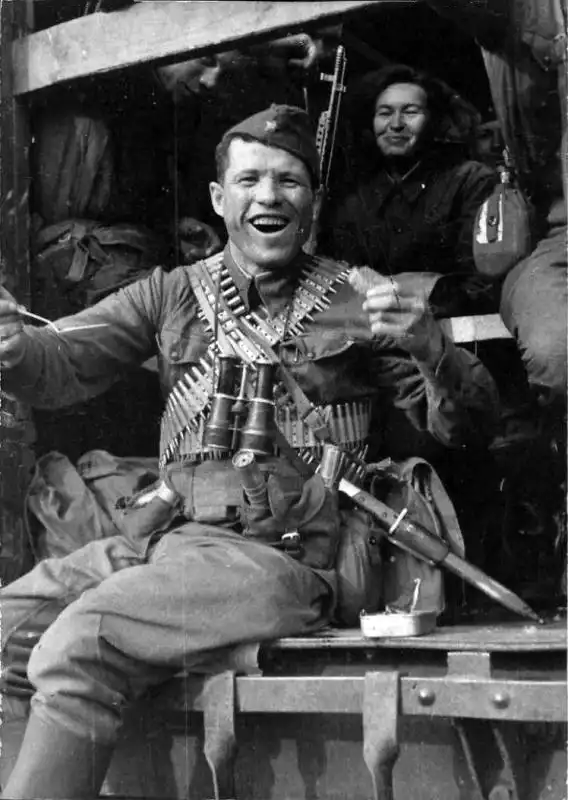
Soviet Volunteer Soldier Traveling to the Front Line (Summer 1942)
This vibrant and character-rich archival photograph from the summer of 1942 depicts a smiling Red Army volunteer soldier sitting at the open door of a wooden troop transport boxcar (teplushka) en route to the front lines. Radiating high morale, the seasoned infantryman is adorned with machine gun ammunition belts crossed over his chest, demonstrating the distinct visual identity of veteran Soviet frontline fighters during the middle stages of World War II.
Despite his cheerful demeanor, his extensive personal equipment and captured gear confirm substantial prior combat experience on the Eastern Front.
Detailed Equipment and Weaponry Breakdown
A technical review of the soldier's personal uniform and field gear highlights a mix of standard Red Army issue arms and prized battlefield trophies:
- SVT-40 Semi-Automatic Rifle: Visible directly behind his shoulder is the muzzle and front sight assembly of a 7.62×54mmR Tokarev SVT-40 semi-automatic rifle, a high-rate-of-fire infantry weapon favored by experienced marksmen and squad leaders.
- RGD-33 Stick Hand Grenades: Tucked into his belt and field pouch are Soviet RGD-33 anti-personnel stick grenades fitted with their metal fragmentation sleeves.
- Captured German Trophy Gear: On his left hip, the soldier carries a captured German Mauser K98k bayonet (Seitengewehr 84/98) in its metal scabbard, alongside a German canvas breadbag (Brotbeutel 31) used for carrying field rations and personal sundries.
- French Optics and Ammunition Belts: Slung around his neck are French-manufactured field binoculars alongside 7.62×54mmR fabric and metal ammunition belts for the Maxim M1910/30 heavy machine gun.
- Standard Red Army Uniform: He wears a standard summer cotton pilotka garrison cap with a Red Star cockade, a Model 1935/1941 tunic (gimnastyerka), and reinforced field trousers.
Troop Transport and Red Army Morale
Rail movements via converted boxcars (teplushki) formed the primary logistical backbone for moving Soviet strategic reserves and volunteer formations toward active combat sectors, including the Don and Stalingrad fronts during the critical 1942 summer campaign.
📍 Location: USSR
📅 Date: Summer 1942
📷 Photographer: Unknown (Red Army Frontline Photo Archive / TASS)
📰 Primary Source: Central Archive of the Russian Ministry of Defense (CAMD) / RGAKFD
Recommended reading:
- Technical design and combat performance of the Tokarev SVT-40 semi-automatic rifle
- Soviet infantry ordnance: RGD-33 stick grenade construction and usage
- Logistics of the Red Army: Strategic troop rail transports (Teplushki) in World War II
- Battlefield trophy acquisition and field gear customization on the Eastern Front (1941–1942)