Famous wartime photograph from autumn 1942 depicting a Soviet soldier armed with a PPSh-41 submachine gun holding a tabby cat in a trench among destroyed factory structures in Stalingrad.
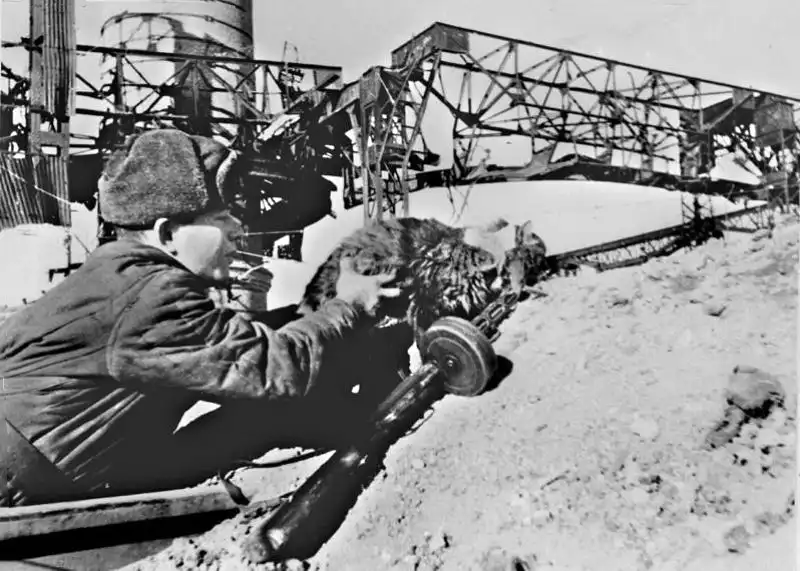
Red Army Soldier with a Cat in the Ruins of Stalingrad (Autumn 1942)
This legendary wartime photograph from autumn 1942 captures a Soviet Red Army infantryman positioned in an earthen trench amidst the heavily shelled industrial sector of Stalingrad. Armed with a 7.62mm PPSh-41 submachine gun, the soldier holds a tabby cat over the trench parapet.
According to widespread wartime folklore and military anecdotes, cats were occasionally used as messengers or to carry propaganda leaflets across trench lines to enemy positions. While the staged nature of the photo remains a subject of debate among historians, it vividly illustrates the presence of domestic animals alongside soldiers during the brutal Siege of Stalingrad.
Equipments, Uniforms, and Visual Features
The photograph offers detailed insight into Red Army winter equipment and battlefield conditions during late 1942:
- Small Arms (PPSh-41): Resting against the trench wall is a 7.62mm PPSh-41 (Pistolet-Pulemyot Shpagina) equipped with a 71-round drum magazine, the iconic submachine gun that provided immense firepower during close-quarters urban combat in Stalingrad.
- Winter Uniform: The soldier wears a padded winter jacket (telogreika) and a standard issue winter fur hat (ushanka), indicating the drop in temperature as the battle intensified in late 1942.
- Background Setting: The background shows the destroyed metal trusses and reinforced concrete structures characteristic of major Stalingrad industrial complexes, such as the Red October or Barrikady factories.
- Role of Animals in Warfare: Beyond popular legends of "messenger cats," felines provided practical benefits in frontline trenches by controlling rodent infestations and providing companionship to troops amidst severe combat stress.
The Industrial Battle for Stalingrad
In autumn 1942, fighting devolved into room-to-room and factory-floor engagements where distance between opposing trenches was often reduced to mere meters. Under these conditions, domestic animals surviving in the rubble frequently interacted with frontline troops from both sides.
📍 Location: Stalingrad (now Volgograd), Russian SFSR, USSR
📅 Date: Autumn 1942
📷 Photographer: Unknown (Soviet War Correspondent / RIA Novosti Archive)
📰 Primary Source: Russian State Archive of Movie and Photo Documents (RGAKFD) / TASS News Agency Archive
Recommended reading:
- Urban warfare tactics: The battle for the Stalingrad Factory District (1942)
- Technical design and combat performance of the PPSh-41 submachine gun
- Animals on the frontline: Dogs, horses, and cats in Red Army service during WWII
- Human stories of WWII: Life and survival inside the ruins of Stalingrad