A stereoscopic view shows besieged Leningrad through the sight of German artillery observers. The photograph highlights the city under constant threat from German 18th Army positions during the siege.
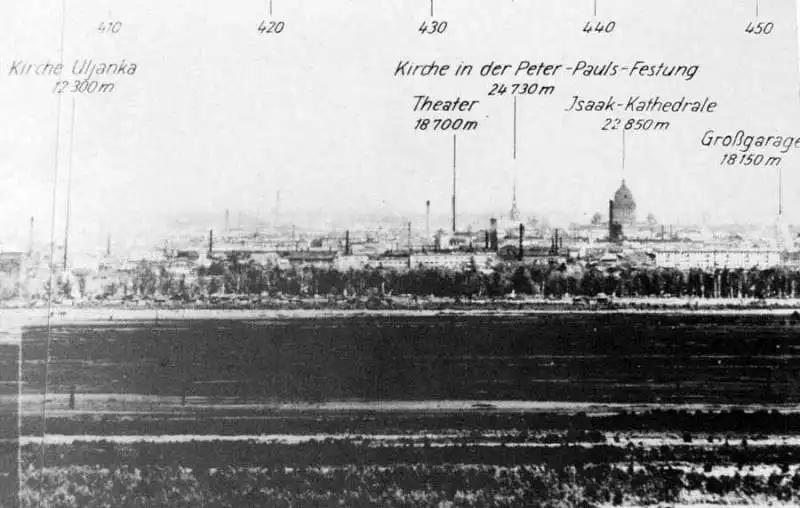
A City Under Observation:
This striking photograph depicts Leningrad through a stereoscopic observation tube used by German artillery crews from the 18th Army of Army Group North, positioned near Krasnoye Selo.
The image was created as a “photo panorama”, a military document used to plan artillery fire and track city defenses. Such photographs were essential for coordinating bombardments against strategic points in the city.
The German Artillery Perspective:
The vantage point for this photograph was Duderhof Heights, situated between Krasnoye Selo and Taytsy. From this elevated position, German artillery observers could monitor movements in Leningrad, identify targets, and adjust firing coordinates with precision.
These observation techniques allowed German forces to:
- Track the movement of Soviet troops and civilian activity
- Target infrastructure and industrial facilities
- Conduct systematic artillery shelling of residential and strategic areas
The photograph serves as a stark reminder of how closely the city was monitored and the continuous threat faced by its inhabitants.
The Siege of Leningrad:
Leningrad was completely encircled by German and Finnish forces from September 1941. The city endured:
- Constant artillery and mortar bombardments
- Air raids targeting civilian and industrial areas
- Severe shortages of food, fuel, and basic necessities
Photographs like this were part of the intelligence and artillery operations that maintained pressure on the city throughout the blockade. The siege lasted over two years, making Leningrad one of the longest and most destructive blockades in modern history.
Historical Significance:
Images taken from enemy observation points are rare examples of wartime military documentation. They provide historians with valuable insight into German operational methods, the geography of surrounding positions, and the vulnerability of the city under siege.
The photograph also underscores the resilience of Leningrad’s defenders and civilians, who maintained industrial production and survival efforts despite being continuously targeted.
Historical Photograph Information:
Location: Leningrad, USSR
Date: Unknown
Photographer: Unknown
Source: German Army observation document
Recommended Books on the Siege of Leningrad:
For those interested in military operations and the civilian experience during the blockade:
1. The 900 Days: The Siege of Leningrad — Harrison E. Salisbury
Classic account with detailed civilian and military perspectives.
2. Leningrad: State of Siege — Michael Jones
Narrative highlighting both daily life and military operations.
3. Leningrad: The Epic Siege of World War II, 1941–1944 — Anna Reid
Modern study combining archival materials and personal testimonies.
4. The Siege of Leningrad 1941–1944 — David M. Glantz
In-depth military analysis with insights into artillery operations and urban defense.