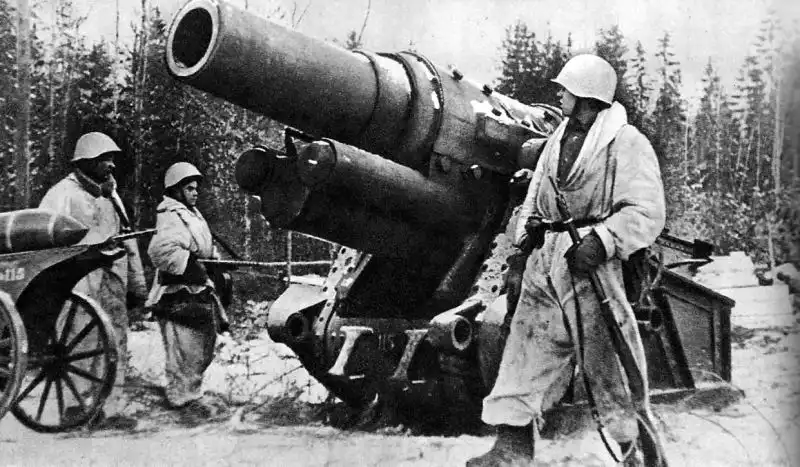
A captured 305mm M16 mortar used by German forces during the Siege of Leningrad. The photograph was taken in January 1943 after Soviet troops seized the weapon during Operation Iskra.
A Giant Weapon of Siege Warfare:
This photograph shows a 305mm M16 heavy mortar, originally produced in Czechoslovakia and later used by German forces during the Siege of Leningrad.
The weapon was captured by Soviet troops in January 1943, during the breakthrough operation known as Operation Iskra, which partially lifted the blockade of the city.
Massive siege weapons like the M16 were designed to destroy fortified positions, infrastructure, and urban targets, making them particularly devastating in prolonged sieges.
The Role of Heavy Artillery in the Siege:
During the Siege of Leningrad, German forces relied heavily on large-caliber artillery to bombard the city from a distance.
Weapons such as the 305mm mortar were capable of:
- Firing extremely heavy shells over long distances
- Destroying buildings, fortifications, and defensive positions
- Causing widespread damage and civilian casualties
Unlike field artillery, siege mortars like the M16 were used for systematic destruction, targeting key points within the city and contributing to the already catastrophic living conditions.
Operation Iskra: Turning the Tide:
The capture of this mortar took place during Operation Iskra (January 1943) — a major Soviet offensive aimed at breaking the blockade.
Key outcomes of the operation:
- A narrow land corridor to Leningrad was opened
- Supply lines were partially restored
- German artillery positions were pushed back
During the offensive, Soviet forces captured two M16 mortars, depriving the enemy of powerful siege weapons and gaining valuable intelligence on their use.
Engineering and Firepower:
The 305mm M16 mortar was an example of early 20th-century heavy siege engineering, originally designed by the Škoda works.
Key characteristics of weapons in this class:
- Massive caliber (305 mm) capable of firing high-explosive shells
- Designed for slow but highly destructive fire
- Required significant logistical support and positioning
These weapons were not mobile in a modern sense — deploying them required preparation, making them vulnerable if front lines shifted, as happened during Operation Iskra.
A Symbol of the Siege’s Brutality:
This captured mortar represents more than just military hardware. It is a symbol of the immense destructive power used against Leningrad and the suffering endured by its inhabitants.
For over two years, the city faced relentless bombardment, starvation, and isolation. The capture of such weapons marked not only a tactical success but also a psychological turning point — proof that the siege could be broken.
Historical Photograph Information:
Location: Leningrad, USSR
Date: January 1943
Photographer: Vsevolod Tarasevich
Recommended Books on the Siege of Leningrad:
For deeper understanding of artillery warfare and the siege:
1. The 900 Days: The Siege of Leningrad — Harrison E. Salisbury
Detailed account of the blockade and its impact on civilians and military operations.
2. Leningrad: State of Siege — Michael Jones
Explores daily life and the role of warfare technologies in the siege.
3. Leningrad: The Epic Siege of World War II, 1941–1944 — Anna Reid
Modern historical perspective with rich archival sources.
4. The Siege of Leningrad 1941–1944 — David M. Glantz
Comprehensive military analysis including artillery strategies.