Ground mechanics at RAF Nuthampstead inspect the completely destroyed nose of B-17G (43-38172) after its miraculous return from a Flak strike over Cologne, October 17, 1944.
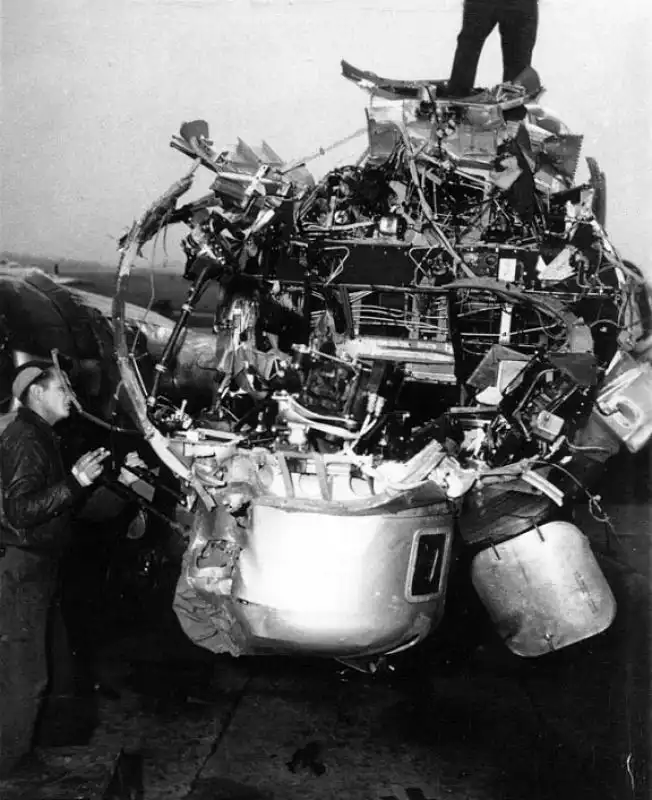
Ground Crew Inspection of the Damaged "Lovely Julie":
This macro-detail photograph taken on October 17, 1944, at RAF Nuthampstead captures USAAF airfield ground mechanics closely examining the destroyed nose compartment of Boeing B-17G-80-BO Flying Fortress (serial number 43-38172, 601st Bomb Squadron, 398th Bomb Group).
Standing on the tarmac beside the lowered chin turret, a technician peers into the hollow, exposed shell of what was once the bombardier and navigator station, following a direct 88mm Flak detonation over Cologne on October 15, 1944.
The Shock and Awe of Airfield Personnel:
When 1st Lt. Lawrence De Lancey safely touched down on the runway without functional nose instruments or forward visibility, the airfield ground crews rushed to the scene expecting a total disaster. The sight of a heavy bomber landing with its entire front section blown away rapidly became legendary across RAF Nuthampstead.
Mechanics, riggers, and intelligence officers flocked to the park position to document the disaster, marveling at how the aircraft remained airborne across hundreds of miles of ocean and occupied territory.
The Role of Maintenance Units and Aircraft Salvage:
Following the immediate rescue of the surviving crew members and the removal of the fallen bombardier, S/Sgt. George E. Abbott, specialized maintenance teams began assessing the airframe:
- Damage Assessment: Technicians evaluated whether structural longerons running beneath the flight deck were completely compromised or if the fuselage could be braced.
- Salvage Operations: Due to the extreme structural destruction, B-17G 43-38172 was deemed beyond field repair (Class 26 damage / written off) and designated for salvage.
- Cannibalization of Parts: Intact components, including the inner Wright R-1820 Cyclone engines, undamaged instruments, wing sections, and landing gear struts, were stripped by ground crews to keep other operational B-17 bombers flying.
Photographs showing ground personnel standing beside such catastrophic damage served as crucial documentation for USAAF engineering officers studying structural failure points, ultimately improving armor placement on future combat aircraft.
📍 Location: RAF Nuthampstead, Hertfordshire, England, UK
📅 Date: October 17, 1944
📷 Photographer: Unknown (USAAF Official Photographer)
Recommended reading:
- Ground crew maintenance and aircraft salvage operations in the 8th Air Force
- Operational history and layout of RAF Nuthampstead airbase
- Battle damage evaluation procedures (Class 26 write-offs) in WWII aviation
- The heroism of 1st Lt. Lawrence De Lancey and his crew over Cologne