A shocking head-on photograph detailing the catastrophic structural damage to the nose of B-17G (43-38172) after a direct 88mm Flak hit over Cologne, October 15, 1944.
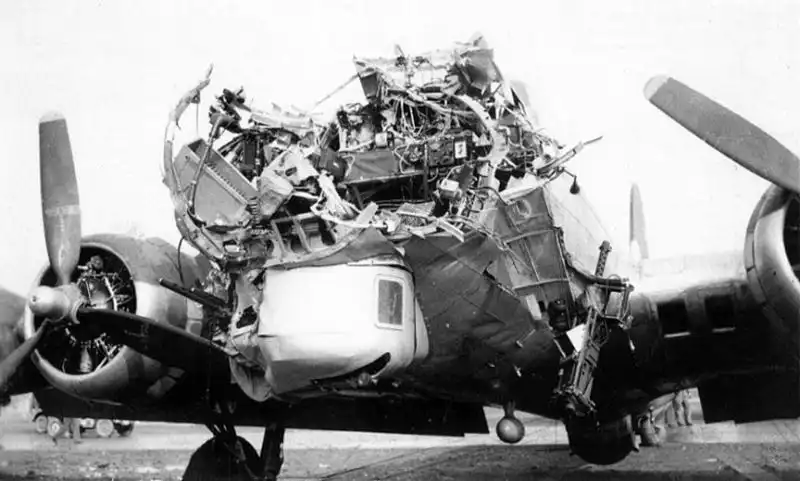
Head-On Technical Analysis of B-17G Flak Damage:
This striking front-angle photograph, taken at RAF Nuthampstead on October 17, 1944, provides a detailed close-up look into the destroyed forward fuselage of Boeing B-17G-80-BO Flying Fortress (serial number 43-38172, 398th Bombardment Group).
Viewed directly from the front, the photo reveals the raw structural consequences of a direct detonation from a German 88mm anti-aircraft Flak shell during a bombing run over Cologne on October 15, 1944. The force of the explosion completely vaporized the Plexiglas nose cone, the chin turret, and the bombardier's station.
Engineering Marvel: Why the "Flying Fortress" Didn't Disintegrate:
In standard aerodynamic terms, a hole of this magnitude should have created immense drag, causing the entire airframe to break apart under intense dynamic pressure. However, the B-17's design proved remarkably resilient due to several key engineering choices:
- Fail-Safe Aluminum Bulkheads: The heavy-duty structural bulkheads situated behind the cockpit absorbed much of the shrapnel and explosion blast wave, preventing structural failure of the main flight deck.
- Redundant Control Cables: Although key instruments, oxygen lines, and electrical wiring were severed, critical flight control cables running along the lower fuselage floor remained functional enough for 1st Lt. Lawrence De Lancey to maintain manual pitch and yaw control.
- Engine Isolation: Despite the destruction of the nose, both inner Wright R-1820 Cyclone radial engines survived the initial blast undamaged, providing full power for the return flight across the North Sea.
Exposed Internal Avionics and Armament:
The head-on view visually demonstrates the sheer chaos inside the nose compartment following the strike:
- Hanging Armament: The twin .30 / .50 caliber nose machine guns and their mounting assemblies are seen dangling from twisted aluminum frames.
- Exposed Wiring Loom: Shredded electrical harnesses, heating suit cables, and severed oxygen supply tubes hang down in front of the forward landing gear strut.
- Cockpit Windshield Damage: The blast sheared off the lower instrument panel and cracked the armored glass of the main cockpit windshield directly above the pilot's seat.
This remarkable front-angle view stands as a powerful engineering study in aircraft survivability and a testament to the rugged construction of American heavy bombers in World War II.
📍 Location: RAF Nuthampstead, Hertfordshire, England, UK
📅 Date: October 17, 1944
📷 Photographer: Unknown (USAAF Official Photographer)
Recommended reading:
- Boeing B-17 Flying Fortress airframe structural design and battle damage tolerance
- German 88mm Flak 36/37 anti-aircraft artillery ballistics and explosive effect
- Flight characteristics of severely damaged heavy bombers during emergency landings
- The history of the 398th Bombardment Group at RAF Nuthampstead