Historical photograph from 1943 showing a German soldier from the 98th Infantry Division posing next to a captured Soviet T-70 light tank in Ukraine.
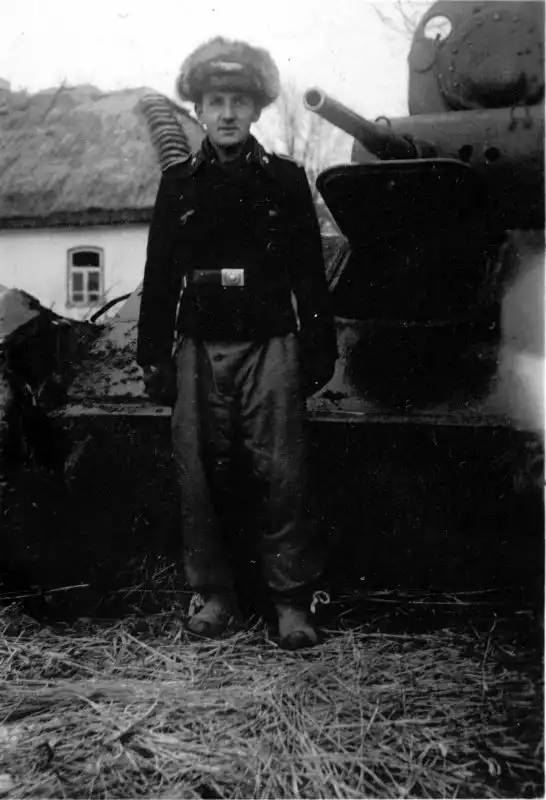
German Tanker with a Captured Soviet T-70 Light Tank in Ukraine (1943)
This evocative archival photograph, captured in 1943 somewhere in Ukraine, highlights a common frontline phenomenon: the absorption of captured Soviet combat vehicles into the machinery of the Wehrmacht.
A German soldier belonging to the 98th Infantry Division poses casually beside a knocked-out or captured Soviet T-70 light tank, with a traditional straw-roofed Ukrainian hut visible in the background.
Beutepanzer: Soviet Light Armor in German Service
While heavy and medium tanks received primary strategic focus, light armor like the T-60 and T-70 played an extended secondary role under German command:
- Police and Security Units: Captured light tanks were frequently allocated to Ordnungspolizei units—such as the 5th and 12th Police Tank Companies (Pol.Pz.Ko)—to bolster security forces operating in occupied territories.
- Anti-Partisan Operations: Lacking dedicated indigenous armored vehicles for rear-area security, German occupation forces valued these operational trophies for infantry support and patrol duties.
- Prolonged Service Life: Despite their obsolescence against frontline anti-tank defenses by 1943–1944, many captured Soviet light tanks remained active in secondary sectors nearly until the end of the war.
📍 Location: Ukrainian SSR, USSR
📅 Date: 1943
📷 Photographer: Unknown (German Frontline Archive)
📰 Primary Source: Wehrmacht 98th Infantry Division Records
Recommended reading:
- Beutepanzer: German use of captured Soviet armor during World War II
- The T-70 Light Tank: Design, combat deployment, and variants
- Ordnungspolizei Armor: German police tank units on the Eastern Front