Historical photograph from the summer of 1941 showing a captured Soviet T-26 single-turret tank bearing German markings near a traditional Ukrainian hut.
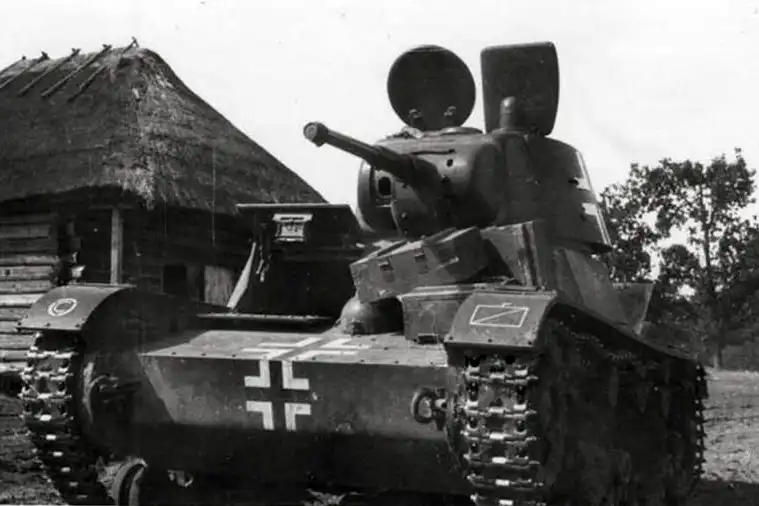
Captured Soviet T-26 Light Tank in Wehrmacht Service in Ukraine (Summer 1941)
This intriguing archival photograph from the summer of 1941 captures a piece of the vast military hardware turnover during the opening months of Operation Barbarossa, showing a captured Soviet single-turret T-26 light tank pressed into Wehrmacht service in Ukraine.
Adorned with prominent German cross markings on its hull and turret to prevent friendly fire incidents, the tank is parked next to a traditional Ukrainian thatched-roof cottage—a stark visual contrast highlighting the clash of modern mechanized warfare with the rural landscape.
The Fate of Obsolete Armor in German Hands
By 1941, the T-26—though numerically the backbone of the Red Army's interwar tank force—was technologically outdated:
- Vulnerability and Limitations: Featuring thin bulletproof armor and a low-velocity 45mm gun, the T-26 was hopelessly outclassed by mid-war anti-tank weapons and medium panzers.
- Rear-Area Duties (Beutepanzer): Rather than discarding captured hulls, German occupation forces frequently reallocated functioning obsolete tanks like the T-26 to security divisions, anti-partisan patrols, and rear-area policing duties across occupied Soviet territories.
- Archival Value: Such photographs illustrate the pragmatic utilization of captured materiel by the German military machine during the rapid advances of 1941.
📍 Location: Ukrainian SSR, USSR
📅 Date: Summer 1941
📷 Photographer: Unknown (Frontline Archive)
📰 Primary Source: Wehrmacht Captured Vehicles Collection
Recommended reading:
- Beutepanzer in the Wehrmacht: The German military use of captured Soviet armor in 1941
- The T-26 Light Tank: Operational history from the Spanish Civil War to Barbarossa
- German Rear-Area Security Divisions: Anti-partisan warfare and occupation logistics