Captured Soviet BA-10 armored car during the 1941 Eastern Front campaign, later designated Panzerspähwagen BA 203(r) in German service.
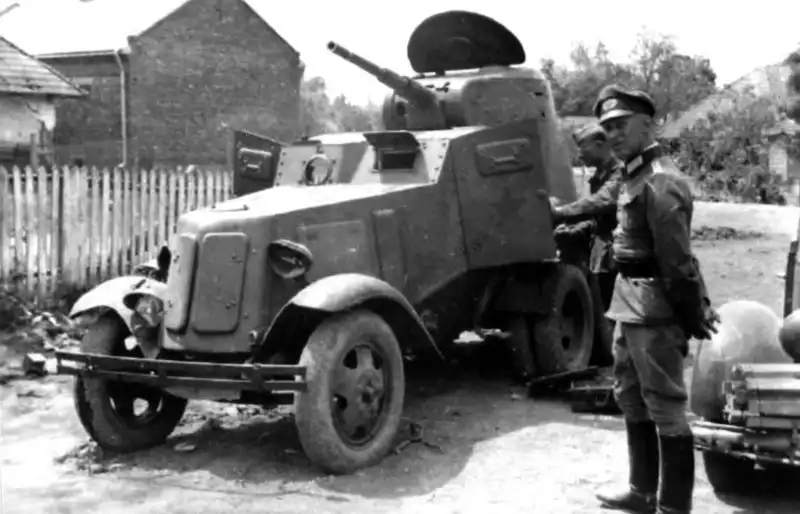
Captured Soviet BA-10 Armored Car (Summer 1941)
This wartime photograph shows a Soviet BA-10 medium armored car captured by the German Wehrmacht during the Blitzkrieg on the Eastern Front in the summer of 1941. In the opening weeks of the invasion, German forces seized large quantities of Soviet equipment, including armored vehicles, many of them still operational.
The BA-10 was among the armored cars that fell into German hands and, in some cases, were returned to service under a new designation.
Photo Information
- Location: USSR
- Date: Summer 1941
- Photographer: Unknown
What the Photo Shows
The image depicts a BA-10 armored car under German control, likely marked or inspected after capture. The vehicle appears intact, suggesting it was abandoned due to:
- Mechanical breakdown
- Fuel shortages
- Disrupted command structure
- Rapid retreat conditions
Such losses were common in 1941, when entire units were forced to withdraw under intense pressure.
The BA-10 Armored Car
The BA-10 was one of the most widely used Soviet medium armored cars before and at the beginning of the war.
Key Characteristics
- Based on a truck chassis with additional rear auxiliary tracks
- Armed with a 45 mm gun in a rotating turret
- Equipped with machine guns
- Relatively strong firepower for a wheeled vehicle
- Limited cross-country mobility compared to tracked vehicles
Although effective on roads and firm terrain, the BA-10 struggled in muddy or soft conditions, a significant disadvantage on the Eastern Front.
German Use of Captured BA-10 Vehicles
During the first months of the campaign, German forces captured large numbers of Soviet armored vehicles. However, there is no comprehensive statistical record of how many BA-10s were reused.
Known facts include:
- Captured and restored vehicles were designated Panzerspähwagen BA 203(r)
- Some were issued to infantry units
- Others were used by police formations and training units
- Operational use varied depending on condition and availability of spare parts
The “(r)” in the designation indicated “russisch” (Russian) origin.
Why Captured Equipment Was Used
In 1941, the rapid pace of operations meant:
- Supply lines were stretched
- Losses had to be replaced quickly
- Serviceable enemy equipment was seen as valuable
- Immediate battlefield needs outweighed standardization concerns
Captured vehicles offered short-term reinforcement, even if long-term maintenance posed difficulties.
Limitations of Reused Soviet Vehicles
Despite being pressed into service, captured BA-10s faced challenges:
- Limited spare parts supply
- Differences in ammunition compatibility
- Wear and tear from previous combat
- Mechanical issues not always easy to repair
As a result, many were used in secondary roles rather than front-line armored combat.
Blitzkrieg and Material Losses
The summer of 1941 was marked by:
- Massive encirclements
- Rapid territorial gains
- Heavy Soviet material losses
- Large amounts of abandoned or captured equipment
Photographs like this illustrate not only battlefield action but also the logistical consequences of operational collapse.
Why This Photograph Matters
This image is significant because it shows:
- A specific example of a captured Soviet armored vehicle
- The fluid nature of equipment ownership in early war
- The practical adaptation of captured matériel
- A technical and operational aspect of the 1941 campaign
It reflects how both sides had to adapt quickly to the realities of mechanized warfare.
Conclusion
The photograph of a captured BA-10 armored car in the summer of 1941 captures a moment when the battlefield shifted rapidly and equipment changed hands. Re-designated as Panzerspähwagen BA 203(r), some of these vehicles continued to serve under new operators, highlighting both the scale of early-war losses and the pragmatic approach to reusing serviceable machinery.
It stands as a reminder that in mechanized war, vehicles could outlive their original crews and sometimes even fight under a different flag.