A damaged B-29 returns from a combat mission over Japan only to be destroyed during a crash landing on Iwo Jima in 1945.
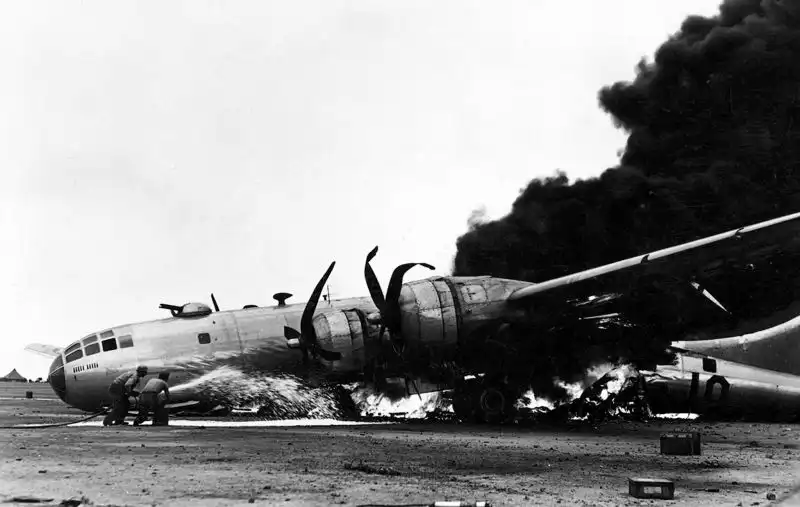
This dramatic photograph shows a Boeing B-29 Superfortress engulfed in flames after a failed landing on the island of Iwo Jima in 1945.
The bomber belonged to the 504th Bombardment Group of the 313th Bombardment Wing and had successfully returned from a combat mission over Japan. Although the aircraft survived enemy defenses and managed to reach the safety of a friendly airfield, its ordeal was not yet over.
Following an emergency landing, the aircraft left the runway, collided with a parked P-51 Mustang fighter, and caught fire.
For this veteran bomber, the mission became its last.
The Importance of Iwo Jima:
The capture of Iwo Jima in early 1945 provided the United States with a strategically important airfield between the Mariana Islands and Japan.
Originally seized after one of the bloodiest battles of the Pacific War, the island soon became a vital emergency landing site for damaged B-29 bombers returning from missions against the Japanese Home Islands.
Hundreds of bombers that might otherwise have been lost at sea were able to land on Iwo Jima.
For many aircrews, the sight of the island after hours of flight over open ocean meant survival.
Surviving the Mission:
The aircraft in this photograph had already completed eleven combat missions, as indicated by the mission markings painted on its fuselage.
Each of those sorties involved long flights over hostile territory, exposure to anti-aircraft fire, adverse weather, mechanical failures, and the constant possibility of enemy fighter interception.
Reaching a twelfth mission was itself evidence of both a capable crew and a reliable aircraft.
Yet wartime aviation often proved unforgiving. Surviving combat did not guarantee a safe return home.
The Dangers of Landing Damaged Aircraft:
A significant percentage of bomber losses occurred not in combat but during takeoff and landing.
Aircraft returning from missions frequently suffered damage to landing gear, hydraulic systems, engines, fuel tanks, or flight controls. Pilots often had to land overloaded, partially disabled machines on crowded wartime airfields.
Even a relatively successful emergency landing could quickly become a disaster if a damaged aircraft lost directional control after touchdown.
According to the available information, this B-29 veered off the runway and collided with a parked P-51 Mustang.
Part of the fighter's wing can reportedly be seen behind the nose section of the burning bomber in the photograph.
A Veteran Aircraft Meets Its End:
One of the most striking details visible on the aircraft is the row of mission symbols marking its previous combat operations.
Such markings represented successful sorties completed by the crew and served as a visible record of service.
Looking at those symbols, it is difficult not to imagine the long chain of events that brought this aircraft to its final resting place: countless hours of maintenance, dangerous flights over the Pacific, bombing missions against Japan, and finally one disastrous landing.
The bomber survived the enemy only to be destroyed after reaching friendly territory.
The Hidden Cost of Strategic Air Warfare:
Photographs of the B-29 often focus on massive bombing raids, technological innovation, or the aircraft's role in ending the war against Japan.
This image tells a different story.
It reminds us that strategic air warfare depended on thousands of aircraft operating at the limits of their endurance. Mechanical failures, weather conditions, navigational challenges, and simple accidents claimed many aircraft that had successfully completed their combat missions.
Not every wartime loss occurred in the skies above the battlefield.
A Final Mission:
The burning aircraft shown in this photograph had already done its duty.
Eleven combat missions were marked on its fuselage, each representing another successful return from enemy territory.
The twelfth mission brought the bomber back to Iwo Jima, but not safely enough to save the aircraft itself.
Today the image stands as a powerful reminder of the risks faced by bomber crews throughout the Pacific War and of how survival often depended on events occurring long after combat had ended.
Photo Details:
📍 Location: Iwo Jima, Japan
📅 Date: 1945
📷 Photographer: Unknown
Recommended Reading:
- Barrett Tillman — Whirlwind: The Air War Against Japan 1942–1945
- Steven Birdsall — Superfortress: The Boeing B-29 and American Air Power
- Richard B. Frank — Downfall: The End of the Imperial Japanese Empire
- Thomas M. Coffey — Iron Eagle: The Turbulent Life of General Curtis LeMay
- Kenneth P. Werrell — Blankets of Fire: U.S. Bombers over Japan During World War II
- John Toland — The Rising Sun: The Decline and Fall of the Japanese Empire