Iconic January 1942 Soviet propaganda photograph from the Battle of Moscow depicting a deceased Wehrmacht Oberfeldwebel with an ornate porcelain vase in the snow.
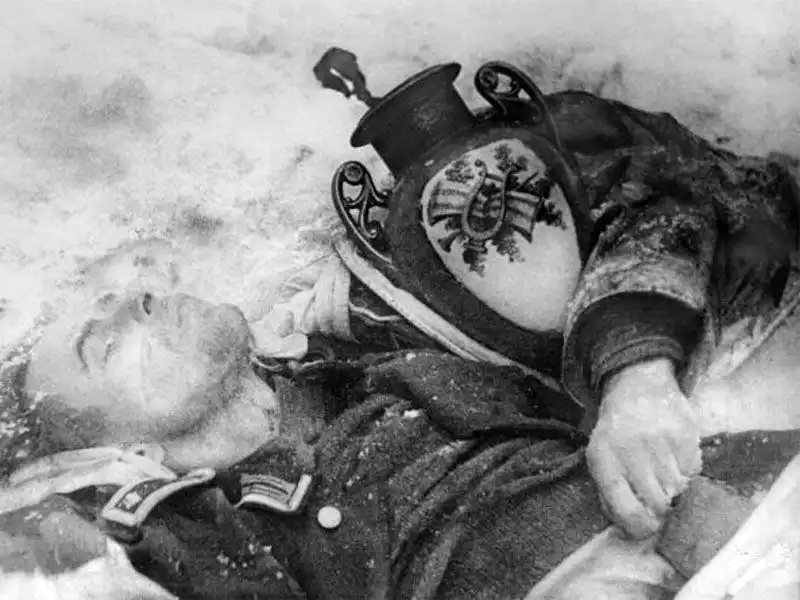
Allegorical Wartime Imagery: Battle of Moscow Propaganda Photo (January 1942)
This renowned photograph taken in January 1942 during the Soviet winter counteroffensive in the Moscow Region represents a prominent example of symbolic photojournalism from the Great Patriotic War.
Published across Soviet state media to boost civilian and military morale following the successful defense of the capital, the image uses stark visual allegories to depict the retreat and losses suffered by German forces during the Battle of Moscow.
Equipment, Uniforms, and Visual Features
The photograph features several distinct uniform identifiers alongside deliberate artistic staging elements:
- Rank Insignia: The uniform collar and shoulder boards identify the soldier as an Oberfeldwebel (senior NCO) of the German Wehrmacht.
- Winter Improvised Clothing: The NCO wears a heavy standard-issue field tunic and coat, supplemented with makeshift head cloth wrapping—a common practice among Axis troops ill-equipped for extreme Russian winter temperatures reaching below -30°C.
- Symbolic Staging: Positioned across the soldier's chest is an ornate porcelain vase featuring classical lyre motifs and decorative handles, placed by the photojournalist to serve as a visual metaphor for looted property and moral reckoning.
- Artistic Composition: The high-contrast framing between the dark uniform fabrics, the glazed ceramic vase, and the surrounding snow highlights the deliberate artistic choices of WWII frontline photojournalists.
Historical Context: Soviet Photojournalism and Morale in 1941–1942
During the critical first year of the war on the Eastern Front, Soviet photojournalists working for national publications like Pravda, Izvestia, and Krasnaya Zvezda frequently utilized composite and staged compositions alongside candid combat reporting. Creating clear visual narratives—such as contrasting culture with destruction or depicting the futility of invasion—served as an effective instrument of wartime information warfare and public communication during the pivotal winter of 1941–1942.
📍 Location: Moscow Region, RSFSR, USSR
📅 Date: January 1942
📷 Photographer: Unknown (Soviet Frontline Correspondent)
📰 Primary Source: Russian State Archive of Documentary Film and Photo Documents (RGAKFD)
Recommended reading:
- Battle of Moscow: The Red Army winter counteroffensive (December 1941 – January 1942)
- Wartime Media Tactics: Staging and composition in Soviet frontline photojournalism
- Wehrmacht Winter Logistics: Equipment shortages and extreme weather impact on the Eastern Front
- Symbolism in WWII Photography: Visual metaphors in Allied and Axis state propaganda