Archival photograph documenting the final outcome of the 1945 Allied military tribunal concerning German General Anton Dostler in Aversa, Italy.
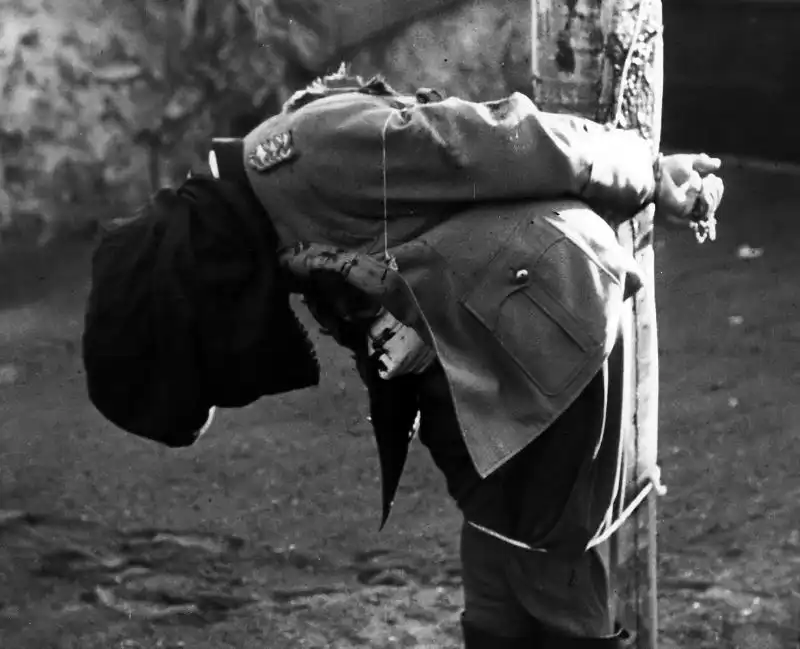
The Conclusion of the Dostler Trial: Historical Aftermath in Aversa (December 1, 1945)
This solemn archival photograph documents the final chapter of a landmark post-war legal proceeding, capturing the aftermath of the execution of German General of Infantry Anton Dostler in Aversa, Italy, on December 1, 1945.
The case stands as one of the earliest and most consequential Allied war crimes trials, directly confronting the complexities of military obedience, unlawful command structures, and individual accountability.
Legal Legacy and the Principle of Command Responsibility
The trial and its ultimate outcome reshaped the framework of international military jurisprudence:
- The Rejection of Superior Orders: The Allied tribunal firmly rejected the defense's argument that the accused was merely transmitting and executing directives issued by supreme leadership under Hitler's 1942 Kommandobefehl.
- Setting the Nuremberg Precedent: By establishing that subordinate officers bear personal criminal responsibility for executing manifestly illegal orders, the Dostler verdict provided a foundational legal doctrine utilized shortly thereafter during the main Nuremberg Trials.
- Historical Documentation: Photographic records of the proceeding and its conclusion serve as a stark reminder of the legal reckoning that followed the conclusion of World War II in Europe.
📍 Location: Aversa, Italy
📅 Date: December 1, 1945
📷 Photographer: Unknown (Allied Military Documentation)
📰 Primary Source: Post-War Military Tribunal Records
Recommended reading:
- Post-War Allied Tribunals: The legal foundation of modern war crimes prosecution
- The Kommandobefehl Re-examined: Orders, compliance, and military ethics
- From Aversa to Nuremberg: The evolution of individual accountability in international law