Historical analysis of Arkady Shaikhet's iconic photograph published in Komsomolskaya Pravda in November 1942, showing a Soviet 76mm ZiS-3 divisional gun crew engaging targets in ruined Stalingrad.
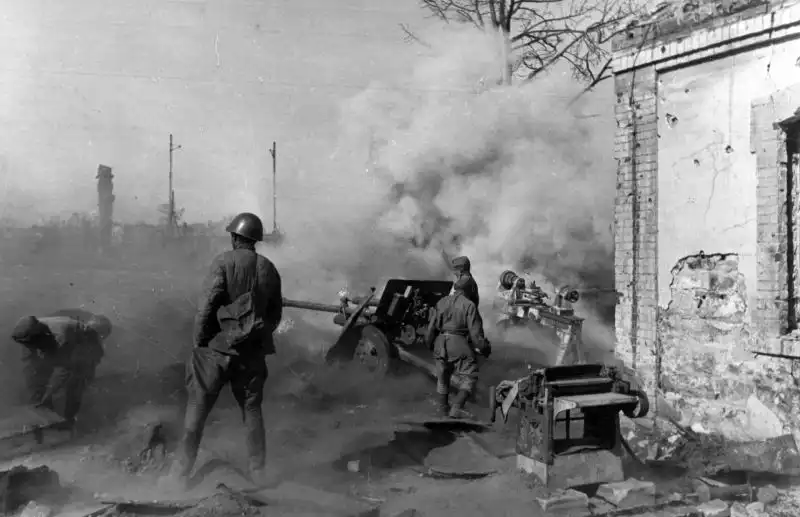
Red Army 76mm ZiS-3 Gun Crew of Lieutenant Sukhachev Firing in Stalingrad (Autumn 1942)
This landmark archival photograph, captured by master Soviet photojournalist Arkady Shaikhet and published in Komsomolskaya Pravda (No. 280, November 28, 1942), depicts a 76mm divisional gun ZiS-3 crew under the command of Lieutenant Sukhachev firing directly at enemy strongpoints during the Battle of Stalingrad.
Positioned inside a ruined industrial workshop alongside heavy factory machinery, the crew illustrates the intense direct-fire artillery tactics that defined urban combat in the city.
Technical Breakthroughs of the ZiS-3 Field Gun
Designed by Vassily Grabin's design bureau at Factory No. 92, the 76mm divisional gun Model 1942 (ZiS-3) became the most widely produced artillery piece of World War II, with over 103,000 units manufactured:
- Ergonomic Elevation and Traverse Controls: Unlike its predecessor, the 76mm F-22 USV (Model 1939), which placed handwheels on opposite sides of the breech, the ZiS-3 grouped all targeting controls on the left side. This allowed a single gunner to align optical sights, traverse, elevate, and fire without requiring assistance.
- Combat Crew Operations: While the official table of organization called for a six-man crew, frontline conditions in urban strongpoints routinely operated with reduced numbers. The photo documents four active crewmen: gunner, loader, section commander, and an ammunition bearer crouching with a shell casing.
- Dual Anti-Tank and Field Role: Light, robust, and possessing high muzzle velocity, the ZiS-3 served as both a divisional field gun and an effective direct-lay tank destroyer against German medium armor.
- Industrial Battlefield Environment: The firing position is established directly inside a destroyed Stalingrad plant, with industrial lathes and metalworking machinery visible adjacent to the gun shield.
The Battle of Stalingrad (Autumn 1942)
In November 1942, as Red Army forces prepared Operation Uranus, isolated artillery detachments positioned near the Volga banks and inside major industrial complexes (such as the Red October and Barrikady factories) engaged enemy infantry and armor at point-blank ranges, playing a decisive role in holding the defensive perimeter.
📍 Location: Stalingrad, RSFSR, USSR
📅 Date: Autumn (November) 1942
📷 Photographer: Arkady Shaikhet
📰 Primary Source: Komsomolskaya Pravda Newspaper Archive (Nov 28, 1942, No. 280)
Recommended reading:
- Vassily Grabin and the ZiS-3: Mass production methods and engineering of the 76mm gun
- Arkady Shaikhet's War Photography: Documenting the Battle of Stalingrad for Soviet press
- Direct-Lay Artillery in Urban Combat: Tactics of Soviet gun crews in industrial Stalingrad
- Soviet Factory Strongpoints: The defense of the Red October and Barrikady plants (1942)