Historical analysis of the captured German trophy photograph documenting the execution of Soviet partisan Zoya Kosmodemyanskaya in Petrishchevo on November 29, 1941.
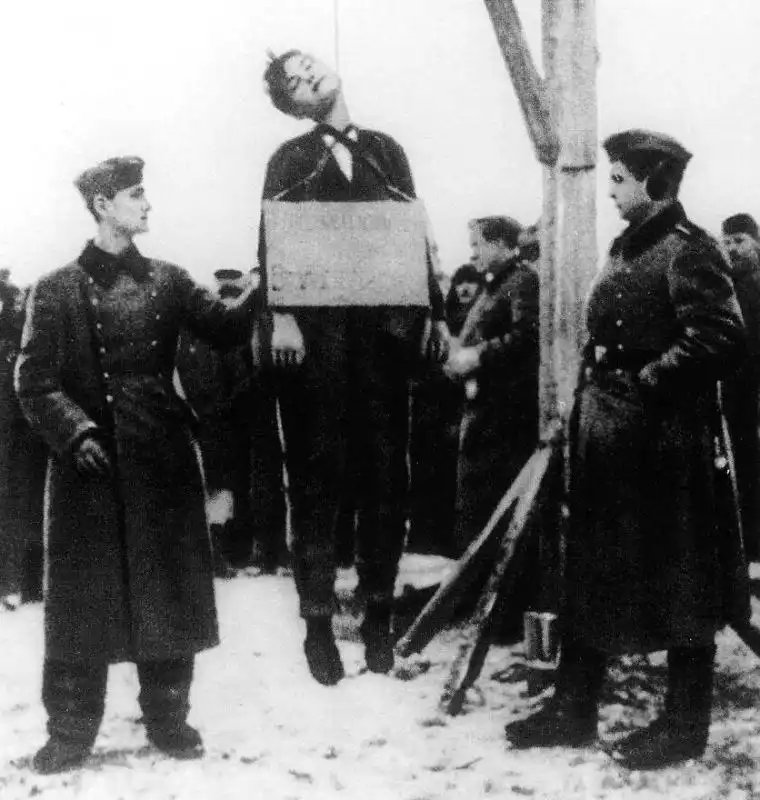
The Execution in Petrishchevo: Captured German Trophy Documentation:
This photograph is one of a series of five iconic war crime documentations recorded by a German soldier during the execution of 18-year-old Soviet intelligence operative Zoya Kosmodemyanskaya on November 29, 1941, in the village of Petrishchevo, Moscow Oblast.
Unlike post-liberation photographs taken by Soviet correspondents, this photo was captured by personnel of the 332nd Infantry Regiment (197th Infantry Division) of the Wehrmacht as an official or personal record of the execution.
The "Brandstifter" Sign and Anti-Partisan Directives:
The image shows severe military protocol and psychological warfare elements applied by occupation authorities during the Battle of Moscow:
- The Identification Plaque: Suspended around Kosmodemyanskaya's neck is a wooden board inscribed with the word "Brandstifter" (German for "Incendiary" or "Arsonist") alongside its Russian translation. This was placed on her after she was apprehended attempting to disable military quartering structures in Petrishchevo under Order No. 0428 (the "scorched earth" military directive).
- Presence of Occupation Troops: Wehrmacht soldiers are photographed posing beside the gallows, reflecting the routine practice of public executions used to intimidate the local civilian population in occupied territories.
- Refusal of Cooperation: Despite severe beatings and torture prior to the execution, Kosmodemyanskaya maintained silence regarding her unit's structure, strength, and mission details.
Discovery of the Trophy Film and Historical Impact:
The story of how these photographic records reached the public domain is a significant episode in WWII archival history:
- Recovery on the Frontline: The original film roll was recovered from the body of a fallen German officer during combat operations near Potapovo (near Smolensk) by Red Army soldiers in late 1943.
- Official Publication: Upon development by Soviet intelligence services, the photos were published in major Soviet newspapers, including Pravda and Izvestia, causing widespread public outrage and hardening resolve on the Eastern Front.
- Evidentiary Use: These captured photographs were later introduced as documentary evidence of war crimes committed against Soviet combatants and partisans during post-war legal proceedings.
📍 Location: Petrishchevo, Ruza District, Moscow Oblast, RSFSR, USSR
📅 Date of Execution: November 29, 1941
📷 Photographer: Unknown German Soldier (332nd Infantry Regiment, 197th Division, Wehrmacht)
📰 Primary Source: RGAKFD (Russian State Archive of Film and Photo Documents) / Captured Wehrmacht Archives
Recommended reading:
- Command structure and war crime documentation of the Wehrmacht 197th Infantry Division
- The recovery and publication of captured enemy photographic evidence in USSR (1943–1945)
- Implementation of Stavka Directive Order No. 0428 during the defense of Moscow
- Legal evidentiary materials presented at the Nuremberg Trials regarding anti-partisan warfare